
FG Supports 4,000 Flood-Affected Ogun Farmers Through NADF
The Federal Government, through the National Agricultural Development Fund (NADF), has launched an emergency agricultural intervention for 4,000 smallholder farmers devastated by the 2026 rainy season floods in Ogun State. With 2,800 maize farmers and 1,200 rice farmers receiving fertilisers, herbicides, and pesticides, the programme is designed to prevent a short-term disaster from becoming a long-term food security crisis, and it comes with a blunt warning: without timely intervention, a disas
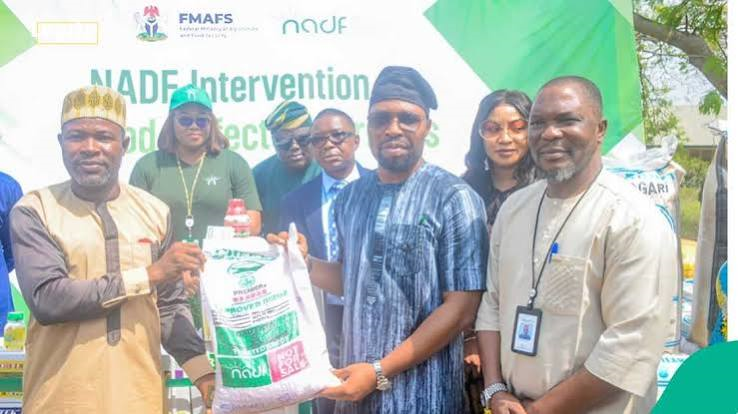
Federal Government has moved to cushion the impact of devastating floods on Ogun State's agricultural sector, rolling out an emergency support programme for 4,000 smallholder farmers whose farms and livelihoods were damaged during the 2026 rainy season.
The intervention, delivered through the National Agricultural Development Fund (NADF), targets 2,800 maize farmers and 1,200 rice farmers who are receiving fertilisers, herbicides, and pesticides under the Fund's Agricultural Emergency Intervention in Enterprise Recovery for Flood-Affected Smallholder Farmers. The flag-off ceremony in Ogun State marked the beginning of a carefully structured recovery effort designed to help farmers return to their fields before the next planting window closes.
Speaking at the event, the NADF Executive Secretary and Chief Executive Officer, Mohammed Ibrahim, who was represented by the Head of Mechanisation Unit, Olakunle Dabiri, framed the intervention as a race against time. "Without timely intervention, a disaster measured in days can easily become a crisis that lasts for seasons," Ibrahim said. His warning captures the stakes involved. Floods can destroy a season's harvest in hours, but the consequences ripple outward for months, threatening food prices, household incomes, and the broader food security agenda that the Federal Government has placed at the centre of its economic agenda.
Ibrahim explained that the programme was structured around three major components: needs assessment and data verification, emergency farm input support, and climate-smart recovery measures. The needs assessment, conducted in collaboration with the state government, was aimed at identifying affected farmers, determining the extent of damage to their farms, and ensuring that assistance reached verified beneficiaries rather than ghost farmers or political favourites. On the climate-smart component, NADF said it would promote agricultural extension services, early-warning systems, and capacity-building initiatives to improve farmers' preparedness for future climate-related emergencies.
The emphasis on verification and transparency is significant. Nigeria has a long and painful history of agricultural interventions that collapsed under the weight of corruption, political interference, and poor monitoring. Ibrahim said every beneficiary under the programme would be properly verified, with a comprehensive database developed to ensure transparency and efficiency. He added that the Fund's digital monitoring and evaluation framework would be deployed to track input distribution, monitor the farmers supported, and assess the extent of agricultural recovery. The programme is expected to be completed within seven weeks, a timeline that reflects the urgency of getting inputs to farmers before they miss critical production opportunities.
Ibrahim was also careful to define what success would look like. "The true measure of success will not be the quantity of inputs delivered. Rather, it will be seen in the fields restored to cultivation, the livelihoods rebuilt, the harvests secured, and the resilience strengthened across our farming communities," he said. It is a standard that shifts the focus from procurement to outcomes, from the volume of bags distributed to the number of farms that return to production.
The Ogun State Commissioner for Agriculture, Hon. Bolu Omotowo, commended NADF for its continued support, describing the intervention as an important contribution to the state's efforts to improve agricultural productivity. He noted that the programme complemented the agricultural development initiatives of Governor Dapo Abiodun, particularly efforts to improve farmers' access to inputs, equipment, and mechanisation services. Omotowo recalled that NADF had distributed more than 20,000 bags of fertiliser to farmers in Ogun State about four months earlier during the planting season, and he disclosed that the state government had recently provided eight tractors to its eight farm settlements, alongside tipping trailers, ploughs, harrows, maize planters, and cassava planters.
The broader context is one of mounting climate pressure on Nigerian agriculture. The 2026 rainy season brought floods that destroyed farmlands, damaged agricultural assets, and threatened the incomes of smallholder farmers across several states. Ogun was among the hardest hit, with fish farmers in Ijebuland alone reporting losses estimated at over N700 million earlier in the year after torrential rainfall washed away ponds and production assets. The NADF intervention is part of a wider emergency recovery programme targeting over 22,000 flood-affected farmers across six states, including Ekiti, Bayelsa, Akwa Ibom, Benue, and Kogi.
For the 4,000 farmers in Ogun receiving inputs this week, the intervention is a lifeline. For the Federal Government, it is a test of whether its food security rhetoric can be translated into timely, transparent, and effective action at the farm gate. The inputs are being distributed. The database is being built. The seven-week clock is ticking. What happens in the fields of Ogun over the coming months will determine whether this remains a story about emergency relief or becomes a story about recovery.
Sponsored

Related stories
 Agriculture
Tinubu Unveils ₦450bn Agricultural Plan Targeting 500,000 Farmers
President Bola Tinubu has committed ₦450 billion to agriculture in a sweeping intervention targeting 500,000 farmers across Nigeria—part of a broader ₦4.7 trillion food security package aimed at tackling hunger, stabilising prices, and weaning the country off food imports. But with food inflation still biting and implementation gaps plaguing past programmes, the question is whether this is the turning point Nigerian farmers have waited for—or another well-funded announcement destined for the she
 Agriculture
Abiodun Deploys 39 Tractors to Boost Mechanised Farming in Ogun
Farmers across Ogun State’s settlements have praised Governor Dapo Abiodun after the government distributed 39 tractors and a suite of modern implements,ploughs, harrows, trailers, grain planters, boom sprayers, cassava planters, and harvesters,at the Cultural Centre, Kuto, Abeokuta. The intervention, part of the World Bank-backed OGSTEP and SAPZ programmes, is designed to end the tyranny of manual labour, accelerate planting after rainfall, and crash food prices. But farmers are already asking
 Agriculture
China’s Smart Farming Revolution Offers Lessons for Nigeria
While China’s high-speed trains and skyscrapers dominate headlines, a quieter revolution is unfolding in its fields—one that Nigeria cannot afford to ignore. A visit to Yangling, Shaanxi Province, reveals a farming future built on data-driven greenhouses, spraying drones, and seed research, offering a stark contrast to Nigeria’s vast but underperforming agricultural sector. The lessons are practical, urgent, and within reach—if only the political will exists to act on them.
 Agriculture
FG Launches Jigawa Fertiliser Support to Boost Farming, Curb Food Inflation
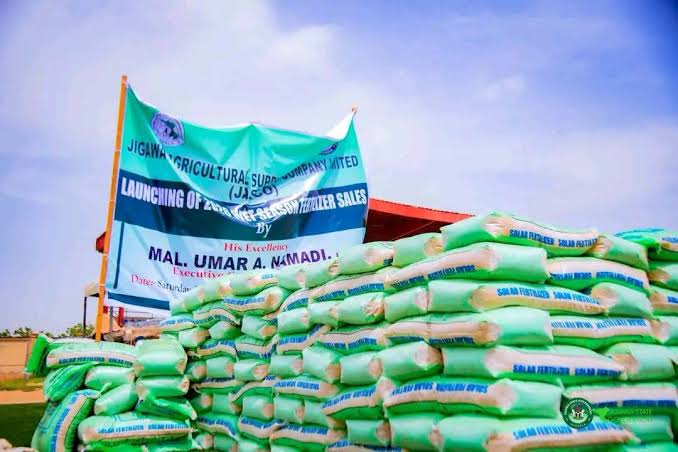
The Federal Government has moved to boost farming activities in Jigawa State by making cheap, subsidised fertiliser available to smallholder farmers,a targeted intervention aimed at raising yields, cushioning the impact of food inflation, and pulling rural households back from the brink of hunger. Officials say the programme is part of a broader national push to make Nigeria self-sufficient in food production, but farmers warn that without sustained supply, timely delivery, and credit support, t
Comments (0)
Leave a comment
All comments are moderated before publishing. Your email is never published.