
Lagos Targets Bigger Slice of ₦16.14trn Food Market with New Infrastructure
Lagos State is ramping up efforts to secure a larger share of Nigeria’s ₦16.14 trillion food market by investing in modern agricultural infrastructure and logistics systems. Central to the plan is the expansion of the Lagos Central Food Security Logistics Hub and other facilities aimed at improving storage, reducing post-harvest losses, and streamlining food distribution. The initiative is expected to boost food security, create jobs, and attract private investment.
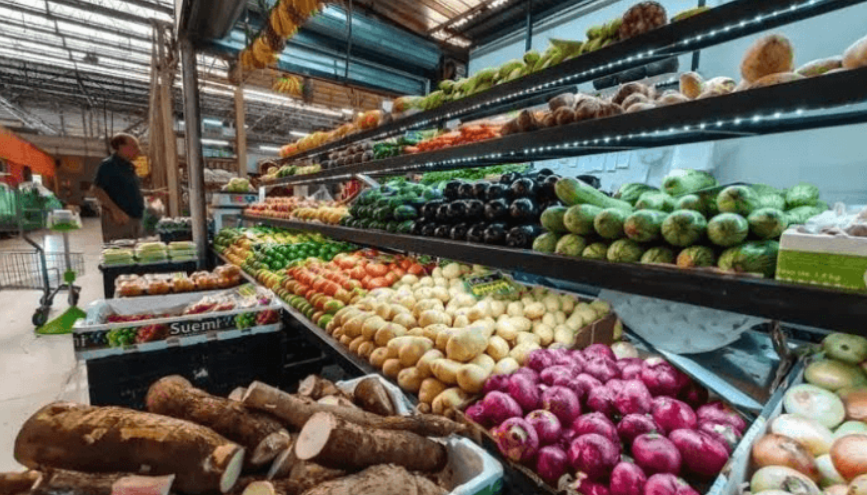
The Lagos State Government is aggressively positioning itself to capture a larger share of Nigeria’s massive ₦16.14 trillion food market by deploying modern agricultural infrastructure, BusinessDay reports.
As the country's most populous economic hub, Lagos consumes a vast majority of the nation's food production but currently relies heavily on inflows from other states. To bridge this gap, reduce supply chain inefficiencies, and lower food costs for its over 20 million residents, the state is scaling up its processing and distribution capabilities.
A central pillar of this strategy is the optimization of the Lagos Central Food Security Logistics Hub in Ketu-Ereyun, Epe, alongside other strategic food hubs across the state. These facilities are designed to store bulk agricultural produce efficiently, drastically cutting down on the post-harvest losses that historically plague Nigerian agriculture.
State officials emphasize that these infrastructural interventions will not only guarantee food security but also formalize food distribution, create thousands of jobs, and stimulate billions in private sector investments by providing farmers with direct, reliable access to an organized market.
Sponsored

Related stories
 Agriculture
FG Supports 4,000 Flood-Affected Ogun Farmers Through NADF
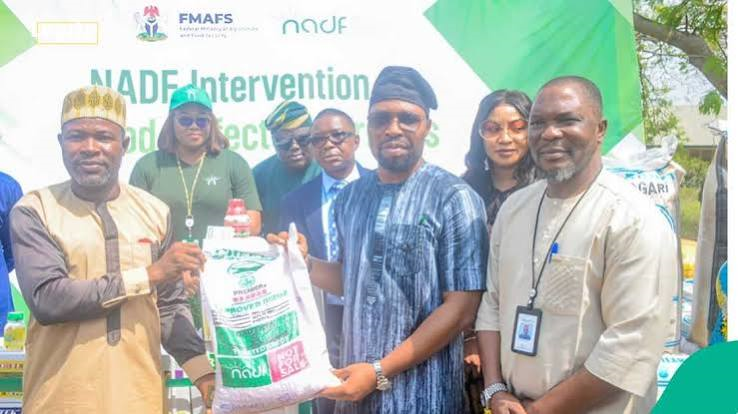
The Federal Government, through the National Agricultural Development Fund (NADF), has launched an emergency agricultural intervention for 4,000 smallholder farmers devastated by the 2026 rainy season floods in Ogun State. With 2,800 maize farmers and 1,200 rice farmers receiving fertilisers, herbicides, and pesticides, the programme is designed to prevent a short-term disaster from becoming a long-term food security crisis, and it comes with a blunt warning: without timely intervention, a disas
 Agriculture
Tinubu Unveils ₦450bn Agricultural Plan Targeting 500,000 Farmers
President Bola Tinubu has committed ₦450 billion to agriculture in a sweeping intervention targeting 500,000 farmers across Nigeria—part of a broader ₦4.7 trillion food security package aimed at tackling hunger, stabilising prices, and weaning the country off food imports. But with food inflation still biting and implementation gaps plaguing past programmes, the question is whether this is the turning point Nigerian farmers have waited for—or another well-funded announcement destined for the she
 Agriculture
Abiodun Deploys 39 Tractors to Boost Mechanised Farming in Ogun
Farmers across Ogun State’s settlements have praised Governor Dapo Abiodun after the government distributed 39 tractors and a suite of modern implements,ploughs, harrows, trailers, grain planters, boom sprayers, cassava planters, and harvesters,at the Cultural Centre, Kuto, Abeokuta. The intervention, part of the World Bank-backed OGSTEP and SAPZ programmes, is designed to end the tyranny of manual labour, accelerate planting after rainfall, and crash food prices. But farmers are already asking
 Agriculture
China’s Smart Farming Revolution Offers Lessons for Nigeria
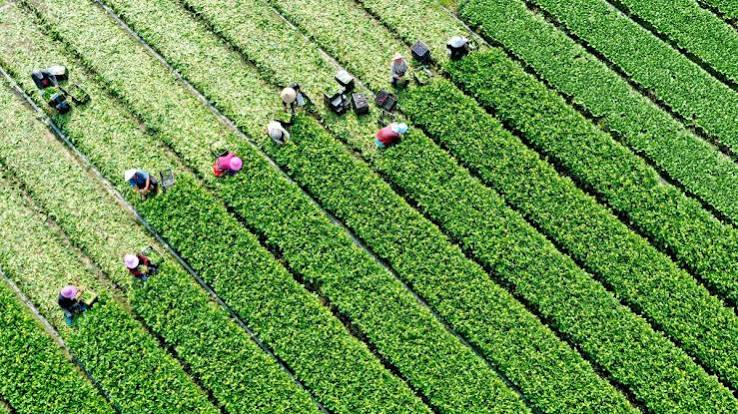
While China’s high-speed trains and skyscrapers dominate headlines, a quieter revolution is unfolding in its fields—one that Nigeria cannot afford to ignore. A visit to Yangling, Shaanxi Province, reveals a farming future built on data-driven greenhouses, spraying drones, and seed research, offering a stark contrast to Nigeria’s vast but underperforming agricultural sector. The lessons are practical, urgent, and within reach—if only the political will exists to act on them.
Comments (0)
Leave a comment
All comments are moderated before publishing. Your email is never published.