
3,256 Women Empowered Under Kogi Rice, Cassava Value Chain Programme, Marks Women Farmer Day
The FGN/IFAD Value Chain Development Programme says 3,256 women across five Kogi LGAs have been supported with inputs, equipment and market access in rice and cassava, as the state marks the 2026 International Year of the Woman Farmer.
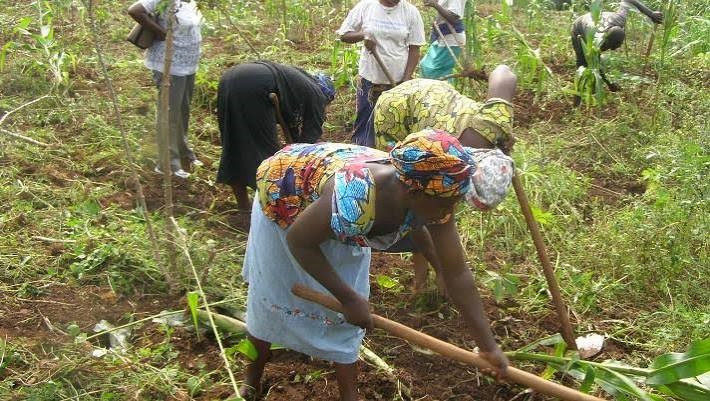
No fewer than 3,256 women across Kogi State have been empowered through the Rice and Cassava Value Chains under the Federal Government/International Fund for Agricultural Development Value Chain Development Programme (FGN/IFAD-VCDP), with beneficiaries gaining access to farm inputs, productive assets, and market linkages.
The disclosure was made by the State Project Coordinator of FGN/IFAD-VCDP Kogi, Stella Adejoh, while speaking at the 2026 International Day of Women Farmers celebration held in Lokoja. The event, themed "Celebrating Women Farmers: Driving Food Security, Inclusive Agri-food Systems and Rural Prosperity," brought together hundreds of women entrepreneurs, producers, processors, and marketers of rice and cassava commodities from across the programme's five benefiting local government areas.
Adejoh described the United Nations' declaration of 2026 as the International Year of the Woman Farmer as a historic recognition of women's indispensable role in agriculture, describing women farmers in Kogi State as the backbone of food security and rural prosperity within the state.
The Lokoja event drew a broad cross-section of stakeholders, including government officials, lawmakers, development partners, traditional and religious leaders, civil society organisations, and representatives of financial institutions, reflecting the scale of interest in the programme's outcomes across the state.
According to Adejoh, women across the five VCDP local government areas of Ajaokuta, Ibaji, Kabba-Bunu, Lokoja, and Olamaboro have progressively moved from subsistence farming toward structured agribusiness activity under the programme. In the rice value chain, she said, women have adopted improved parboiling, milling, packaging, and branding techniques aimed at raising both product quality and household income. In cassava, participating women have similarly moved into producing gari, high-quality cassava flour, and odourless fufu for expanding local and regional markets.
A key driver behind this progress, according to Adejoh, has been the Gender Action Learning System (GALS), a structured approach that promotes household-level dialogue around domestic responsibilities and encourages greater participation by women in decisions concerning agricultural production and income use. She explained that Empowerment Learning Centres established under the programme have further equipped women with practical skills in agribusiness management, financial literacy, nutrition, and broader entrepreneurship.
Beyond direct skills training, Adejoh noted that participating women are increasingly leveraging digital tools to access market information and weather forecasts, while adopting climate-smart agricultural practices such as improved soil and water management, homestead gardening, and crop diversification, measures designed to build greater resilience against climate-related shocks affecting farm output.
"Women are further leveraging digital tools for market information and weather forecasts, and adopting climate-smart practices such as soil and water management, homestead gardening and crop diversification to build resilience," Adejoh said. She added that, through the VCDP, women have also gained access to labour-saving processing equipment, enabling many to transition from small-scale individual production into more organised aggregation and distribution activities within their respective value chains.
The FGN/IFAD Value Chain Development Programme operates across several Nigerian states with support from the International Fund for Agricultural Development, focusing on strengthening rice and cassava value chains by improving smallholder farmers' access to inputs, modern processing techniques, financing, and structured markets. The programme has placed particular emphasis on women's economic empowerment within these value chains, recognising the outsized role women play in agricultural production and processing across much of rural Nigeria, even as they have historically faced disproportionate barriers to accessing finance, equipment, and formal markets compared to their male counterparts.
With 3,256 women already benefiting from the programme's interventions in Kogi State alone, officials at the Lokoja event expressed optimism that continued investment in structured, gender-focused agricultural support could further strengthen food security, expand rural incomes, and deepen women's participation across the state's rice and cassava value chains in the years ahead.
Sponsored

Related stories
 Agriculture
Babalola’s Farmer Support Hits N98m
Legal icon Aare Afe Babalola has disbursed N11.2 million to 81 outstanding farmers across Ekiti State's 16 local government areas, bringing total awards under his annual agricultural scheme since 2015 to N98 million.
 Agriculture
FG Launches African Swine Fever Control Campaign in Southwest
The Federal Government has launched a major African Swine Fever control and biosecurity campaign at the Oke-Aro Pig Farm Estate, distributing protective kits to farmers and pledging comprehensive training to prevent future outbreaks. The intervention by the Livestock Productivity and Resilience Support Project (L-PRES) targets one of Nigeria's largest pig production clusters, which has suffered devastating losses from the highly contagious disease in the past.
 Agriculture
Kyari: More Farmland Won’t Feed 400 Million Nigerians
Agriculture Minister Abubakar Kyari says Nigeria must treat agricultural extension as critical infrastructure, disclosing that over 100,000 farmers already receive weekly digital advisories as the country's population heads toward 400 million by 2050.
 Agriculture
Farmland Expansion Alone Won’t Feed Nigeria
Agriculture Minister Abubakar Kyari says Nigeria must shift to demand-driven, AI-enabled agricultural extension services to boost farm yields, warning that expanding farmland alone can no longer feed the country's growing population.
Comments (0)
Leave a comment
All comments are moderated before publishing. Your email is never published.