
Health Insurance Enrolment Rises but Coverage Gap Persists
Nigeria’s health insurance enrolment has climbed to 22.03 million by July 2026, a 35 per cent year-on-year rise, yet millions remain uncovered and exposed to high out-of-pocket costs, with structural barriers slowing the march to universal health coverage

Nigeria’s health insurance enrolment has risen sharply to more than 22 million, but the country still faces a significant coverage gap as millions of Nigerians remain exposed to rising out-of-pocket healthcare costs.
The National Health Insurance Authority (NHIA) said enrolment had reached 22.03 million by July 2026, representing a 35 per cent year-on-year increase as the government quickens implementation of mandatory health insurance under the NHIA Act.
The growth reflects increased participation in federal and state-backed health insurance programmes, with state social health insurance agencies emerging as major drivers of coverage.
Data from the NHIA’s fourth-quarter 2025 dashboard showed that state schemes accounted for 9.74 million beneficiaries, compared with 7.07 million under NHIA-managed programmes.
However, the expansion remains insufficient relative to Nigeria’s population, leaving a large proportion of citizens without health insurance and vulnerable to medical expenses.
The challenge is particularly significant for low-income households and workers in the informal sector, many of whom rely on direct payments when they require medical treatment.
Recent analysis links the heavy reliance on out-of-pocket spending to the risk of catastrophic health expenditure, with calls for wider insurance coverage, particularly among vulnerable and informal-sector populations.
The NHIA Act, signed into law in 2022, replaced the former National Health Insurance Scheme and established a framework for expanding health insurance coverage to all Nigerians and legal residents.
The Authority operates programmes covering formal-sector workers, organised private-sector employees, vulnerable groups and other categories, while state social health insurance agencies provide additional coverage at the sub-national level.
The NHIA says state schemes are expected to establish equity funds to extend insurance protection to poor and vulnerable residents.
Industry stakeholders, however, say increasing enrolment alone will not be enough to achieve universal health coverage.
The Managing Director/Chief Executive Officer of SUNU Health Nigeria Limited, Dr Moyosore Olomola, said the country’s slow pace of health insurance expansion was driven more by structural challenges than a lack of public interest.
“The obstacles are structural, not attitudinal, and I want to push back on the narrative that Nigerians simply do not value health insurance. The evidence does not support that. What we see at SUNU Health is that when the product is accessible, affordable and claims are settled promptly, people enrol and they renew,” he said.
Olomola stressed that while the NHIA deserved credit for reforms aimed at expanding coverage, significant barriers still stood in the way of achieving universal health coverage.
According to him, income volatility, inadequate provider networks and low public trust remain the biggest obstacles to wider enrolment.
“The first and most stubborn obstacle is income volatility. Approximately 80 per cent of Nigeria’s working population earns income that is irregular, seasonal or cash-based. A premium structure that demands monthly or annual upfront payment simply does not fit that reality,” Olomola said.
He called for flexible premium collection mechanisms, greater investment in provider networks in underserved states and stronger accountability measures for both HMOs and healthcare providers to accelerate enrolment and support Nigeria’s drive towards universal health coverage.
With millions still paying out of pocket for treatment, bridging the coverage gap will require not only expanding enrolment but also adapting premium structures to informal incomes, strengthening provider networks in underserved areas and building public trust in the system.
Sponsored
Related stories
 Health
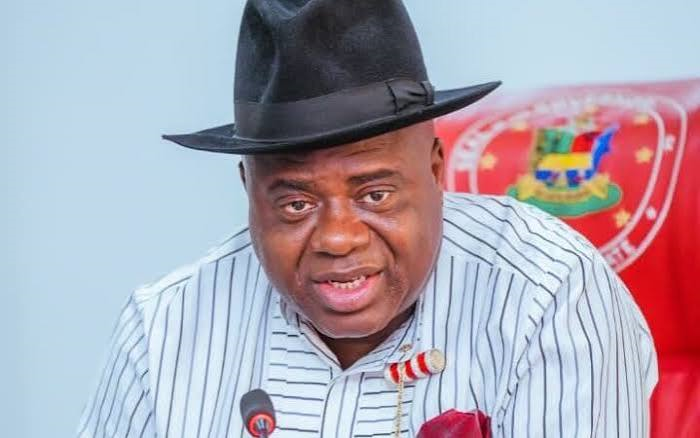
Diri Orders Free Quarterly Health Checks for All Bayelsa Residents at Secondary Facilities
Governor Douye Diri has directed Bayelsa's Ministry of Health to begin free quarterly medical check-ups across all eight local government areas, aimed at helping residents who cannot afford routine screening and promoting early detection of diseases.
 Health
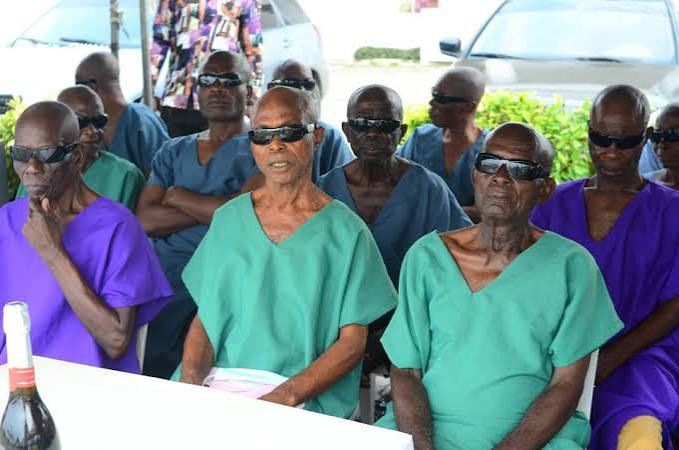
‘Priceless Gift of Sight’ Reaches 400,000 Beneficiaries
FCMB and the Tulsi Chanrai Foundation say their 15-year eye care partnership has reached over 400,000 Nigerians, as a World Sight Day roundtable in Abuja pushes for private-sector funding to sustain and expand care.
 Health
FUNAAB Launches Africa’s First AI Disease Surveillance System
Researchers at the Federal University of Agriculture, Abeokuta, have developed IDS-Master, a groundbreaking AI-powered surveillance system that detects infectious disease outbreaks in real time by analysing reports from community leaders, health agents, and ordinary residents. Described as Africa's first fully AI-driven event-based surveillance platform, the innovation promises to bridge critical gaps in outbreak detection across underserved rural communities where delays in reporting can cost l
 Health
NAFDAC Seeks Global Partners for Local Vaccine Production
The Director-General of the National Agency for Food and Drug Administration and Control (NAFDAC), Prof. Mojisola Adeyeye, has called on international partners to support the establishment of vaccine manufacturing facilities in Nigeria, saying local production is the missing link in the agency’s push to attain World Health Organisation Maturity Level 4 for vaccine lot release. She spoke at the 8th Nigeria Pharma Manufacturers’ Expo in Lagos, where she commended President Bola Tinubu’s Executive
Comments (0)
Leave a comment
All comments are moderated before publishing. Your email is never published.