
BATN Foundation Plants 22,000 Economic Trees Across Kano, Jigawa to Boost Rural Incomes
The British American Tobacco Nigeria Foundation has launched a 22,000-tree afforestation project spanning 11 local government areas in Kano and Jigawa, pairing environmental restoration with income-generating fruit and cash-crop species for rural households.
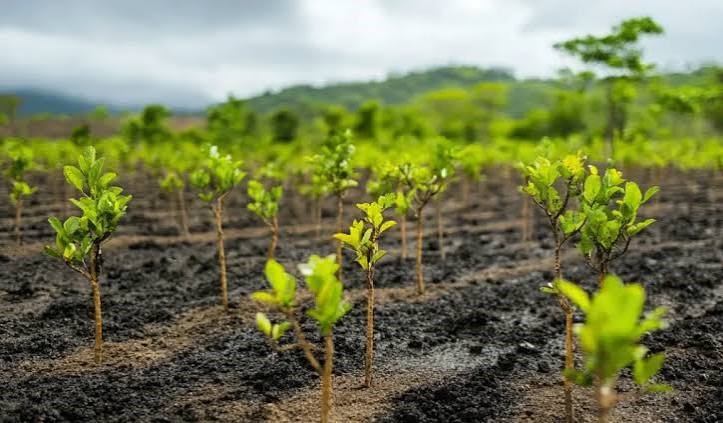
The British American Tobacco Nigeria (BATN) Foundation has launched a 22,000-tree afforestation project across 11 local government areas in Kano and Jigawa States, deliberately combining environmental restoration with income generation for rural households across Nigeria's North-West.
Implemented in partnership with the Federal College of Agricultural Produce Technology (FCAPT) and Green Legacy, the initiative focuses on high-value tree species, including date palm, mango, guava, tamarind, baobab, and neem, selected specifically for their dual capacity to restore degraded land while delivering cash crops, fruit, and other marketable products to communities over the coming decades.
Speaking on the initiative, BATN Foundation Board Director Mrs Ruth Owojaiye framed the project as a practical response to climate pressures that are already eroding soil fertility and farm output across the region. "This project is not just about planting trees. It is about planting hope, restoring our environment, strengthening rural livelihoods and reaffirming our shared responsibility to protect the future of our communities," she said. She noted that the BATN Foundation has channelled more than ₦4 billion into agricultural and rural development initiatives over the past two decades, reaching approximately 1.7 million beneficiaries through more than 300 separate projects.
Also speaking at the launch, Alhaji Nasiru Wada, Magajin Garin Kano and fellow BATN Foundation Board Director, described the newly planted trees as a long-term asset class capable of delivering returns well beyond their immediate environmental benefit. "A tree is an unusual kind of investment. It returns value quietly for decades through cleaner air, stronger soil, food, shade and income," he said, urging participating communities to treat the plantings as a form of equity that will compound in value for future generations.
Technical lead for the project, Dr Tayo Oni of FCAPT, confirmed that seedling distribution and transplanting activities are already under way across the target local government areas. To support the project's long-term sustainability, the initiative includes the training of 22 Community Forest Ambassadors, tasked specifically with monitoring tree growth, sensitising local communities, and helping ensure high survival rates so that the anticipated economic returns eventually materialise. FCAPT itself contributed an additional 2,000 seedlings toward the project, with the college's Provost, Dr Salisu Salisu, projecting a minimum 95 per cent survival rate for the plantings, contingent on sustained community engagement and care.
Kano State's Director of Monitoring and Evaluation, Abbas Iliyasu Karaye, welcomed the private-sector-led intervention, describing it as fully aligned with the state's broader priorities linking climate resilience to economic empowerment. He indicated that the project's early reception within participating communities has already prompted state authorities to consider expanded afforestation funding within the 2027 budget framework, suggesting the initiative could see continued government backing going forward.
By converting degraded land into productive orchard and agroforestry systems, the programme positions participating rural households to capture new revenue streams from the sale of fruit and other tree-derived products, while simultaneously reducing their exposure to desertification and declining agricultural yields, challenges that have grown increasingly severe across Nigeria's North-West in recent years due to climate change, land degradation, and unsustainable farming practices.
The project adds to a broader pattern of private-sector-driven afforestation and rural development interventions across Northern Nigeria, as organisations increasingly look to combine environmental restoration efforts with tangible economic incentives for local communities, an approach proponents argue is more likely to secure long-term community buy-in and sustained tree survival than environmental interventions focused on conservation alone.
For BATN Foundation, the 22,000-tree rollout represents its latest contribution to a two-decade track record of agricultural and rural development investment across Nigeria, with officials expressing confidence that the project's dual environmental and economic design will help ensure its lasting impact across the participating communities in Kano and Jigawa States.
Sponsored

Related stories
 Agriculture
Babalola’s Farmer Support Hits N98m
Legal icon Aare Afe Babalola has disbursed N11.2 million to 81 outstanding farmers across Ekiti State's 16 local government areas, bringing total awards under his annual agricultural scheme since 2015 to N98 million.
 Agriculture
FG Launches African Swine Fever Control Campaign in Southwest
The Federal Government has launched a major African Swine Fever control and biosecurity campaign at the Oke-Aro Pig Farm Estate, distributing protective kits to farmers and pledging comprehensive training to prevent future outbreaks. The intervention by the Livestock Productivity and Resilience Support Project (L-PRES) targets one of Nigeria's largest pig production clusters, which has suffered devastating losses from the highly contagious disease in the past.
 Agriculture
Kyari: More Farmland Won’t Feed 400 Million Nigerians
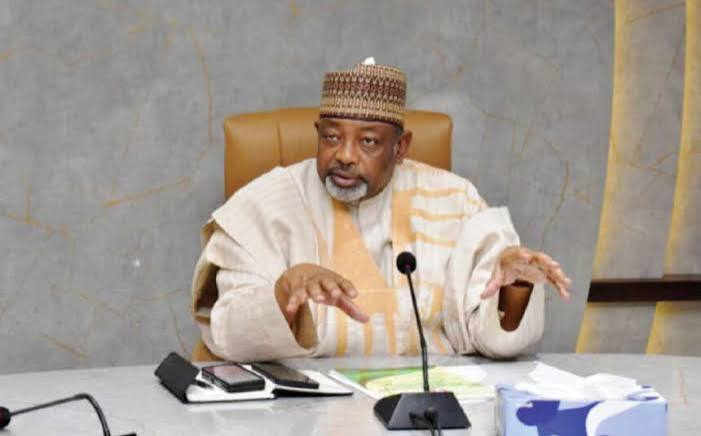
Agriculture Minister Abubakar Kyari says Nigeria must treat agricultural extension as critical infrastructure, disclosing that over 100,000 farmers already receive weekly digital advisories as the country's population heads toward 400 million by 2050.
 Agriculture
Farmland Expansion Alone Won’t Feed Nigeria
Agriculture Minister Abubakar Kyari says Nigeria must shift to demand-driven, AI-enabled agricultural extension services to boost farm yields, warning that expanding farmland alone can no longer feed the country's growing population.
Comments (0)
Leave a comment
All comments are moderated before publishing. Your email is never published.