
Infrastructure Gaps Threaten Africa's Ambitions in Global AI Race, Experts Warn
Electric has warned that Africa’s artificial intelligence expansion could be stifled by grid instability, advising firms to invest in smaller, energy-efficient modular data hubs instead.

Africa’s aspirations to establish itself as a heavyweight in the global artificial intelligence market could be derailed by chronic electricity shortages and deficient infrastructure, a leading technology firm has warned.
The caution arrives at a time when private investors and continental governments are funnelling substantial capital into digital advancement, even as grid instability and rolling blackouts continue to plague long-term technology initiatives across the region.
Addressing delegates at the IDC CIO Summit in Sandton, Johannesburg, Steven Santini, Vice President for Secure Power in Sub-Saharan Africa at Schneider Electric, acknowledged that international technology giants are increasingly viewing Africa as a major growth market for AI. However, he stressed that severe infrastructural deficits could act as a bottleneck to widespread adoption if left unaddressed.
"The fundamental question is whether Africa is genuinely prepared," Santini remarked, noting that whilst countries like South Africa, Kenya, and Nigeria are seeing a significant uptick in data centre construction, power availability remains the ultimate hurdle.
Santini explained that electricity supply is the single greatest barrier to expanding artificial intelligence infrastructure. This is particularly true for high-density data processing facilities, which demand massive, uninterrupted electrical currents. He noted that in other parts of the world, certain AI projects now consume as much energy as entire municipalities.
Given these constraints, Santini advised against focusing solely on gargantuan "hyperscale" data centres. Instead, he argued that Africa’s AI evolution will rely heavily on smaller, localized computing hubs designed to operate within the continent’s existing energy limits.
Modern AI systems are progressively being rolled out using modular architectures, such as prefabricated equipment units, containerised data networks, and compact server nodes integrated directly into commercial and industrial locations.
"When people discuss artificial intelligence, the mind often jumps to sprawling, industrial-scale data centres. Yet AI takes many different shapes," Santini observed. He suggested that these compact, distributed systems are far more viable for key African sectors, including commercial banking, mining, and agriculture.
These agile, smaller setups allow firms to utilise their current electrical and cooling systems, dramatically reducing the financial burden and logistical headaches of installation.
Beyond the issue of grid capacity, Santini identified telecommunications connectivity as another critical factor in determining the success of the continent's digital pivot, stating that an isolated data hub lacking reliable network access is essentially little more than an expensive paperweight.
To navigate these power-starved environments, he highlighted the growing necessity of specialized, software-driven energy management platforms to optimize efficiency, a crucial asset in a region where energy deficits are a daily reality.
Ultimately, Santini concluded that Africa's digital success will depend on more than just physical infrastructure. Businesses must establish precise commercial objectives and outcomes first, subsequently aligning their computing, cooling, storage, and networking technologies to meet those specific goals.
Sponsored

Related stories
 Tech & Education
African Universities Urged to Rethink Teaching in AI Era
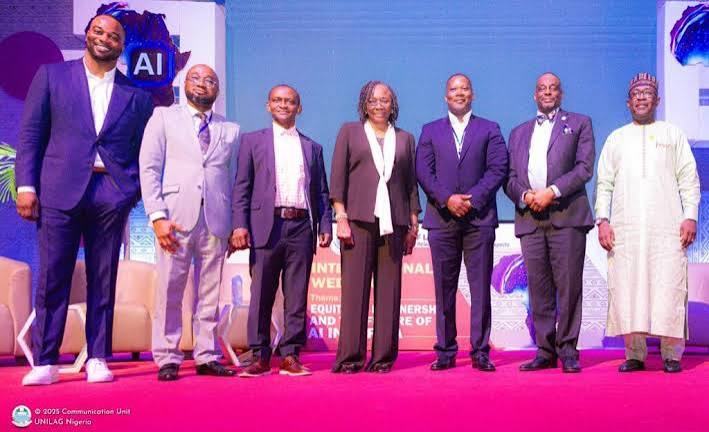
At UNILAG's International Week, leaders from the University of Ghana, UNILAG and UNDP argued that AI makes memorisation-based teaching obsolete and urged universities to reform curricula, assessment and incentives to reward critical thinking and innovation.
 Tech & Education
Otti’s Wife Supports 1,000 Abia Pupils With School Materials
The wife of the Abia State Governor, Mrs. Priscilla Otti, has distributed back-to-school materials to 1,000 indigent pupils from 50 public schools across the state's 17 local government areas, declaring that a child's background should never be a barrier to greatness. The intervention, organised by the Safe Tent Care Initiative in collaboration with the Abia State Universal Basic Education Board, is designed to support families struggling to provide essential educational materials for their chil
 Tech & Education
AI Era: Experts Warn Nigerian Graduates Face Skills Gap
Education experts have warned that Nigerian universities risk producing graduates who are ill-prepared for an AI-driven global job market unless curricula are urgently overhauled. At the StudyIn Global Study Conference 2026 in Lagos, stakeholders called for proactive curriculum reform, ethical AI adoption, and a shift from producing AI users to nurturing AI innovators who can solve real-world problems.
 Tech & Education
YABATECH, Threatremeter Launch Filmmaking Centre
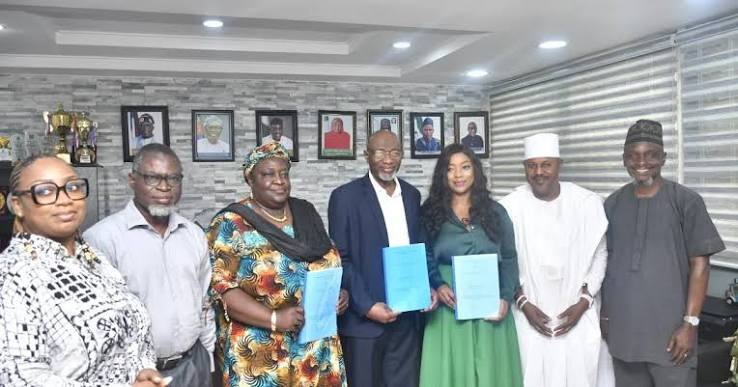
Yaba College of Technology has signed a partnership with Threatremeter Nigeria Limited to establish a Centre for Filmmaking and Production, offering certified training in acting, directing and film production for students and the public.
Comments (0)
Leave a comment
All comments are moderated before publishing. Your email is never published.