
How We’ll Prevent Governors From Abusing State Police — Senate
The Senate has outlined safeguards in the State Police Bill to prevent governors from abusing policing powers, including federal oversight, judicial review, and restrictions on politically motivated enforcement actions.
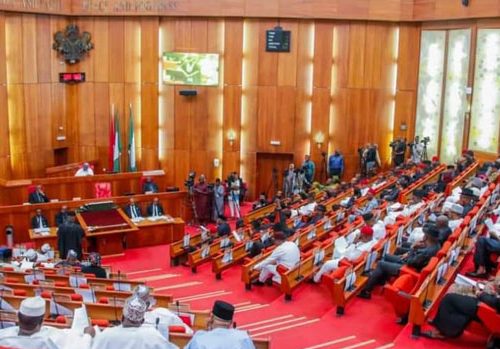
The Senate has explained measures built into the proposed State Police Bill to prevent state governors from abusing the powers of decentralised policing as lawmakers continue efforts to reform Nigeria’s security architecture.
Senate Leader, Senator Opeyemi Bamidele, disclosed the safeguards on Wednesday while leading debate on the Constitution of the Federal Republic of Nigeria Alteration (State Police) Bill, 2026.
The bill was passed by the Senate after extensive deliberations and a manual voting process in which more than two-thirds of senators voted in support of the constitutional amendment.
The legislation now awaits consideration by the House of Representatives, presidential assent, and approval by a majority of state Houses of Assembly before it can become law.
According to a statement issued by Bamidele’s office, the proposed amendment seeks to establish state police services while retaining the Nigeria Police Force for federal responsibilities.
He stressed that the framework was deliberately designed to prevent governors from using state police for partisan, ethnic, religious, sectional, or personal interests.
“The bill is intended to retain the Nigeria Police Force for federal policing duties while providing for the establishment of state police services in states that choose to adopt them,” Bamidele stated.
Under the proposal, state police services will be responsible for enforcing state laws, maintaining public safety and order, preventing and detecting crimes within their jurisdictions, and protecting lives and property.
Meanwhile, the federal police will continue to handle national security matters, including terrorism, cybercrime, organised crime, border security, arms trafficking, interstate criminal activities, and the protection of federal institutions.
Bamidele explained that federal intervention in state policing matters would only be permitted under specific conditions, including a breakdown of public order, inability of a state police service to function effectively, serious violations of fundamental rights, electoral intimidation, or threats to national security.
He added that any federal intervention must be authorised in writing by the President and Commander-in-Chief and would be limited in scope and duration.
Such intervention would also be subject to Senate oversight and open to judicial review.
“The bill provides robust safeguards against abuse, preserves federal authority where necessary, protects constitutional rights, and creates a modern policing framework capable of addressing contemporary security challenges,” he said.
Several senators, including Enyinnaya Abaribe, Aminu Tambuwal, and Tahir Monguno, supported the bill, describing state police as a necessary response to Nigeria’s growing security challenges
Related stories
 News
News
2027: Peter Obi Unveils Vision for Education, Industrialisation, National Unity
The 2027 presidential candidate of the Nigeria Democratic Congress (NDC), Peter Obi, has unveiled a vision focused on transforming education, driving industrialisation, and strengthening national unity.
 News
News
Nigerian Army Declares 104 Soldiers Missing, Says They Absconded, Are Deserters
The Nigerian Army has officially declared 104 of its personnel missing, describing them as deserters who allegedly absconded from their duty posts without authorisation
 News
News
Oyo Schools to Reopen Thursday as NUT Suspends Strike
The Nigeria Union of Teachers (NUT), Oyo State Chapter, has suspended its ongoing strike action, paving the way for the reopening of public schools across the state on Thursday, July 2, 2026
 News
News
Natasha Commends Air Peace Over Evacuation of 533 Nigerians from South Africa
Kogi Central Senator, Natasha Akpoti-Uduaghan, has commended Air Peace and its Chairman, Chief Allen Onyema, for successfully evacuating 533 Nigerians stranded in South Africa amid the ongoing migrants crisis.
Comments (0)
Leave a comment
All comments are moderated before publishing. Your email is never published.