
FSL Launches Commodity Fund to Boost Agric Investment
FSL Asset Management has launched an SEC-regulated Commodity Fund to channel non-bank capital into Nigeria’s agricultural value chain, offering investors exposure to securitised agri-contracts, commercial papers and exchange-traded commodities.
FSL Asset Management has officially launched its Commodity Fund, a strategic investment vehicle designed to channel non-bank capital into Nigeria’s agricultural ecosystem while offering retail and institutional investors regulated exposure to high-yield commodity instruments.
Operating as an open-ended unit trust scheme under Securities and Exchange Commission (SEC) guidelines, the fund focuses primarily on securitised agricultural contracts, commercial papers issued by leading agri-firms, and exchange-traded commodities listed on registered platforms such as the AFEX Commodities Exchange and the Lagos Commodities Exchange.
The fund requires a minimum initial subscription of N5 million for high-net-worth individuals and qualified institutional investors, with a minimum holding period of 90 days.
At the launch, FSL management outlined the firm’s strategy to bridge the multi-billion-naira funding gap facing agribusinesses across the country, noting that agriculture accounts for roughly 25 to 30 per cent of Nigeria’s GDP yet continues to face severe capital constraints.
Odukoya, speaking on behalf of the management team, said the fund was developed to solve two major market challenges: providing cheaper, flexible patient capital for agricultural production and processing, and protecting everyday investors from unregulated, high-risk commodity schemes that have proliferated in recent years.
He said: “With this commodities fund, we are creating a transparent, SEC-regulated gateway that allows investors to earn competitive real returns from high-growth agricultural assets while providing much-needed, lower-cost financing to legitimate operators across the agricultural value chain.”
The initiative aligns with broader efforts to deepen agricultural financing through structured products, commodity exchanges and institutional investment, as Nigeria seeks to boost food security, reduce import dependence and attract more private capital into the sector.
By offering a regulated alternative to informal commodity investment schemes, the FSL Commodity Fund aims to improve investor confidence, enhance transparency and support the growth of credible agribusinesses with access to affordable working capital and expansion finance.
Sponsored

Related stories
 Agriculture
FG Launches Jigawa Fertiliser Support to Boost Farming, Curb Food Inflation
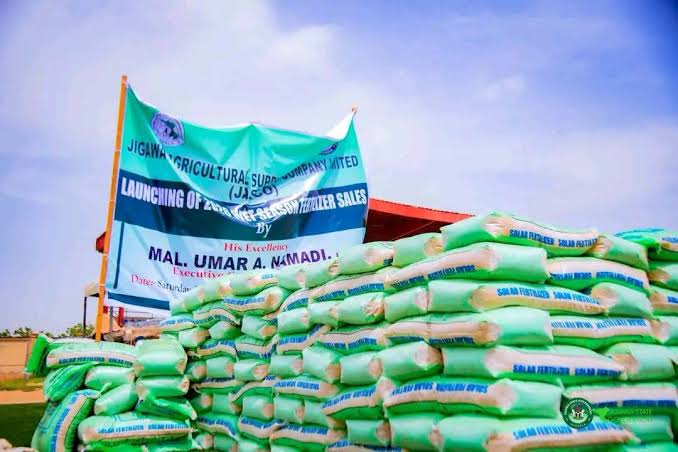
The Federal Government has moved to boost farming activities in Jigawa State by making cheap, subsidised fertiliser available to smallholder farmers,a targeted intervention aimed at raising yields, cushioning the impact of food inflation, and pulling rural households back from the brink of hunger. Officials say the programme is part of a broader national push to make Nigeria self-sufficient in food production, but farmers warn that without sustained supply, timely delivery, and credit support, t
 Agriculture
Poor Harvest May Worsen Nigeria's Food Crisis, AFAN Warns
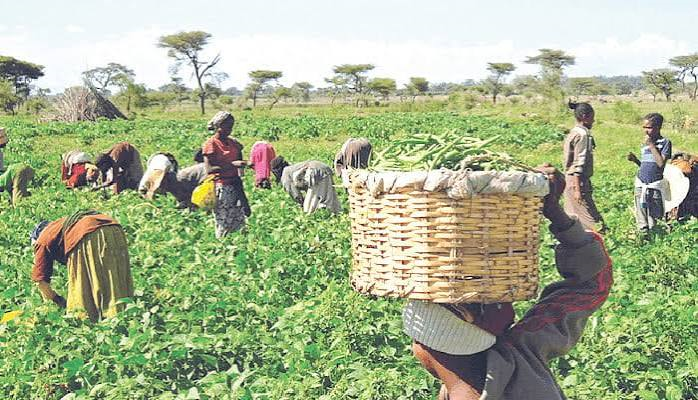
The All Farmers Association of Nigeria has warned that poor harvests caused by devastating floods, insecurity and farmer displacement could plunge the country into a severe food crisis, with millions facing famine-like conditions in early 2027. AFAN President Kabir Ibrahim says the situation could mirror the 2024 hardship protests unless urgent interventions are made to support farmers and stabilise food production.
 Agriculture
Abakaliki Rice Mill: Ebonyi’s N171bn Neglected Goldmine
Nigeria's largest rice mill, operating since 1967, processes 132,000 tonnes of rice annually—worth over N171 billion—yet operates without power, safe working conditions, or good roads. As the state's entire IGR sits at just N17.18 billion, analysts ask how a facility generating ten times that amount has been allowed to decay into a "prostrate goldmine."
 Agriculture
Seaweed Could Transform Nigeria’s Agricultural Energy Sector
SMEFUNDS CEO Dr. Femi Oye advocates for seaweed as a renewable energy source to power Nigeria’s food production, offering a circular solution for farmers and small businesses.
Comments (0)
Leave a comment
All comments are moderated before publishing. Your email is never published.