
Firm Seeks Greater Investment in Africa’s Agricultural Value Chains
Davidorlah Nigeria Limited is urging stronger investment in Africa’s agricultural value chains, arguing that strategic financing, infrastructure and value-added processing are essential for food security, jobs and long-term agribusiness growth.

Davidorlah Nigeria Limited is calling for much greater investment in Africa’s agricultural value chains, warning that the continent cannot unlock the full potential of agriculture without stronger financing and infrastructure. The company argues that Africa’s food systems need more than farm-level support; they need capital, logistics, storage, processing and market access to make production truly profitable.
The firm’s position is important because agricultural value chains cover everything from inputs and cultivation to harvesting, transport, processing, packaging and distribution. When any one of those stages is weak, farmers earn less, food gets wasted and consumers pay more. The company’s call suggests that Africa must start treating agriculture as an integrated business ecosystem rather than as isolated farming activity.
Strategic financing is one of the biggest issues raised in the report. Many agribusinesses in Africa struggle to raise money for expansion, especially small and medium-sized enterprises that sit between primary producers and major processors or exporters. Without accessible capital, it becomes difficult to upgrade equipment, buy raw materials in bulk, expand warehouses or improve transport systems.
Infrastructure is the second major concern. Roads, storage facilities, cold chains, processing plants and reliable power all determine whether agricultural products can move efficiently from farm to market. In many parts of Africa, weak infrastructure raises costs and causes losses after harvest, which reduces profitability across the entire chain.
The company’s message also has a food-security dimension. If agricultural value chains are stronger, countries can reduce import dependence, improve food availability and create more stable supply systems. That is especially relevant in a region where population growth, climate pressure and market instability are all increasing the strain on food systems.
Jobs are another major part of the investment case. Stronger value chains create work not only for farmers, but also for transporters, processors, traders, warehouse operators, packaging firms and exporters. That means investment in agriculture can generate a wider economic ripple effect than many other sectors because it touches both rural and urban livelihoods.
The argument fits a wider continental conversation about agricultural transformation. Africa’s agriculture sector is increasingly being viewed as investable across the full value chain, especially as governments and development institutions look for ways to turn demographic growth into productive employment. In that context, Davidorlah’s call reflects a broader push to attract private capital into agrifood systems.
There is also growing interest in catalytic financing models that support agribusinesses and agri-SMEs rather than only large industrial players. These models are designed to bridge the funding gap, encourage innovation and help promising businesses grow into stronger links in the food economy. The overall idea is that smart investment can improve livelihoods while also making food systems more climate-resilient and commercially viable.
The firm’s call is timely because many African countries are trying to reduce the gap between what farmers produce and what markets actually need. More investment in value chains could help turn agriculture into a more reliable engine of growth, especially if it is paired with policy reforms, better infrastructure and stronger technical support.
In short, Davidorlah Nigeria Limited is pushing for a shift in thinking: from agriculture as subsistence to agriculture as a structured investment opportunity. If governments, financiers and private investors respond, the result could be stronger food systems, more jobs and greater economic resilience across Africa.
Sponsored

Related stories
 Agriculture
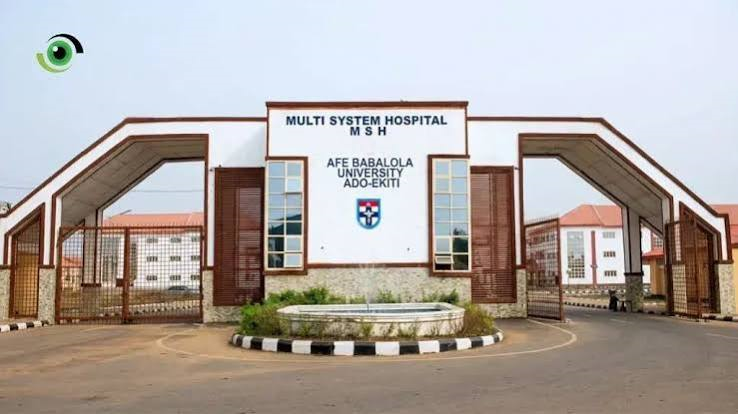
Babalola’s Farmer Support Hits N98m
Legal icon Aare Afe Babalola has disbursed N11.2 million to 81 outstanding farmers across Ekiti State's 16 local government areas, bringing total awards under his annual agricultural scheme since 2015 to N98 million.
 Agriculture
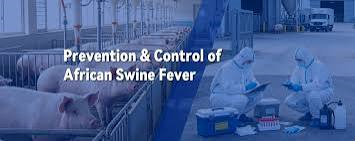
FG Launches African Swine Fever Control Campaign in Southwest
The Federal Government has launched a major African Swine Fever control and biosecurity campaign at the Oke-Aro Pig Farm Estate, distributing protective kits to farmers and pledging comprehensive training to prevent future outbreaks. The intervention by the Livestock Productivity and Resilience Support Project (L-PRES) targets one of Nigeria's largest pig production clusters, which has suffered devastating losses from the highly contagious disease in the past.
 Agriculture
Kyari: More Farmland Won’t Feed 400 Million Nigerians
Agriculture Minister Abubakar Kyari says Nigeria must treat agricultural extension as critical infrastructure, disclosing that over 100,000 farmers already receive weekly digital advisories as the country's population heads toward 400 million by 2050.
 Agriculture
Farmland Expansion Alone Won’t Feed Nigeria
Agriculture Minister Abubakar Kyari says Nigeria must shift to demand-driven, AI-enabled agricultural extension services to boost farm yields, warning that expanding farmland alone can no longer feed the country's growing population.
Comments (0)
Leave a comment
All comments are moderated before publishing. Your email is never published.