
FG Receives Final Report on $500m AGROW Programme as Implementation Begins
Vice President Kashim Shettima has received the final report on the World Bank-backed $500 million Sustainable Agricultural Value Chains for Growth Programme, known as AGROW, signaling the end of the design phase and the start of nationwide implementation to boost productivity, private investment and food security
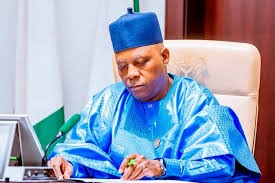
The federal government has officially moved the $500 million AGROW programme from planning into action after receiving the final report from the National Technical Working Group. Vice President Kashim Shettima’s receipt of the report marks the close of the design stage and the beginning of rollout across participating states, with the programme intended to transform Nigeria’s agricultural value chains in a more coordinated and commercially viable way.
AGROW is backed by the World Bank and structured as a six-year project running from 2026 to 2032. The programme is designed to strengthen smallholder productivity, improve market linkages, create jobs and lift food and nutrition security, while also drawing in additional private investment into agribusiness. Reports indicate that the initiative could mobilise about $220 million in private-sector financing on top of the World Bank credit.
At the core of the project is a push to move agriculture away from subsistence farming and toward a more modern, market-driven system. The plan includes support for aggregation, post-harvest handling, agro-processing and improved access to markets, especially for key crops such as rice, maize, cassava and soybeans. It also aims to improve access to quality inputs, including climate-resilient seeds and fertiliser, while strengthening research, extension services and digital advisory systems for farmers.
One of the project’s major features is the creation of a national digital farm and farmer registry. That registry is meant to improve targeting, transparency and coordination, so that support reaches the right farmers and value-chain actors more efficiently. The programme also includes mechanisms for monitoring, citizen engagement and coordination, with a stated emphasis on women and youth inclusion.
According to the World Bank, the AGROW project could benefit up to one million smallholder farmers nationwide. The bank says the goal is not just to increase yields, but also to strengthen resilience to climate shocks and expand food security in a sustainable way. In practical terms, that means better yields, more reliable farm incomes and stronger links between production and markets.
The project comes at a time when Nigeria is under pressure to improve domestic food supply and reduce the vulnerability of farmers to climate and market shocks. Agriculture remains the country’s largest employer, yet productivity is still low because of weak input systems, limited access to finance, poor market access and fragmented support structures. AGROW is intended to address those bottlenecks by combining public policy, donor financing and private-sector participation in one framework.
For the federal government, the programme also has a broader economic significance. By improving value addition and commercial linkages, AGROW is expected to support rural jobs, encourage agribusiness expansion and make farming more attractive to younger Nigerians. If implementation is effective, the programme could become one of the country’s more important agricultural interventions in recent years, especially because it ties farmer support to measurable outcomes and private investment rather than short-term relief alone.
Sponsored
Related stories
 Agriculture
Babalola’s Farmer Support Hits N98m
Legal icon Aare Afe Babalola has disbursed N11.2 million to 81 outstanding farmers across Ekiti State's 16 local government areas, bringing total awards under his annual agricultural scheme since 2015 to N98 million.
 Agriculture
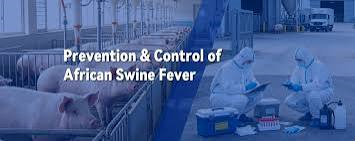
FG Launches African Swine Fever Control Campaign in Southwest
The Federal Government has launched a major African Swine Fever control and biosecurity campaign at the Oke-Aro Pig Farm Estate, distributing protective kits to farmers and pledging comprehensive training to prevent future outbreaks. The intervention by the Livestock Productivity and Resilience Support Project (L-PRES) targets one of Nigeria's largest pig production clusters, which has suffered devastating losses from the highly contagious disease in the past.
 Agriculture
Kyari: More Farmland Won’t Feed 400 Million Nigerians
Agriculture Minister Abubakar Kyari says Nigeria must treat agricultural extension as critical infrastructure, disclosing that over 100,000 farmers already receive weekly digital advisories as the country's population heads toward 400 million by 2050.
 Agriculture
Farmland Expansion Alone Won’t Feed Nigeria
Agriculture Minister Abubakar Kyari says Nigeria must shift to demand-driven, AI-enabled agricultural extension services to boost farm yields, warning that expanding farmland alone can no longer feed the country's growing population.
Comments (0)
Leave a comment
All comments are moderated before publishing. Your email is never published.