
FG, Heifer International Partner to Empower Nigerian Youth in Agritech for Food Security
The Federal Government has partnered with Heifer International to train and empower 50,000 young Nigerians in agritech, aiming to boost food production, create jobs, and reduce youth unemployment.

Federal Government has entered into a major partnership with Heifer International to empower young Nigerians with modern agritech skills, as part of a broader strategy to tackle food insecurity, reduce youth unemployment, and build a new generation of technology-driven farmers and agribusiness entrepreneurs.
The collaboration, formally sealed on Monday, July 20, 2026, brings together the Federal Ministry of Agriculture and Food Security, the Ministry of Youth Development, and Heifer International, a global development organisation with decades of experience in sustainable agriculture and livestock programmes across Africa.
Announcing the partnership at a high-level stakeholders’ meeting in Abuja, the Minister of Agriculture and Food Security, **Senator Abubakar Kyari**, described the initiative as “a strategic response to the twin challenges of youth unemployment and declining agricultural productivity.” He said the programme will focus on equipping young people with practical skills in precision farming, digital agriculture, value chain development, and climate-smart practices.
“This partnership is not just about giving young people jobs — it is about positioning them as the drivers of Nigeria’s agricultural transformation,” Senator Kyari stated. “With the right training, access to technology, and market linkages, our youth can move from being consumers to becoming producers and innovators in the food system.”
According to details released by both parties, the programme will target 50,000 young Nigerians, with a strong emphasis on women and persons with disabilities, over the next three years. Participants will receive comprehensive training in modern agritech tools, including drone technology for farm monitoring, sensor-based irrigation systems, data analytics for crop management, and digital platforms for market access and financial services.
Heifer International’s Country Director for Nigeria, **Dr. Adeola Osinubi**, said the organisation brings proven models of community-owned agricultural enterprises that have successfully lifted thousands of families out of poverty in other African countries. “Our approach combines skills development with asset transfer and strong market linkages,” she explained. “We don’t just train young people — we ensure they have the tools, capital, and networks to build sustainable agribusinesses.”
The partnership will also include the establishment of **Youth AgriTech Innovation Hubs** in selected states across Nigeria’s six geopolitical zones. These hubs will serve as training centres, demonstration farms, and business incubation spaces where participants can experiment with new technologies, develop business plans, and access mentorship from successful agribusiness leaders.
The initiative is coming at a critical time. Nigeria continues to battle high food inflation, rising import bills for staple foods, and the effects of climate change on agricultural productivity. According to recent data from the National Bureau of Statistics, food inflation remains above 40 percent, while millions of young people remain unemployed or underemployed despite the country’s vast agricultural potential.
Government officials believe that empowering youth in agritech offers a sustainable solution to both problems. By introducing modern technology and business thinking into agriculture, the programme aims to make farming more attractive, profitable, and efficient — particularly for young people who have traditionally shunned the sector in favour of white-collar jobs.
President Bola Ahmed Tinubu’s administration has repeatedly identified agriculture and youth development as twin priorities under the Renewed Hope Agenda. This latest partnership is seen as a practical expression of that commitment, combining technology, skills development, and entrepreneurship to drive food system transformation.
Officials project that the programme will create thousands of direct and indirect jobs while significantly increasing the productivity of smallholder farms. By training young people in digital tools and modern farming techniques, organisers hope to raise average yields, reduce post-harvest losses, and improve market access for farmers.
A key component of the partnership is its focus on sustainability. Participants will be trained in climate-smart agriculture practices, including soil conservation, efficient water use, and the integration of renewable energy solutions on farms. The programme also includes a strong monitoring and evaluation framework to ensure long-term impact and value for money.
Development partners at the launch expressed strong support for the initiative. Representatives from the World Bank, FAO, and USAID praised the focus on youth and technology, noting that similar programmes in countries like Kenya, Ghana, and Rwanda have produced impressive results in both agricultural output and youth employment.
Dr. Osinubi called on the private sector, financial institutions, and development partners to support the programme through funding, mentorship, and market access. “This cannot be government’s work alone,” she said. “We need the private sector to provide capital, technology companies to share tools, and established farmers to offer mentorship. Only through genuine collaboration can we build a resilient and inclusive agricultural economy.”
The partnership is expected to begin full implementation before the end of 2026, with the first cohort of young agritech entrepreneurs selected from all 36 states and the Federal Capital Territory. Successful participants will receive starter packs, including improved seeds, livestock, digital tools, and working capital to launch their enterprises.
For Nigeria’s teeming youth population, many of whom face limited employment opportunities, this latest government-private sector collaboration offers a new pathway — one that combines technology, agriculture, and entrepreneurship to create sustainable livelihoods while contributing directly to the nation’s food security goals.
As the programme rolls out, stakeholders will be watching closely to see whether it can deliver on its ambitious targets and become a model for youth-focused agricultural transformation across Africa.
Sponsored

Related stories
 Agriculture
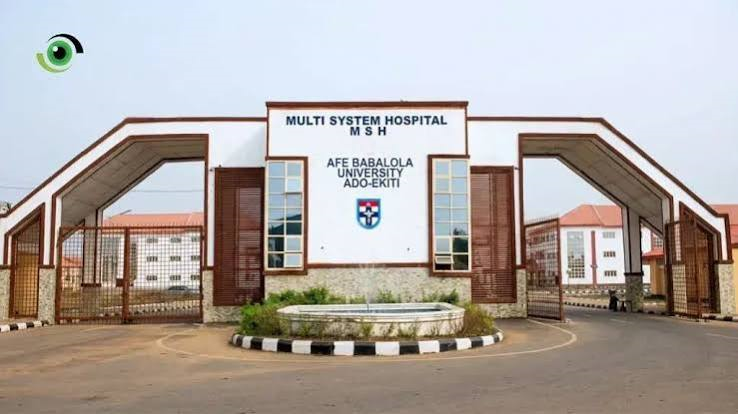
Babalola’s Farmer Support Hits N98m
Legal icon Aare Afe Babalola has disbursed N11.2 million to 81 outstanding farmers across Ekiti State's 16 local government areas, bringing total awards under his annual agricultural scheme since 2015 to N98 million.
 Agriculture
FG Launches African Swine Fever Control Campaign in Southwest
The Federal Government has launched a major African Swine Fever control and biosecurity campaign at the Oke-Aro Pig Farm Estate, distributing protective kits to farmers and pledging comprehensive training to prevent future outbreaks. The intervention by the Livestock Productivity and Resilience Support Project (L-PRES) targets one of Nigeria's largest pig production clusters, which has suffered devastating losses from the highly contagious disease in the past.
 Agriculture
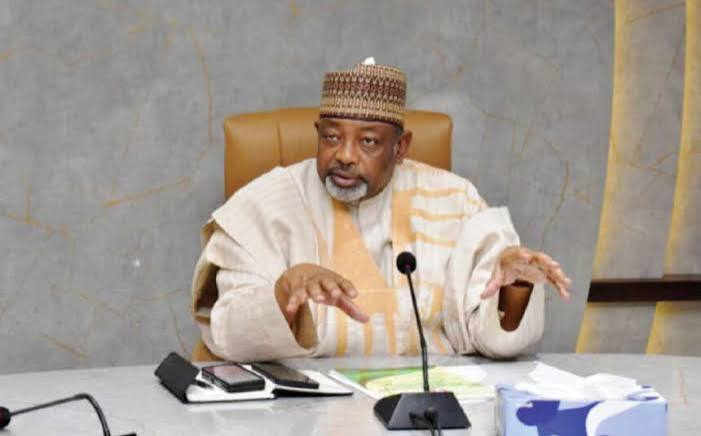
Kyari: More Farmland Won’t Feed 400 Million Nigerians
Agriculture Minister Abubakar Kyari says Nigeria must treat agricultural extension as critical infrastructure, disclosing that over 100,000 farmers already receive weekly digital advisories as the country's population heads toward 400 million by 2050.
 Agriculture
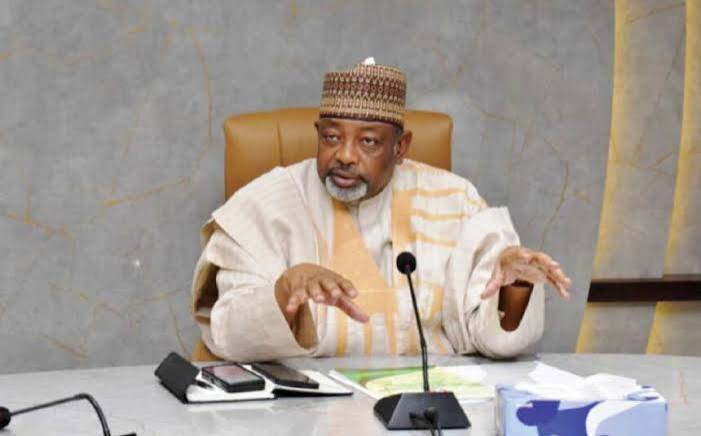
Farmland Expansion Alone Won’t Feed Nigeria
Agriculture Minister Abubakar Kyari says Nigeria must shift to demand-driven, AI-enabled agricultural extension services to boost farm yields, warning that expanding farmland alone can no longer feed the country's growing population.
Comments (0)
Leave a comment
All comments are moderated before publishing. Your email is never published.