
Federal Government Moves to End Open Grazing, Identifies 470 Gazetted Reserves
The Minister of Livestock Development, Idi Maiha, has announced that the Federal Government will resettle herders across 470 gazetted reserves to phase out open grazing, utilizing high-tech animal jaw-tagging to track boundaries and addressing a massive dairy yield deficit through genetic modernization.
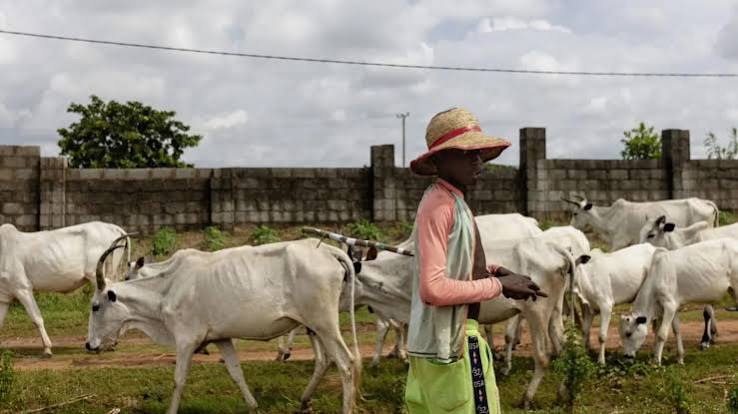
The Federal Government has identified 470 gazetted and legally protected grazing reserves across the country to rehabilitate and resettle pastoralists, signaling a major policy shift aimed at ending the era of cattle roaming the streets of major cities like Abuja and Lagos.
The Minister of Livestock Development, Idi Maiha, announced the development during a live interview on Arise News while outlining the implementation of the National Dairy Policy Framework. According to Maiha, shifting herders away from an unstructured, migratory lifestyle into designated reserves is a crucial step to modernizing the livestock sector, strengthening animal health management, improving livestock genetics, and bolstering disease surveillance.
To ensure the boundaries of these 470 reserves are strictly maintained, the federal government is introducing an automated tracking system:
- Boundary Alarms: Animals within the reserves will undergo a mandatory jaw-tagging procedure.
- Theft and Stray Mitigation: If an animal steps outside its designated perimeter boundary, an automated alarm is triggered immediately. This signals to administrators that the livestock has either strayed or been stolen, allowing security and tracking teams to intercept and return the animal swiftly.
- The Dairy Yield Gap: Offering structural context, Minister Maiha highlighted that Nigeria’s traditional cattle produce an average milk yield of just 1.2 to 2 liters per cow per day. In comparison, nations like Kenya, which have modernized their livestock genetics and feeding practices, achieve yields of up to 30 liters daily. Maiha lamented that despite boasting an estimated 270 million ruminants (including cattle, sheep, goats, and camels), Nigeria has failed to upgrade its traditional breeds, a stagnation the new reserve infrastructure aims to correct.
Related stories
 News
News
Panic in Lagos as Fire Guts Major Fuel Terminal in Apapa
Emergency responders are currently battling a massive fire at a fuel terminal in the Apapa area of Lagos. No fatalities reported as firefighters contain the blaze.
 News
News
Cape Verde Eyes Historic World Cup Upset Against Messi's Argentina
Cape Verde will look to continue its fairy-tale 2026 FIFA World Cup campaign when it faces defending champions Argentina in the quarter-finals. The underdogs are hoping to produce one of the biggest upsets in World Cup history against Lionel Messi's side.
 News
News
VAR Sparks Debate After Portugal's Quarter-Final Victory Over Croatia
Portugal reached the 2026 FIFA World Cup semi-finals after defeating Croatia, but the match was overshadowed by a controversial VAR decision that denied Croatia a late penalty, reigniting debate over the use of video technology in football.
 News
News
Ronaldo Marches On as Modrić Bows Out of the World Cup
Cristiano Ronaldo and Portugal advanced to the FIFA World Cup semi-finals, keeping their title hopes alive, while Luka Modrić's illustrious World Cup career came to an emotional end after Croatia's quarter-final exit.
Comments (0)
Leave a comment
All comments are moderated before publishing. Your email is never published.