
FEC Approves ₦286bn for Maritime Infrastructure Projects
The Federal Executive Council (FEC) has approved ₦286 billion for the execution of various maritime infrastructure projects, in line with the Federal Government's commitment to developing the blue economy.
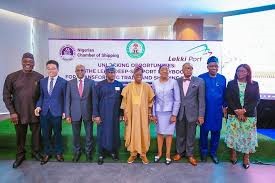
The Federal Executive Council (FEC) has approved the sum of ₦286 billion for the execution of key maritime infrastructure projects in various parts of the country, in line with the Federal Government's commitment to revamping the country's maritime sector and unlocking the full potential of the blue economy.
The approval, granted at the Federal Executive Council meeting presided over by President Bola Ahmed Tinubu, covers a range of strategic projects aimed at improving port operations, expanding infrastructure, enhancing maritime safety, and positioning Nigeria as a major hub for maritime trade in the West African sub-region.
The Minister of Marine and Blue Economy reportedly disclosed the approval after the FEC meeting, explaining that the projects would significantly transform the country's maritime landscape and contribute to the diversification of the national economy.
According to the minister, the projects to be executed under the approval include the dredging of strategic waterways, the modernisation of port facilities, the deployment of modern maritime security infrastructure, the establishment of fishing terminals, and the development of supporting infrastructure across the country's coastal areas.
The Federal Government noted that the projects align with its broader vision of repositioning Nigeria's maritime sector to play a more strategic role in the country's economic development, in line with global best practices and the principles of the blue economy.
The blue economy, which involves the sustainable use of ocean resources for economic growth, livelihoods, and ecosystem health, has been identified by the Federal Government as a critical area for economic diversification, job creation, and revenue generation.
The minister explained that the ₦286 billion approval reflects the seriousness with which the Tinubu administration views the development of the maritime sector and the determination to unlock its full potential for the benefit of all Nigerians.
The Federal Government further explained that the projects would be executed in collaboration with relevant agencies of government, including the Nigerian Ports Authority (NPA), the Nigerian Maritime Administration and Safety Agency (NIMASA), the Nigerian Shippers' Council, and other stakeholders.
The government also indicated that the projects would be implemented in line with the provisions of the Public Procurement Act, with transparency, accountability, and value for money guiding the procurement and execution processes.
The minister stressed that the projects would not only improve the country's maritime infrastructure but also enhance the competitiveness of Nigeria's ports, reduce transit times, lower cargo handling costs, and boost the overall efficiency of maritime operations in the country.
He further noted that the projects would have far-reaching implications for the country's economy, including increased revenue generation, improved foreign exchange earnings, expanded employment opportunities, and the growth of related sectors such as shipping, logistics, and fisheries.
The minister reaffirmed the Federal Government's commitment to creating an enabling environment for private sector investment in the maritime sector, including the implementation of policy reforms, regulatory improvements, and infrastructure upgrades to attract local and foreign investors.
He called on stakeholders in the maritime sector, including shipowners, importers, exporters, freight forwarders, port operators, and labour unions, to collaborate with the government to ensure the successful implementation of the approved projects.
The minister also expressed appreciation to President Tinubu for his strong support for the development of the maritime sector and his commitment to repositioning Nigeria as a leading maritime nation in Africa.
He noted that the President had consistently emphasised the importance of the maritime sector in the country's economic diversification agenda, with the recent establishment of the Ministry of Marine and Blue Economy reflecting that commitment.
The Federal Government, through the Ministry of Marine and Blue Economy, has continued to roll out various initiatives aimed at unlocking the potential of the country's maritime sector, including reforms in port operations, the promotion of inland waterways transport, and the development of supporting infrastructure.
The approval of the ₦286 billion projects is expected to provide further impetus to these efforts, with stakeholders welcoming the development as a significant step towards transforming the maritime sector and the broader Nigerian economy.
Industry analysts have, however, called for transparency in the implementation of the projects, urging the government to ensure that the funds are judiciously utilised and that the projects are delivered on time and within budget.
They also called for robust monitoring and evaluation mechanisms to track the progress of the projects, assess their impact on the maritime sector, and ensure that the desired outcomes are achieved.
Nigeria, with a coastline of about 853 kilometres and several strategic seaports, is well-positioned to play a major role in the global maritime trade, given its strategic location, abundant marine resources, and growing economy.
However, the country's maritime sector has, for years, been confronted with various challenges, including infrastructure deficits, port congestion, maritime insecurity, and the slow pace of implementation of relevant policies and reforms.
The current administration has signalled a strong commitment to addressing these challenges and unlocking the full potential of the sector, with the establishment of the Ministry of Marine and Blue Economy and the latest project approvals reflecting that resolve.
The development is expected to attract increased interest from local and international investors, multilateral institutions, and development partners in the country's maritime sector.
Stakeholders are also looking forward to the rollout of the approved projects, the timelines for their implementation, and the expected impact on the country's port operations, maritime safety, fishing industry, and the broader blue economy.
The Federal Government has assured Nigerians that the implementation of the approved projects would be guided by the principles of transparency, accountability, and value for money, with regular updates provided on their progress.
It also called on stakeholders to continue to support the government's efforts to revamp the maritime sector, stressing that a thriving maritime industry holds the key to unlocking new economic opportunities, improving the welfare of Nigerians, and positioning the country for sustained growth in the years ahead.
Related stories
 News
News
'Nothing on Earth Will Stop This Revolution' — Sowore Speaks After Bail
Human rights activist Omoyele Sowore has declared that nothing on earth would stop the revolution he is championing in Nigeria, in his first major statement following his release on bail.
 News
News
ADC Rejects Court Verdict, Moves to Block INEC Access Code for Rival Faction
The African Democratic Congress (ADC) has rejected a recent court verdict affecting its leadership and is taking steps to prevent INEC from issuing access codes to a rival faction.
 News
News
South Africa in Total Shutdown Amid Worsening Migrants Crisis
South Africa has been thrown into a state of total shutdown amid the worsening crisis surrounding migrants and undocumented foreigners, with protests, security tensions, and economic disruptions widening.
 News
News
Court Grants Sowore Bail, Sets Fresh Conditions for Release
A court has granted bail to human rights activist and former presidential candidate Omoyele Sowore, setting fresh conditions for his release as legal proceedings against him continue.
Comments (0)
Leave a comment
All comments are moderated before publishing. Your email is never published.