
Ex-Labour Leader Seeks Oil Buffer to Stabilise Petrol Prices
Former labour leader Mustapha Wali proposes an oil price stabilisation reserve to cushion Nigerians from sharp petrol price increases.

Former labour leader and oil and gas practitioner, Mustapha Wali, has called for the establishment of a petroleum price moderator and stabilisation reserve to cushion Nigerians from exceptional increases in global oil prices.
Wali, a former National Vice President of the Petroleum and Natural Gas Senior Staff Association of Nigeria, made the proposal in a policy document titled Beyond Petroleum Subsidy: A Petroleum Price Moderator and Downstream Transformation Framework for Nigeria.
According to him, Nigeria needs a mechanism capable of absorbing global oil price shocks while the government addresses the structural factors driving the cost of petrol production and distribution.
He said the proposed stabilisation reserve would accumulate funds when international petroleum prices are favourable and deploy them when prices rise beyond predetermined thresholds.
Wali stressed that the proposal should not be interpreted as a return to the former petrol subsidy regime. Instead, he described it as a counter-cyclical mechanism designed to protect consumers from exceptional price shocks.
He also called for a comprehensive review of Nigeria’s petroleum pricing template, covering crude supply, refining, freight, foreign exchange, financing, pipelines, storage, depots, transportation and distribution.
The former labour leader argued that the review should identify costs that are unavoidable while eliminating excessive or unnecessary expenses through improved regulation.
Wali further proposed a predictable framework for domestic refineries to access crude oil, with clearly defined terms covering allocation, pricing, delivery obligations, quality standards and penalties for non-performance.
He also identified inadequate petroleum infrastructure as a major contributor to downstream costs and proposed transforming the Nigerian Pipeline and Storage Company into a professionally managed national petroleum infrastructure operator.
On refinery development, Wali called for independent technical and commercial assessments of the Nigerian National Petroleum Company Limited-owned refineries to determine which facilities remain economically viable for rehabilitation.
He also urged international oil companies and other upstream producers to invest more directly in refinery rehabilitation, crude supply, storage, pipelines and other downstream infrastructure.
Wali said the long-term objective should be to reduce Nigeria’s dependence on imported petroleum products and position the country as a regional refining and supply hub for West Africa.
Sponsored

Related stories
 News
News
NPHCDA Completes Renovation of 3,526 Primary Healthcare Centres
The National Primary Health Care Development Agency says it has renovated and handed over 3,526 healthcare centres nationwide, with work continuing at 908 others to improve access to essential medical services.
 News
News
Army Destroys Lakurawa Camps in Sokoto, Kills Terrorists
Nigerian Army troops have destroyed Lakurawa terrorist camps in Waria Forest, Sokoto State, killing several fighters and recovering weapons and five motorcycles during a military operation.
 News
News
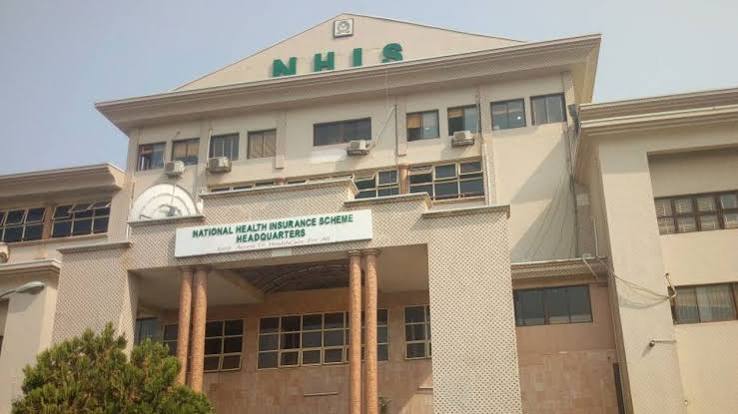
NHIA Raises Fee-for-Service Payments to Hospitals by 373 Per Cent
The National Health Insurance Authority has increased reimbursements to healthcare providers by 373 per cent and doubled capitation payments, as part of efforts to improve care quality, expand insurance coverage and restore public confidence.
 News
News
Nigeria’s Inflation Rate Drops to 14.63 Per Cent in September
Nigeria’s headline inflation rate fell to 14.63 per cent in September 2026 from 15.39 per cent in August, according to the National Bureau of Statistics, although food inflation remained elevated.
Comments (0)
Leave a comment
All comments are moderated before publishing. Your email is never published.