
Enugu's Dormant Palm Plantations Spring Back to Life as UPPL Begins Commercial Production, Invests $2.2m in Refinery
In a major boost for Nigeria's agricultural renaissance, the Enugu United Palm Products Limited (UPPL) has commenced commercial production of palm oil, breathing life into long-abandoned plantations across the state. With an additional $2.2 million investment in a state-of-the-art refinery and ambitious plans for a public listing, the public-private partnership is positioning itself as a cornerstone of Enugu's economic transformation under Governor Peter Mbah's administration.
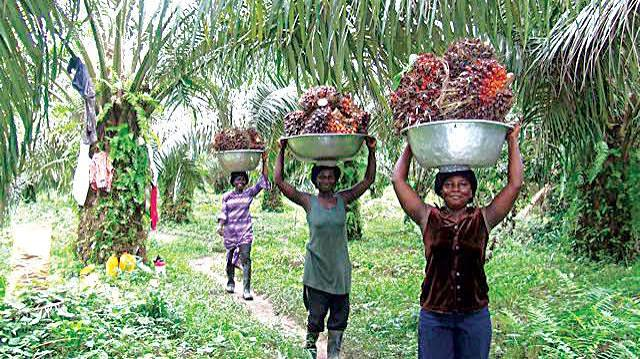
In a significant milestone for Enugu State's agricultural revival agenda, the Enugu United Palm Products Limited (UPPL) has officially commenced commercial production of palm oil for the Nigerian market, transforming long-abandoned plantations into thriving hubs of economic activity.
The company, a public-private partnership between Pragmatic Palms Limited and the Enugu State Government, has also committed an additional $2.2 million to install a refinery and develop a new industrial complex, signaling a bold vision for value addition and self-sufficiency in the palm oil value chain.
Managing Director of UPPL, Professor George Nwangwu, made the progress report known on Monday when he led a team of the company's directors to brief Governor Peter Mbah on the firm's achievements after two years of operations. Nwangwu disclosed that the company had successfully restored to productive use the palm tree plantations at Ibite-Olo, Umulokpa and Ugwu-Oba, located in Ezeagu, Uzo-Uwani and Oji River Local Government Areas, respectively.
Recounting the dire state of the plantations at the point of takeover, Nwangwu said, "When we took over, the place was thick forest and nothing but a dead place. We came in and turned the place from being a forest into a plantation". He explained that the company had cleared the entire area, pruned existing trees and commenced replanting, noting that the trees they met were over 50 years old and required replacement. "So far, we've replanted over 1,000 hectares. The idea is to keep planting until we replant the entire plantation and renew all the trees that are there," he said.
The UPPL boss emphasized that the company was moving beyond primary agricultural production by investing heavily in processing and value addition. "Agriculture has moved beyond planting alone. We need to process (palm produce) because value addition is important. So, we're milling our oil now. We've improved the quality and quantity of the oil that we're producing," Nwangwu stated. He revealed that the company had installed mills and was investing about $2.2 million to install a refinery that would not only refine crude palm oil into olein and stearin but also refine palm kernel oil. The company is also developing a new industrial complex to consolidate its production and processing operations.
Nwangwu announced that the company's palm oil had already been launched into the market under the brand name "EVOP" and is available in open markets and supermarkets across Nigeria. He added that sachet packaging of the product has commenced and would hit the market within the next two weeks. Explaining the choice of the brand name, the MD said EVOP was chosen to connect the product with the region's agricultural and industrial heritage, particularly the former AVOP vegetable oil brand produced in Nachi, Udi Local Government Area, which was among the popular brands in the Nigerian market before the company went under decades ago. "We chose the name EVOP to make sure that we keep in touch with our historical foundation. Some of us who are old enough would remember AVOP vegetable oil being bottled in Nachi, Udi. We feel that this is the product of our people and we had to connect with our historical beginnings," he said.
Nwangwu said UPPL has a set objective of making its products readily available to households across Nigeria while maintaining strict standards of quality, natural production and traceability. "The important takeaway about this palm oil is that it's natural," he said, adding that everything is done in-house and nothing is contracted. The company has certification from NAFDAC, SON and all relevant agencies, and its products carry barcodes and codes that can be scanned to reveal their origin, ensuring traceability from plantation to table. He said the company's expansion would lead to the creation of employment opportunities, growth of local economic activities and development of the state's agricultural value chain.
Responding, Governor Mbah described the partnership between the Enugu State Government and Pragmatic Palms Limited as a model worthy of emulation, given the successes already recorded by UPPL. He said the partnership demonstrated his administration's commitment to reactivation of dormant government assets for the benefits of Ndi Enugu. Mbah assured the company that the state government would fulfil all its obligations under the partnership MoU and provide the necessary support to enable UPPL achieve its full potential.
The governor gave his backing for the company's plan to be listed on the Nigerian stock market within four years, saying that Enugu needed companies capable of attracting public investment and creating greater value for the state. "This is consistent with the state's ambition, to optimise these assets and to grow them and make them big. We are talking about an investment outlay of over N100 billion, and if in four years you are targeting going to the market, we are with you on that. We will give you all support," he said. He stressed the importance of maintaining transparent and credible financial records ahead of the proposed listing and added that the government would hold regular briefings with the company to identify and swiftly resolve challenges.
Mbah also disclosed that the state government had finalised arrangements to award contracts for the speedy construction of two major road projects, including the Umumba Ndiagu to Ebenebe road, to improve accessibility to the company's plantations. He further revealed that he had issued a directive that the headquarters of the state's Forest Guards be located at Ibite-Olo to strengthen security around the plantations. While assuring the company that the government would address any encroachment on its acquired land, Mbah further assured UPPL that the government would provide the 6,700 hectares committed under the partnership and work with host communities and the company to secure additional land if it decides to expand to its targeted 10,000 hectares.
The revival of Enugu's palm plantations and the commencement of commercial production by UPPL represent a significant victory for the state's agricultural renaissance agenda. With a clear commitment to value addition, job creation and economic diversification, the company is poised to become a major player in Nigeria's palm oil industry. As Governor Mbah noted, the success of this public-private partnership offers a compelling model for how dormant government assets can be reactivated to drive sustainable development and prosperity for the people of Enugu State.
Sponsored

Related stories
 Agriculture
Babalola’s Farmer Support Hits N98m
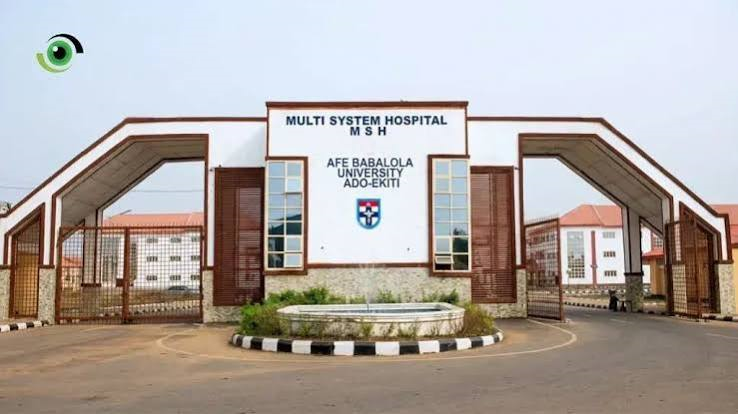
Legal icon Aare Afe Babalola has disbursed N11.2 million to 81 outstanding farmers across Ekiti State's 16 local government areas, bringing total awards under his annual agricultural scheme since 2015 to N98 million.
 Agriculture
FG Launches African Swine Fever Control Campaign in Southwest
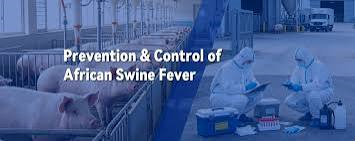
The Federal Government has launched a major African Swine Fever control and biosecurity campaign at the Oke-Aro Pig Farm Estate, distributing protective kits to farmers and pledging comprehensive training to prevent future outbreaks. The intervention by the Livestock Productivity and Resilience Support Project (L-PRES) targets one of Nigeria's largest pig production clusters, which has suffered devastating losses from the highly contagious disease in the past.
 Agriculture
Kyari: More Farmland Won’t Feed 400 Million Nigerians
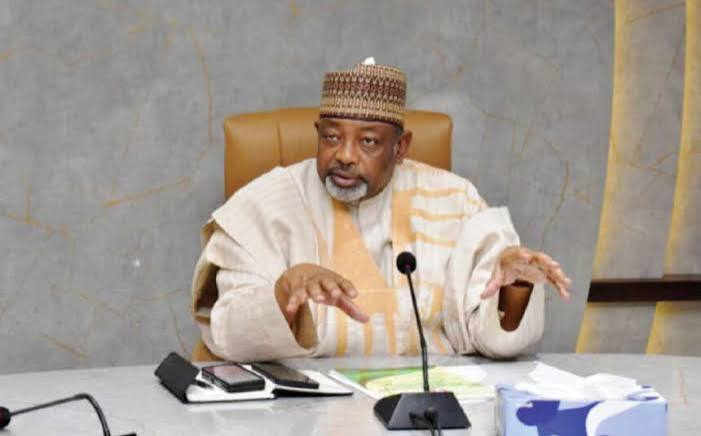
Agriculture Minister Abubakar Kyari says Nigeria must treat agricultural extension as critical infrastructure, disclosing that over 100,000 farmers already receive weekly digital advisories as the country's population heads toward 400 million by 2050.
 Agriculture
Farmland Expansion Alone Won’t Feed Nigeria
Agriculture Minister Abubakar Kyari says Nigeria must shift to demand-driven, AI-enabled agricultural extension services to boost farm yields, warning that expanding farmland alone can no longer feed the country's growing population.
Comments (0)
Leave a comment
All comments are moderated before publishing. Your email is never published.