
Ebola Alert: NCDC Screens Travellers From Affected Countries
The Nigeria Centre for Disease Control and Prevention (NCDC) has issued an interim public health advisory requiring travellers from countries with active Ebola transmission to complete Health Declaration Forms as part of enhanced surveillance measures. The advisory follows the ongoing Ebola outbreak in the Democratic Republic of Congo, which has now recorded over 7,600 cases and nearly 3,700 deaths, with Nigeria placing itself on high alert to prevent the importation of the deadly virus.
The Nigeria Centre for Disease Control and Prevention (NCDC) has announced that travellers arriving from countries with active or relevant Ebola Virus Disease (EVD) transmission may be required to complete health declaration forms as part of enhanced measures to prevent the importation and spread of the disease.
The NCDC disclosed this in an interim public health advisory issued on Tuesday by its Director-General, Dr Jide Idris, following an assessment of the evolving epidemiological situation and consultations with public health experts and the Federal Ministry of Health and Social Welfare.
"Travellers from countries with active or relevant EVD transmission may be required to complete the Health Declaration Form as part of enhanced public health surveillance and follow-up measures," the NCDC stated. The agency, however, clarified that passengers arriving from other countries were currently exempt from completing the form. "Passengers from all other countries are exempt from completing the form, at this time," it added.
The advisory comes amid a devastating Ebola outbreak in the Democratic Republic of Congo (DRC), which has now become the country's largest and deadliest epidemic on record and the second-largest globally behind the 2014-2016 West African outbreak. According to the DRC's National Public Health Institute, confirmed cases have reached 7,672, with 3,699 deaths, representing a case fatality rate of approximately 48.2 per cent. The outbreak, declared in May 2026, has affected 63 health zones across seven provinces, including Ituri, North Kivu, South Kivu, Haut-Uele, Tshopo, Bas-Uele and Sud-Ubangi. While 1,879 patients have recovered, 886 remain hospitalised or in quarantine.
The scale of the outbreak has raised alarm across the continent, prompting Nigeria to activate a series of preparedness measures in recent months. In June 2026, President Bola Ahmed Tinubu established a Presidential Task Force on Ebola Virus Disease Preparedness and approved N10 billion in emergency intervention funding to strengthen the operational capacity of the NCDC. The task force, chaired by the Chief of Staff to the President, Femi Gbajabiamila, was mandated to intensify passenger screening at all international airports, including enhanced temperature checks and crowd-control protocols.
Additional measures approved under the presidential directive included enhanced monitoring of passengers arriving through high-risk airline routes such as Air Uganda, RwandAir, Air Tanzania, Air Angola, Kenya Airways and Ethiopian Airlines. The government also ordered the immediate activation of referral and isolation centres at Lagos and Abuja international airports, the mandatory activation of QR code-based pre-arrival health declaration systems for passengers originating from or transiting through designated high-risk countries, and the disinfection of departure halls, cargoes, baggage areas and airport facilities as precautionary environmental measures. The task force was further directed to designate specific airports or terminals for high-risk flights to enable controlled screening and isolation procedures, and to consider adjusting flight timings to minimise interaction between high-risk passengers and others.
The NCDC has also initiated a 21-day Ebola watch for travellers who have been exposed to the virus, requiring that any person who develops a sudden fever and other symptoms associated with Ebola within 21 days of travelling to affected countries be treated as a suspected case and immediately investigated.
Ebola is a severe and often fatal illness in humans, transmitted through direct contact with the blood, secretions, organs or other bodily fluids of infected people, as well as with surfaces and materials contaminated with these fluids. The early symptoms of the disease — fever, fatigue, muscle pain, headache and sore throat — are nonspecific and can easily be mistaken for malaria or other common illnesses, making vigilance and prompt reporting of travel history critical to early detection and containment.
The NCDC has urged members of the public to remain vigilant, particularly for symptoms consistent with Ebola, and to promptly seek medical attention and report relevant travel or exposure history where applicable. "The general public is encouraged to remain vigilant, particularly for symptoms consistent with EVD, and to promptly seek medical attention and report relevant travel or exposure history where applicable," the advisory stated.
The agency emphasised that Nigeria remained on high alert, with all preparedness activities ongoing. "Nigeria remains on high alert, and all preparatory activities are ongoing. These measures will continue to be reviewed in line with the evolving epidemiological situation and public health risk assessment," the NCDC said.
The agency reaffirmed its commitment to protecting Nigerians through evidence-based surveillance, preparedness and response to public health threats. The advisory was copied to key stakeholders, including the Federal Ministry of Health and Social Welfare, the Federal Airports Authority of Nigeria (FAAN), Port Health Services and the Nigeria Immigration Service, ensuring a coordinated, multi-agency approach to border health security.
For a country that experienced the devastating 2014 Ebola outbreak, which claimed eight lives in Lagos and Port Harcourt before being contained through swift and coordinated action, the current measures reflect a hard-earned understanding of the stakes involved. As the outbreak in the DRC continues to evolve, Nigeria's ability to prevent importation and protect its citizens will depend on sustained vigilance, robust surveillance systems and the cooperation of travellers and the general public alike.
Sponsored

Related stories
 Health
Borno Hires 2,000 Health Workers, Still Faces Staff Shortage
Borno State has recruited nearly 2,000 doctors, nurses and other health professionals in two years, but the head of its contributory health agency says manpower gaps persist as demand grows under the state health insurance scheme.
 Health
Lassa Fever Kills 268 in Nigeria as Cases Hit 1,138
Nigeria has recorded 1,138 confirmed Lassa fever cases and 268 deaths across 24 states in 2026, with the case fatality rate rising to 23.6 per cent—significantly higher than the 18.6 per cent recorded during the same period in 2025. The NCDC has identified five states accounting for 88 per cent of all confirmed cases, as it intensifies preparedness efforts ahead of the peak transmission season.
 Health
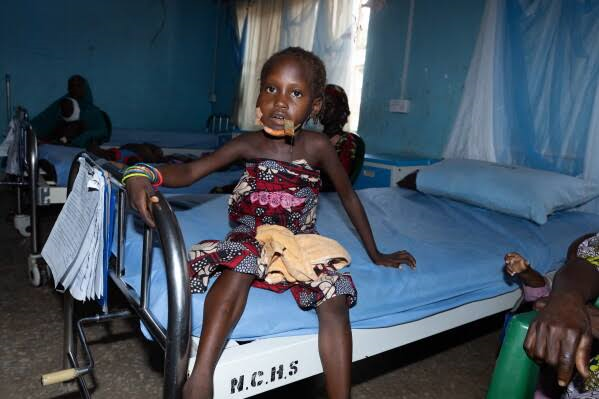
MSF Calls for Routine Noma Surveillance in Nigeria
Doctors Without Borders says noma, a fast-moving and often fatal facial infection linked to malnutrition and poverty, remains largely missing from Nigeria's routine child health programmes despite its 2023 recognition as a neglected tropical disease.
 Health
Oyo Rejects Diphtheria Outbreak Claims, Accuses APC
The Oyo State Government has dismissed claims by the Senator Sharafadeen Alli Campaign Organisation that diphtheria has affected 16 local government areas, describing the allegation as false and politically motivated. Commissioner for Health Dr. Oluwaserimi Ajetunmobi confirmed that while suspected cases have been recorded in 10 LGAs, none have been confirmed, and accused the APC campaign group of distorting immunisation data to score political points.
Comments (0)
Leave a comment
All comments are moderated before publishing. Your email is never published.