
Cross River Intensifies Fight Against Maternal Deaths With Preeclampsia Awareness Campaign
The Cross River State Government has launched a week-long preeclampsia awareness campaign as part of its commitment to reducing maternal and neonatal deaths across the state.
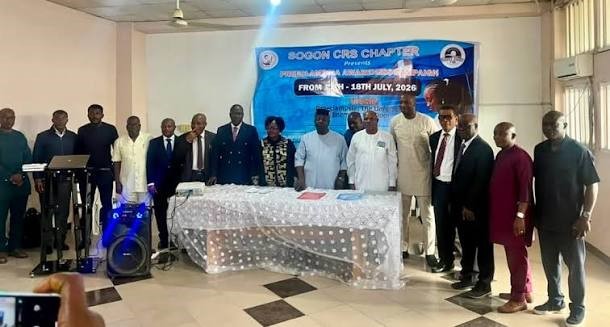
The campaign, themed "Preeclampsia: The Unforeseen Enemy at the Door," runs from July 13 to July 18, 2026, and brings together medical experts, policymakers, and other stakeholders to advance strategies for improving maternal health outcomes across the state.
Speaking during the event, the Cross River State Commissioner for Health, Dr. Henry Egbe Ayuk, reaffirmed the commitment of the Governor Bassey Otu-led administration to safeguarding the lives of mothers and newborns through sustained investments in the healthcare sector. Dr. Ayuk said maternal health remains a central pillar of the state's People First Agenda, noting that the Ministry of Health is implementing comprehensive reforms focused on revitalising health facilities, strengthening service delivery, and ensuring that quality, life-saving maternal healthcare is accessible to all women across the state.
Preeclampsia, a pregnancy-related condition characterised by high blood pressure and organ dysfunction, remains one of the leading causes of maternal and neonatal deaths globally.
The Chairman of the Cross River State Task Force on Health Quality and Anti-Quackery, Dr. Dan Abubakar, said "Preeclampsia remains one of the leading causes of maternal and neonatal deaths globally. But early detection, prompt treatment and access to quality obstetric care are critical to preventing avoidable deaths and complications."
Organisers said the week-long programme is expected to deepen public awareness on the dangers of preeclampsia, strengthen collaboration among healthcare stakeholders, and promote policy actions that will further improve maternal and newborn health outcomes in Cross River State.
The commissioner stressed that improving maternal health requires more than clinical expertise, emphasising the need for strong regulatory systems and modern healthcare infrastructure. "The future of healthcare is digital, and Cross River State is taking deliberate steps to position itself at the forefront of that transformation. We are integrating advanced healthcare management systems, revamping our infrastructure, and enforcing regulatory standards to ensure that obstetric emergencies are managed with modern equipment and standardised procedures across all 18 local government areas," Ayuk stated.
The state had recorded significant progress in maternal health outcomes, with maternal mortality reducing from 54 cases in 2023 to six in the first quarter of 2026. Cross River State also intensified efforts to reduce maternal and neonatal deaths with the deployment of 18 ultrasound machines across the 18 Local Government Areas and the training of 54 frontline health workers in basic obstetric ultrasonography. The intervention was implemented through the World Bank-assisted Immunization Plus and Malaria Progress by Accelerating Coverage and Transforming Services (IMPACT) Project in partnership with the State Ministry of Health and the Primary Healthcare Development Agency.
The Chairman of the Cross River State House of Assembly Committee on Health, Honourable Hilary Bisong, said the procurement of one ultrasound scanner for each Local Government Area demonstrated that access to quality healthcare should not be determined by location. "These eighteen ultrasound scanners are more than medical equipment. They represent the democratisation of healthcare. They affirm that a pregnant woman in Obanliku deserves the same quality of early diagnosis as one in Calabar, and that a mother in Bakassi deserves the same opportunity for a safe delivery as any mother anywhere in the world," he stated.
Also speaking, the Permanent Secretary of the Cross River State Ministry of Health, Dr. Jonah Offor, highlighted the importance of translating medical knowledge into effective government policies capable of strengthening emergency obstetric care. Presenting a paper on the sub-theme "From Awareness to Policy: Strengthening the Health System Response," Dr. Offor said sustainable improvements in maternal health depend on strong collaboration between healthcare professionals, policymakers, and administrators. He advocated the establishment of structured policy frameworks that bridge the gap between expert clinical knowledge and government action, thereby enhancing the capacity of the health system to respond effectively to obstetric emergencies.
Cross River State Government earlier launched a high-level task force under the Maternal and Neonatal Mortality Reduction Innovation Initiative (MAMII), reaffirming its strong commitment to saving the lives of women and children across the state. The launch marked the culmination of a five-day MAMII activation workshop held in Calabar, which gathered key stakeholders in the health sector, development partners, and community representatives. The workshop developed a sustainable, community-driven framework aimed at significantly reducing maternal and neonatal deaths across the state.
The Permanent Secretary reaffirmed the Otu-led administration's commitment to reducing maternal and newborn deaths by at least 30 per cent by 2030, in accordance with national and global health targets.
Dr. Dan Abubakar drew attention to the realities confronting healthcare providers in the current economic climate, acknowledging the increasing pressure on healthcare facilities and personnel but urging practitioners not to compromise professional standards. According to him, maintaining quality healthcare services remains essential despite prevailing economic challenges, stressing that patient safety must always remain the highest priority.
The Otu administration's sustained focus on maternal and neonatal health, backed by international partnerships, digital infrastructure, and community-level interventions, positions Cross River as one of the most proactive states in Nigeria on this critical public health challenge.
Related stories
 Health
Katsina Health Insurance Enrolment Hits 583,460 Beneficiaries
Katsina State’s health insurance enrolment has risen from 355,000 beneficiaries in 2023 to 583,460 in 2026, while Governor Dikko Radda has made coverage compulsory for participants in government employment programmes.
 Health
Nigerian Army CMD: Medical Corps Is Army's 'Eye' on Health, Cleanliness in Barracks
Brig-Gen. Godwin Ogoh, CMD of 44 Nigerian Army Reference Hospital Kaduna, says the Medical Corps serves as the Army's watchdog on hygiene and preventive healthcare, as the hospital hosts a Barracks Health Committee sensitisation programme.
 Health
Japanese Doctors Shield Patient with Their Bodies as 7.1 Magnitude Earthquake Hits Mid-Surgery
Newly released hospital security footage shows medical staff at Kumamoto General Hospital in Japan shielding a patient with their bodies as a powerful earthquake shook the operating theatre, with all four ongoing surgeries successfully completed.
 Health
Sick Health Centres Keep Rural Dwellers in Agony as Nigeria’s PHCs Struggle
Nigeria’s primary healthcare centres are facing poor infrastructure, staff shortages, inadequate equipment and hidden charges, leaving rural residents to travel long distances or depend on unqualified providers for basic medical care
Comments (0)
Leave a comment
All comments are moderated before publishing. Your email is never published.