
Cassava is Benue's 'Crude Oil': Agro Company Launches Revolution with Drones, Surveillance to Transform Farmers' Fortunes
Green Harvest Food Stuff has declared cassava as Benue State's equivalent of crude oil, launching a farmer awareness programme that deploys drones and surveillance cameras to revolutionise production. The company's Executive Director declared that proper processing and export of the crop could transform farmers' fortunes, position Benue as a major carbohydrate hub, and even support renewable energy development through bioethanol production.
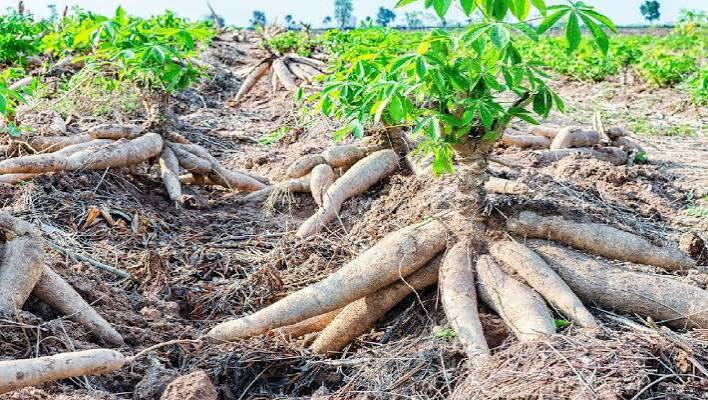
Green Harvest Food Stuff has described cassava as Benue State's equivalent of "crude oil," declaring that the crop possesses the transformative potential to revolutionise the fortunes of farmers across the region if properly processed, packaged and exported to the global market.
Prince Joshua Esho Apeh, Executive Director of Green Harvest Food Stuff, made the declaration on Monday during the Farmer Awareness and Mobilisation programme organised by the Green Harvest Cooperative Society in Otukpo, Benue State. Apeh argued that the crop's potential had long been underestimated, stressing that value addition remained the critical difference between countries with strong cassava industries and those that merely produce the crop without capturing its full economic value.
The company unveiled an ambitious technological roadmap to support large-scale cassava production, announcing plans to deploy drones and install surveillance cameras on farms across the state. Apeh disclosed that a situation room would be established to monitor activities on the farms, detect security threats and alert security agencies promptly. The technological intervention is designed to address the twin challenges of farm security and operational efficiency, creating an enabling environment for farmers to scale up production without fear of disruptions.
Apeh emphasised that Benue's fertile land and abundant cassava production capacity could position the state as a major carbohydrate hub, capable of contributing significantly to food security not only in Nigeria but across the West African sub-region. He said the crop's versatility extended far beyond traditional food applications, noting that cassava could support renewable energy development, particularly through bioethanol production. The executive director argued that value addition to cassava would create new industries and jobs while reducing Nigeria's dependence on imported fuel.
The company's vision for cassava aligns with broader national efforts to diversify the economy away from oil dependence and tap into the vast potential of the agricultural sector. Nigeria is the world's largest producer of cassava, accounting for about 20 per cent of global output, yet the country captures only a fraction of the crop's potential value. Most cassava is consumed domestically in traditional forms such as garri, fufu and starch, with limited processing into higher-value products for export. Green Harvest's push for processing, packaging and export represents a significant departure from this pattern, offering a pathway to capture greater value from the crop.
Apeh urged farmers across Benue to embrace large-scale cassava production, emphasising that the crop's potential could only be realised through collective effort and a shift in mindset. He called on the government to support and replicate the Green Harvest model across Nigeria's six geopolitical zones, arguing that a coordinated national approach to cassava development could transform the country's agricultural landscape and create millions of jobs. The executive director stressed that value addition remained the difference between countries with strong cassava industries and those merely producing the crop without capturing its full economic value.
The Farmer Awareness and Mobilisation programme represents the beginning of what Green Harvest hopes will be a widespread movement to reposition cassava as a strategic economic crop. By combining technological innovation with community engagement and a clear value-addition strategy, the company is seeking to build a model that can be replicated across the country. The deployment of drones and surveillance cameras signals a commitment to modern, data-driven agriculture that moves beyond subsistence farming to commercial-scale production.
For Benue State, often referred to as the "Food Basket of the Nation," the cassava revolution offers an opportunity to deepen its agricultural advantage and create sustainable livelihoods for thousands of farming families. The state's fertile soils and favourable climate have long made it a powerhouse of food production, but the full economic potential of its agricultural output has remained largely untapped. Green Harvest's intervention could provide the catalyst needed to unlock that potential, transforming cassava from a subsistence crop into a major source of wealth and employment.
As Nigeria continues its search for economic diversification and food security, the cassava revolution launched by Green Harvest Food Stuff offers a compelling blueprint. With the right investment, policy support and technological innovation, cassava could indeed become Benue's crude oil—a resource capable of powering the state's economic transformation and contributing meaningfully to national development.
Sponsored

Related stories
 Agriculture
Babalola’s Farmer Support Hits N98m
Legal icon Aare Afe Babalola has disbursed N11.2 million to 81 outstanding farmers across Ekiti State's 16 local government areas, bringing total awards under his annual agricultural scheme since 2015 to N98 million.
 Agriculture
FG Launches African Swine Fever Control Campaign in Southwest
The Federal Government has launched a major African Swine Fever control and biosecurity campaign at the Oke-Aro Pig Farm Estate, distributing protective kits to farmers and pledging comprehensive training to prevent future outbreaks. The intervention by the Livestock Productivity and Resilience Support Project (L-PRES) targets one of Nigeria's largest pig production clusters, which has suffered devastating losses from the highly contagious disease in the past.
 Agriculture
Kyari: More Farmland Won’t Feed 400 Million Nigerians
Agriculture Minister Abubakar Kyari says Nigeria must treat agricultural extension as critical infrastructure, disclosing that over 100,000 farmers already receive weekly digital advisories as the country's population heads toward 400 million by 2050.
 Agriculture
Farmland Expansion Alone Won’t Feed Nigeria
Agriculture Minister Abubakar Kyari says Nigeria must shift to demand-driven, AI-enabled agricultural extension services to boost farm yields, warning that expanding farmland alone can no longer feed the country's growing population.
Comments (0)
Leave a comment
All comments are moderated before publishing. Your email is never published.