
Can Nigeria Grow Its Own Wheat? AfDB-Backed Programme Nearly Doubles Yields, Cuts Import Reliance
An AfDB-financed seed and fertiliser programme has lifted Nigeria's wheat self-sufficiency from below 5% to roughly 20% in two seasons, but sustaining those gains beyond heavy subsidies remains the real test, writes AfDB's Martin Fregene.
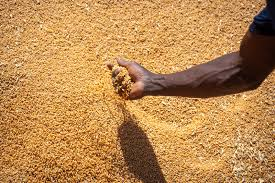
A two-season agricultural experiment across northern Nigeria suggests the country could eventually grow most of the wheat it consumes, according to an analysis by Martin Fregene, Director of Agriculture and Agro-Industry at the African Development Bank (AfDB), though he cautions that turning early gains into a lasting system remains the harder task.
Nigeria has long been viewed as an unlikely candidate for wheat self-sufficiency, given its hot climate, fragmented farms, and heavy reliance on imports. According to Fregene, the country imported an estimated 4.7 million tonnes of wheat in the 2024/25 season, rising to 6.1 million tonnes in 2025/26, based on United States Department of Agriculture figures, with demand growing by roughly 4 per cent annually, driven by a young, urbanising population with a strong appetite for bread and noodles.
Despite this import dependence, Fregene notes that northern Nigeria holds an estimated 2.2 million hectares of potentially irrigable land suitable for dry-season wheat cultivation. If half of that land were planted and yielded five tonnes per hectare, he calculates the resulting harvest would reach about 5.5 million tonnes, roughly 90 per cent of projected 2025/26 import volumes. Even accounting for lower yields, competing crops, and rising consumption, he argues that producing four-fifths of Nigeria's wheat requirements domestically looks plausible.
The basis for that optimism, according to Fregene, traces back partly to a crisis thousands of kilometres away. Russia's invasion of Ukraine disrupted global grain and fertiliser markets, exposing the vulnerability of import-dependent African countries.
In response, the AfDB approved a $1.5 billion emergency food-production facility in 2022, intended to help 20 million farmers across 35 countries obtain improved seed and fertiliser.
Nigeria became one of the facility's largest testing grounds through the National Agricultural Growth Scheme-Agro-Pocket (NAGS-AP) programme. Under the scheme, farmers were digitally registered and received certified seed and fertiliser through private agro-dealers, with subsidies redeemed electronically to reduce diversion, while seed companies, fertiliser producers, banks, insurers, and buyers were brought into a coordinated system.
For wheat specifically, Fregene reports that across the 2023/24 and 2024/25 dry seasons, some 386,700 farmers received roughly 6,000 tonnes of improved, heat-tolerant seed. They cultivated nearly 398,000 hectares and produced an estimated 1.59 million tonnes, with programme yields averaging around three tonnes per hectare, more than double the baseline of 1.42 tonnes. According to Fregene, wheat self-sufficiency rose from below 5 per cent in 2023 to roughly 20 per cent by 2025 as a result.
A separate 2024 survey by Nigeria's National Bureau of Statistics, sponsored by the Flour Milling Association of Nigeria and supported by the agriculture ministry, measured farms using GPS technology and yields through crop-cutting experiments across 15 northern states, finding average yields of just over four tonnes per hectare, further supporting the productivity gains observed under the programme. Satellite analysis cited by Fregene also estimated that wheat acreage across those states rose from about 116,000 hectares in 2023 to nearly 278,000 hectares in 2024, an increase of roughly 139 per cent.
On the economics, Fregene notes that programme reporting estimated approximately ₦377 billion in investment generated ₦2.3 trillion in farmers' sales, while cautioning that gross sales figures are not the same as economic returns and would benefit from independent scrutiny. He also flags an important caveat: farmers under the programme received fertiliser at roughly a 60 per cent discount and certified seed at an 80 per cent discount, raising the question of whether productivity gains can be sustained as subsidies decline.
Illustrating both the promise and the limitations of the programme, Fregene points to the experience of Erisa Danladi, a 44-year-old farmer in Gombe State who joined NAGS-AP in 2024. From two hectares, she harvested 133 bags of 50kg each, totalling 6.65 tonnes of wheat, with her income rising by more than 200 per cent, aided crucially by a buyer connection facilitated by the Flour Milling Association. According to Fregene, this points to the programme's central lesson: that seed alone is insufficient, and farmers also need finance, water, technical advice, and reliable markets, with the 2024 NBS survey finding that some farmers had already reduced acreage due to a lack of dependable buyers.
Looking at the scale required for a genuine transformation, Fregene calculates that one million hectares of irrigated wheat, at five tonnes per hectare, would produce five million tonnes; even at the four tonnes recorded in the national survey, the yield would still reach four million tonnes, either of which would substantially transform Nigeria's import dependence. He argues that land and labour are not necessarily the biggest constraints; rather, water and organisational capacity remain the key bottlenecks, requiring expanded irrigation (preferably solar-powered rather than diesel-dependent), reliable breeder and foundation seed supply, adequate agricultural financing, effective extension services, and sufficient storage, transport, and aggregation infrastructure, along with millers willing to purchase domestic grain over imports.
Fregene warns that Nigeria has a long history of agricultural schemes that flourish under political attention but fade once ministers or budgets change, arguing that a genuine wheat revolution cannot depend indefinitely on subsidised fertiliser from Abuja. He proposes instead a more durable model built on a bargain between science, business, and the state, researchers developing climate-suited varieties, companies handling seed multiplication, input distribution, financing, storage and processing, and government providing infrastructure, standards, security, and predictable rules while reducing risks that private firms cannot bear alone.
He suggests that trade policy tools, such as linking import access to millers purchasing agreed quantities of domestic wheat, alongside credit guarantees and public-private storage partnerships, could help, while acknowledging the familiar risks such policies carry: purchase mandates can become protectionist rents, subsidies can be captured, and cheap credit can turn into bad debt. For that reason, Fregene argues that NAGS's less visible innovations, digital farmer identification, electronic subsidy redemption, and private distribution networks, may prove more consequential than the subsidies themselves, having created an auditable chain connecting farmers, suppliers, banks, and government. According to his figures, some 1.4 million farmers were registered across the programme's interventions, with more than 620,000 redeeming inputs through 1,269 distribution centres.
Fregene concludes that two successful seasons do not yet make Nigeria a wheat power, noting that consumption continues rising while irrigation, credit, and storage capacity remain inadequate, insecurity persists in parts of the north, and climate change adds further uncertainty. Even so, he argues that the NAGS experience has shifted the central question facing Nigerian agriculture: rather than proving whether farmers can grow wheat productively, the task now is turning roughly 400,000 demonstrated hectares into perhaps one million reliable ones, converting emergency subsidies into functioning input markets, and transforming scattered farms into organised supply chains. "The revolution, if it comes, will be institutional," he writes, "turning an emergency project into a permanent system connecting research, finance, irrigation, farmers and buyers."
Sponsored

Related stories
 Agriculture
Babalola’s Farmer Support Hits N98m
Legal icon Aare Afe Babalola has disbursed N11.2 million to 81 outstanding farmers across Ekiti State's 16 local government areas, bringing total awards under his annual agricultural scheme since 2015 to N98 million.
 Agriculture
FG Launches African Swine Fever Control Campaign in Southwest
The Federal Government has launched a major African Swine Fever control and biosecurity campaign at the Oke-Aro Pig Farm Estate, distributing protective kits to farmers and pledging comprehensive training to prevent future outbreaks. The intervention by the Livestock Productivity and Resilience Support Project (L-PRES) targets one of Nigeria's largest pig production clusters, which has suffered devastating losses from the highly contagious disease in the past.
 Agriculture
Kyari: More Farmland Won’t Feed 400 Million Nigerians
Agriculture Minister Abubakar Kyari says Nigeria must treat agricultural extension as critical infrastructure, disclosing that over 100,000 farmers already receive weekly digital advisories as the country's population heads toward 400 million by 2050.
 Agriculture
Farmland Expansion Alone Won’t Feed Nigeria
Agriculture Minister Abubakar Kyari says Nigeria must shift to demand-driven, AI-enabled agricultural extension services to boost farm yields, warning that expanding farmland alone can no longer feed the country's growing population.
Comments (0)
Leave a comment
All comments are moderated before publishing. Your email is never published.