
BOA Expands Finance, Input Support for Women Farmers, Cites 3% Financial Inclusion Gap
The Bank of Agriculture says it is deepening support for women farmers, who make up nearly 70% of Nigeria's agricultural workforce, as new World Bank data shows just 3% of female farmers are formally enrolled in financial systems.
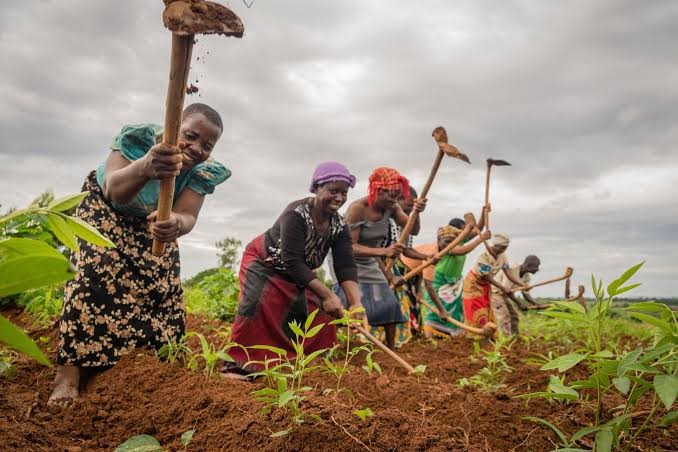
The Bank of Agriculture (BOA) has announced plans to deepen its support for women farmers across Nigeria by expanding access to agricultural finance and productive inputs, aimed at boosting production, strengthening livelihoods, and increasing women's participation in the country's agricultural value chain.
The bank disclosed this in a statement issued to journalists on Monday, saying the initiative was designed to address persistent challenges confronting women farmers, including limited access to finance, agricultural inputs, technology, mechanisation, and markets, gaps the bank said have continued to constrain the sector's overall productivity despite the outsized role women play within it.
According to BOA, women constitute a significant share of Nigeria's agricultural workforce, with estimates cited from the Food and Agriculture Organisation (FAO) putting their contribution at up to 70 per cent. The bank said women are already playing a central role in the country's food system, but that their full potential remains constrained by persistent gaps in access to the productive resources needed to scale their farming activities.
Citing recent World Bank data, the bank highlighted a stark disparity in financial inclusion within the sector, noting that only 3 per cent of female farmers in Nigeria are currently formally enrolled in financial systems, compared to 10 per cent of their male counterparts. BOA described this gap as both a challenge and an opportunity, stating that closing it could meaningfully expand access to agricultural finance in ways that help women farmers increase production, strengthen their livelihoods, and participate more fully across the agricultural value chain.
Speaking on the initiative, BOA's Managing Director and Chief Executive Officer, Ayodeji Sotinrin, stressed that expanding access to agricultural finance must go hand in hand with a deeper understanding of what farmers actually need to remain productive. He noted that women are already contributing significantly to Nigeria's food system, and that the bank's approach was designed around addressing the specific, interconnected barriers they face, rather than offering financing in isolation.
According to the bank, its model for supporting women farmers combines direct financing with agricultural inputs, agronomic support, and offtake arrangements, an integrated approach intended to increase production while also strengthening farmers' overall participation in the value chain. BOA explained that women farmers in particular stand to benefit from this combined model, since the constraints they face are rarely isolated: limited access to finance is frequently compounded by parallel difficulties in obtaining quality inputs, appropriate technology, mechanisation support, and reliable, fairly priced markets for their produce.
To support this expanded push, the bank disclosed that it is deploying a N250 billion facility specifically designed to provide single-digit interest financing to smallholder farmers nationwide. BOA added that its recently completed N1.5 trillion recapitalisation is expected to significantly expand its lending capacity, enabling the bank to reach a larger pool of farmers and deepen its overall agricultural lending activities going forward.
The renewed push for women farmers comes as BOA has separately moved to formalise a broader partnership with the Federal Ministry of Women Affairs and Social Development, signing a Memorandum of Understanding under the Renewed Hope Women Agro-Value Expansion (RH-WAVE) Programme. That programme, targeting at least three million women farmer beneficiaries over the next three to five years, is expected to provide concessional input financing, mechanisation support, and guaranteed market access, with an initial pilot phase already drawing interest from more than 33,000 women farmers. Implementation under that broader programme is expected to begin in Plateau, Kaduna, Katsina, Kano, Sokoto, Bauchi, and Nasarawa states, before expanding to other parts of the country.
Taken together, BOA's expanded finance and input support initiative reflects a broader institutional push to close persistent gender gaps within Nigeria's agricultural financing landscape, gaps that development experts and advocacy groups have long argued continue to hold back productivity gains within a sector where women make up the overwhelming majority of the workforce, yet remain significantly underserved by formal financial systems. For BOA, the expanded programme signals an attempt to translate its recapitalisation gains into more targeted, structurally designed support capable of addressing the specific, compounded barriers facing Nigeria's women farmers, rather than relying on financing alone to close the gap.
Sponsored

Related stories
 Agriculture
Babalola’s Farmer Support Hits N98m
Legal icon Aare Afe Babalola has disbursed N11.2 million to 81 outstanding farmers across Ekiti State's 16 local government areas, bringing total awards under his annual agricultural scheme since 2015 to N98 million.
 Agriculture
FG Launches African Swine Fever Control Campaign in Southwest
The Federal Government has launched a major African Swine Fever control and biosecurity campaign at the Oke-Aro Pig Farm Estate, distributing protective kits to farmers and pledging comprehensive training to prevent future outbreaks. The intervention by the Livestock Productivity and Resilience Support Project (L-PRES) targets one of Nigeria's largest pig production clusters, which has suffered devastating losses from the highly contagious disease in the past.
 Agriculture
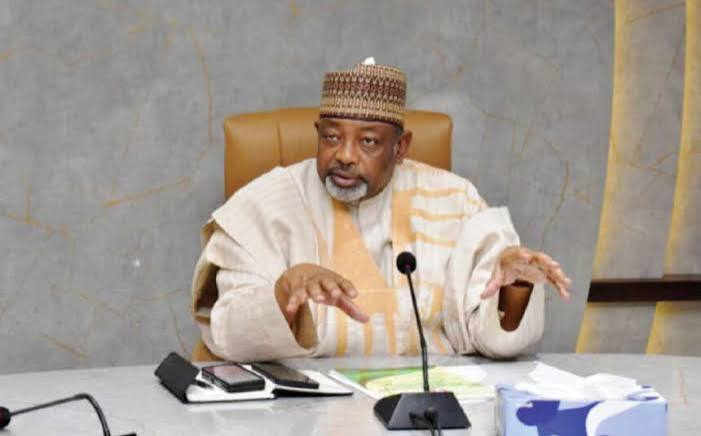
Kyari: More Farmland Won’t Feed 400 Million Nigerians
Agriculture Minister Abubakar Kyari says Nigeria must treat agricultural extension as critical infrastructure, disclosing that over 100,000 farmers already receive weekly digital advisories as the country's population heads toward 400 million by 2050.
 Agriculture
Farmland Expansion Alone Won’t Feed Nigeria
Agriculture Minister Abubakar Kyari says Nigeria must shift to demand-driven, AI-enabled agricultural extension services to boost farm yields, warning that expanding farmland alone can no longer feed the country's growing population.
Comments (0)
Leave a comment
All comments are moderated before publishing. Your email is never published.