
Atiku Challenges FG as IMF Flags $14bn in Unreported Public Expenditure, Demands Accountability
Former Vice President Atiku Abubakar has demanded accountability after the IMF reported that about 2% of Nigeria's GDP—estimated at roughly $14 billion—was not reflected in recent official fiscal reports. Atiku urged the Federal Government to explain the discrepancy, calling for greater transparency and investigations by the National Assembly and oversight agencies. The IMF said the gap stemmed from some government expenditures, including capital projects, not being captured in official budget d
.jpeg)
Former Vice President Atiku Abubakar has demanded full accountability from the Federal Government following disclosures by the International Monetary Fund, IMF, that Nigeria recorded about 2 per cent of its Gross Domestic Product, GDP, or approximately $14 billion, in unreported public expenditure in recent fiscal accounts.
The disclosure was made by the IMF's Resident Representative in Nigeria, Christian Ebeke, during an engagement with business executives in Lagos, where he explained that the discrepancy arose because significant government expenditure was not reflected in official fiscal records.
Ebeke said the omission created a statistical discrepancy between Nigeria's officially reported fiscal deficit and its actual financing requirements.
"So far, we think that there are about 2 per cent of GDP of expenditure that were not reported that should be reported and should be recorded, so that this statistical discrepancy will disappear," he said.
According to him, much of the unreported expenditure resulted from major government capital projects that were implemented outside the formal budget framework.
He explained that while the projects were financed and executed, the spending was not fully captured in official budget documents and fiscal reports, thereby understating the country's fiscal deficit and presenting an incomplete picture of government finances.
Ebeke said accurate fiscal reporting is essential for effective economic management, noting that incomplete reporting complicates fiscal policy, affects debt sustainability assessments and weakens coordination between fiscal and monetary authorities.
He also stressed the need for stronger fiscal transparency, comprehensive budget reporting and improved public financial management to ensure that every government expenditure is properly documented and subjected to statutory oversight.
The IMF official noted that Nigerian authorities had begun taking measures to address the discrepancies by revising aspects of the budget framework, but said updated fiscal reports would be required to determine whether all omitted expenditure had been properly incorporated into official accounts.
Reacting to the IMF disclosure, Atiku described the findings as "deeply troubling" and said they represented what he called "the most consequential act of fiscal impunity in Nigeria's recent democratic history."
"My attention has been drawn to a deeply troubling report by the International Monetary Fund, which reveals that the Tinubu led APC administration failed to record public expenditures amounting to approximately 2 per cent of Nigeria's Gross Domestic Product in recent official budgets," Atiku said.
Although the IMF quantified the omitted expenditure at approximately $14 billion, Atiku estimated the amount at ₦8.8 trillion, based on Nigeria's current GDP valuation.
"At the current valuation of Nigeria's economy at approximately ₦441.5 trillion, this figure translates to a staggering ₦8.8 trillion in public funds spent entirely outside the statutory framework of Nigeria's official budget documents, unaccounted for, unaudited, and hidden from the Nigerian people."
He said the revelation should concern every Nigerian and called on the media, civil society organisations, the National Assembly and all democratic institutions to focus their attention on what he described as an unprecedented fiscal scandal.
"I view this revelation with the gravest alarm and call upon all Nigerians, the media, civil society, the National Assembly, and every democratic institution in this country to set aside every distraction and direct their full attention to what is, by any reasonable standard, the most consequential act of fiscal impunity in Nigeria's recent democratic history."
The former Vice President argued that the IMF findings pointed to a systemic pattern rather than an isolated accounting error.
"A pattern of conduct, not an isolated incident, the IMF's latest Article IV consultation, articulated by its resident representative in Nigeria, Christian Ebeke, confirmed that this staggering discrepancy arises from large scale government projects executed entirely off budget."
He added, "Let us be absolutely clear about what this means. The Tinubu administration is awarding multi trillion naira contracts, moving massive public capital, and commissioning infrastructure projects entirely beyond the reach of the Auditor General, the nation's procurement laws, and the legitimate oversight of the National Assembly. It is a parallel fiscal universe, one governed by executive whim, shielded from the constitutional accountability that the Nigerian people are owed."
Atiku further alleged that the development reflected what he described as a continuation of fiscal practices established during President Bola Tinubu's tenure as Governor of Lagos State.
"This conduct follows a pattern that is unmistakably familiar to anyone who has studied the fiscal governance of Lagos State under Bola Ahmed Tinubu as Governor."
He claimed that what the IMF documented at the federal level mirrored what he called the "Lagos playbook."
"What the IMF has now documented at the federal level is that same Lagos playbook, replicated at national scale and with national consequences. The man who perfected the art of the off budget economy in Lagos has brought that 'Beta' form to Abuja, and the price is being paid by 220 million Nigerians."
The former Vice President also linked the IMF findings to his allegation that ₦800 billion had been unlawfully deducted from statutory allocations due to state governments.
"This shadow economy does not operate only through unrecorded expenditures. It also operates through illegal extractions."
"We draw the attention of Nigerians to the ₦800 billion that has been illegally deducted from the statutory allocations of state governments, funds belonging to the federating units of this republic, unlawfully withheld and diverted without the authorisation of the National Assembly, without a court order, and without any constitutional basis whatsoever."
He further alleged that the combined figures pointed to preparations for the 2027 general elections.
"We state clearly and without equivocation that this ₦800 billion, combined with the ₦8.8 trillion in unrecorded federal expenditures, points unmistakably to the construction of a massive, multi source political war chest being assembled ahead of the 2027 general elections."
"When a government operates a secret treasury of this scale at precisely the moment it needs to purchase electoral outcomes, the conclusion is not difficult to reach. The Tinubu administration is not reforming Nigeria's economy. It is financing its own political survival with money that belongs to the Nigerian people."
Atiku also referenced the controversy surrounding the Presidential Foreign Intervention Promotion Council, arguing that it should now be viewed in the context of the IMF findings.
"The ghost agency and the shadow budget are not separate scandals. They are two expressions of the same governing philosophy, that public money belongs to those in power, to be deployed as they see fit, beyond the reach of the law and the knowledge of the public."
The former Vice President further criticised the Federal Government's economic reforms, saying Nigerians had endured severe hardship while, according to him, substantial public expenditure remained outside official records.
"The IMF has now exposed that narrative as a big fat lie."
"While the poor were told to bleed, the government maintained access to a ₦8.8 trillion shadow treasury, entirely outside public view, entirely beyond legislative oversight, and entirely at the disposal of those who hold executive power."
He argued that the alleged off budget expenditure had worsened economic conditions.
"The interest rates crushing Nigerian businesses, the weak naira destroying Nigerian savings, and the economic stagnation hollowing out Nigerian households are not the unavoidable consequences of global headwinds. They are, at least in part, the direct result of a government that has removed from the productive economy ₦8.8 trillion that should have been transparently appropriated, competitively allocated, and deployed in ways that create jobs, reduce the cost of capital, and strengthen the naira."
Atiku also said the alleged expenditure could have funded a significant economic stimulus programme.
"I presented to Nigerians a comprehensive economic recovery programme anchored on a $10 billion stimulus package."
"The IMF has now answered that question. ₦8.8 trillion was available. It was not unavailable. It was not non existent. It was simply being spent in the dark, by unaccountable hands, on undisclosed purposes, beyond the reach of the Nigerian public and their elected representatives."
He demanded six immediate actions, including emergency investigative hearings by the National Assembly, an independent audit by the Auditor General of the Federation, full public disclosure of every naira spent outside the official budget, the restoration of the alleged ₦800 billion deducted from state allocations, formal investigations by the Economic and Financial Crimes Commission, the Independent Corrupt Practices and Other Related Offences Commission and other anti corruption agencies, as well as sustained pressure from civil society and international institutions.
"The National Assembly must convene emergency investigative hearings on the IMF's findings without further delay. The revelation of ₦8.8 trillion in unrecorded public expenditures is a constitutional emergency, not a matter to be managed through ministerial press conferences or diplomatic qualifications."
He concluded by urging Nigerians not to ignore the IMF's findings.
"A government that governs in secret spends in secret. A government that spends in secret does not govern, it plunders."
"The Tinubu administration has been exposed, not by its political opponents and not by partisan advocacy, but by the International Monetary Fund, the most authoritative multilateral financial institution in the world."
"The evidence is on the record. The figures are not in dispute."
"We will not accept it. And we call on every Nigerian who believes in the integrity of the public treasury, the sovereignty of the Nigerian people over their own resources, and the future of this republic to refuse to accept it as well."
Related stories
 News
News
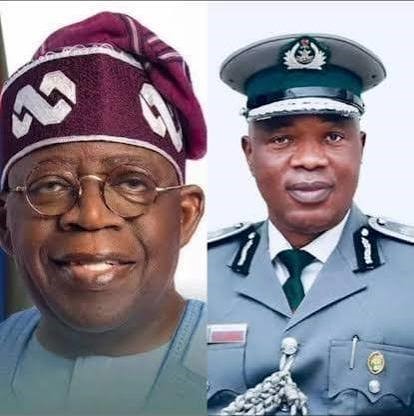
Tinubu Congratulates Customs CG Adeniyi on Re-election as WCO Council Chairman
President Bola Tinubu has felicitated Comptroller-General of Customs Adewale Adeniyi on his re-election as Chairperson of the World Customs Organization (WCO) Council, hailing it as a proud moment for Nigeria.
 News
News
IPI Nigeria Demands Immediate Release of Detained Journalist Stanley Ugagbe
The International Press Institute (IPI) Nigeria has called for the immediate and unconditional release of journalist Stanley Ugagbe, describing his detention as a violation of press freedom.
 News
News
UNIOSUN Rejects Army Denial of Rape Allegation During Campus Invasion, Vows to Protect Students
Osun State University has rejected the Nigerian Army’s position on alleged rape during a soldiers’ invasion of its campus and declared it will take all necessary steps to protect the rights of its students.
 News
News
LAWMA Intensifies Waste Evacuation in Major Lagos Communities
The Lagos State Waste Management Authority (LAWMA) has expanded its waste removal operations across key communities in response to public complaints, deploying more trucks and personnel to restore sanitation standards.
Comments (0)
Leave a comment
All comments are moderated before publishing. Your email is never published.