
Zamfara Receives 100 Tractors Under Renewed Hope Agricultural Programme
Zamfara State has taken delivery of 100 tractors and farm implements under the Federal Government’s Renewed Hope National Agricultural Mechanisation Programme after approving N6.271 billion for the initiative.
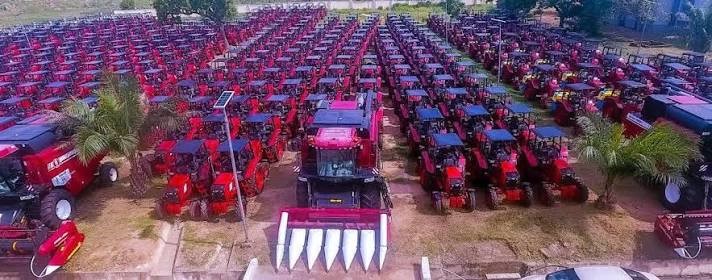
Zamfara State has taken delivery of 100 tractors under the Federal Government’s Renewed Hope National Agricultural Mechanisation Programme, in a move aimed at modernising farming, reducing production costs and increasing food output across the state.
The equipment was secured after the Zamfara State Executive Council approved N6.271 billion for the state’s participation in the federal mechanisation programme. The investment covers the purchase of tractors and farm implements, as well as the establishment of an Agricultural Mechanisation Hub, known as the Agri-Hub, in Gusau.
The Commissioner for Agriculture, Ya’u Haruna Gamji, said the package consists of 50 tractors with an 81-horsepower capacity and another 50 tractors with a 90-horsepower capacity. The delivery also includes 100 disc ploughs, 100 disc harrows, 100 disc ridgers and other essential implements needed for land preparation and cultivation.
The Agri-Hub will serve as the operational centre for managing, maintaining and deploying the equipment across Zamfara. It is expected to provide more than tractor storage. The hub will support equipment maintenance, farmer training, commodity aggregation, storage, extension services, market linkages and digital financial services.
The state government said the hub would help ensure that the equipment remains available and functional for farmers over the long term. Mechanisation programmes in the past have often faced challenges when tractors break down or are distributed without adequate maintenance systems. By placing servicing and management within a central hub, Zamfara hopes to reduce downtime and improve access to the machines.
The programme is being implemented through the Bank of Agriculture, with the Federal Government providing a 40 per cent subsidy to participating states. Under the arrangement, farmers will not necessarily receive individual tractors. Instead, they will access mechanised services through a pay-as-you-go model at subsidised rates.
Commissioner Gamji said the model would make mechanised farming more accessible to smallholder farmers who cannot afford to purchase tractors or farm implements themselves. He added that the intervention would ease access to farm machinery, reduce production costs and ultimately increase yields across the state.
The pay-as-you-go approach is also intended to make the programme financially sustainable. Rather than distributing equipment without a recovery or maintenance structure, the model allows farmers to pay for the specific services they use. Revenue generated can then support repairs, fuel, operator costs and future replacement of machines.
The Zamfara initiative is part of the Federal Government’s wider mechanisation drive. President Bola Tinubu launched 2,000 tractors and thousands of accompanying implements under the Renewed Hope Agricultural Mechanisation Programme in 2025. The national programme was designed to cultivate more than 550,000 hectares of farmland, produce over two million metric tonnes of staple food, create more than 16,000 jobs and benefit more than 550,000 farming households.
The Federal Government later began distributing the equipment in phases through the Bank of Agriculture. The national rollout includes 2,000 heavy-capacity tractors and more than 9,000 precision implements, with a target of expanding mechanised farming across the country.
For Zamfara, mechanisation is especially important because agriculture remains the main source of livelihood for many residents. The state government has also launched other agricultural interventions, including the distribution of fertiliser and farm inputs for the 2026 wet season. That programme includes 72,000 bags of fertiliser, herbicides, crop residue crushers, grass choppers, feed milling machines and improved pasture seeds.
The new tractors could help farmers cultivate larger areas within shorter periods and reduce dependence on manual labour. Faster land preparation may also allow farmers to take advantage of the planting season and improve the timing of cultivation, which is crucial in areas where rainfall is becoming less predictable.
Mechanisation can also make farming more attractive to young people. Agriculture in many rural areas is still associated with labour-intensive methods and low returns. Access to modern equipment, training and markets could help change that perception and create opportunities in farm services, equipment operation, repairs, processing and logistics.
However, the success of the programme will depend on transparent access and effective management. Farmers must be able to book services without political interference, while the machinery must be maintained and deployed when needed. Operator training, spare parts, fuel availability and strong monitoring will also be essential.
Zamfara’s delivery of the 100 tractors is therefore an important step, but it is only the beginning. If the Agri-Hub operates efficiently and farmers can access the equipment at affordable rates, the programme could help expand cultivated land, raise yields and strengthen the state’s contribution to Nigeria’s food security.
Sponsored

Related stories
 Agriculture
Babalola’s Farmer Support Hits N98m
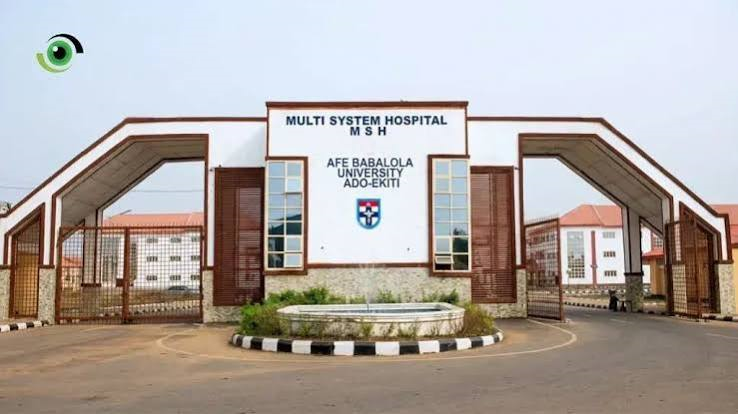
Legal icon Aare Afe Babalola has disbursed N11.2 million to 81 outstanding farmers across Ekiti State's 16 local government areas, bringing total awards under his annual agricultural scheme since 2015 to N98 million.
 Agriculture
FG Launches African Swine Fever Control Campaign in Southwest
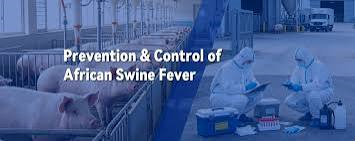
The Federal Government has launched a major African Swine Fever control and biosecurity campaign at the Oke-Aro Pig Farm Estate, distributing protective kits to farmers and pledging comprehensive training to prevent future outbreaks. The intervention by the Livestock Productivity and Resilience Support Project (L-PRES) targets one of Nigeria's largest pig production clusters, which has suffered devastating losses from the highly contagious disease in the past.
 Agriculture
Kyari: More Farmland Won’t Feed 400 Million Nigerians
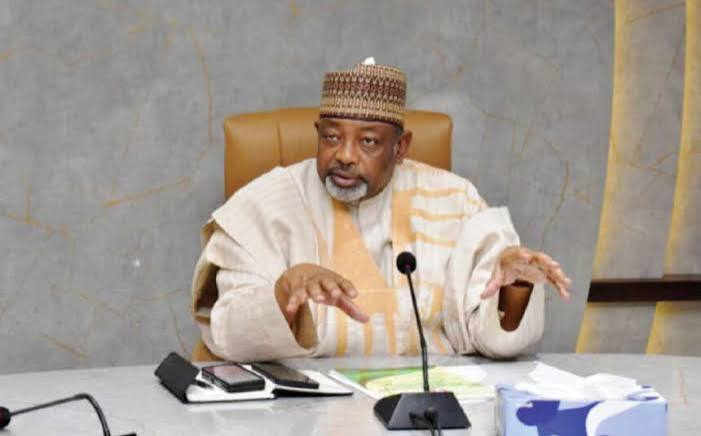
Agriculture Minister Abubakar Kyari says Nigeria must treat agricultural extension as critical infrastructure, disclosing that over 100,000 farmers already receive weekly digital advisories as the country's population heads toward 400 million by 2050.
 Agriculture
Farmland Expansion Alone Won’t Feed Nigeria
Agriculture Minister Abubakar Kyari says Nigeria must shift to demand-driven, AI-enabled agricultural extension services to boost farm yields, warning that expanding farmland alone can no longer feed the country's growing population.
Comments (0)
Leave a comment
All comments are moderated before publishing. Your email is never published.