
US Congress Will Closely Monitor Nigeria’s 2027 Elections, Says Congressman Gregory Meeks
A senior US lawmaker has declared that Washington will closely watch Nigeria’s 2027 general elections, stressing the need for transparency, fairness, and a level playing field for all parties.
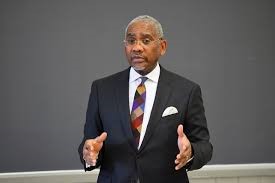
The United States Congress will be watching Nigeria’s 2027 general elections “very closely,” a senior American lawmaker has said, describing the polls as critical to the future of democracy not only in Nigeria but across the African continent.
Congressman Gregory Meeks, Chairman of the House Foreign Affairs Committee, made the declaration during a recent briefing on US-Africa policy. He stressed that Nigeria, as Africa’s most populous nation and largest economy, remains a strategic anchor for democratic governance and regional stability. Any significant erosion of democratic standards in Nigeria, he warned, could have far-reaching consequences for West Africa and beyond.
“Nigeria is too important to get this wrong,” Meeks stated. “We saw the controversies in 2023. We expect better in 2027. The United States will be paying close attention to the independence of the electoral commission, the neutrality of security agencies, the freedom of the press, and the ability of all political parties to compete on a level playing field.”
The lawmaker’s comments reflect growing bipartisan concern in Washington about the trajectory of Nigerian democracy. In 2023, the presidential election was marred by technical failures with the Bimodal Voter Accreditation System (BVAS), allegations of result manipulation in several states, and a bitterly contested outcome that eventually reached the Supreme Court. Although the court upheld President Bola Tinubu’s victory, international observers, including those from the United States, noted significant lapses in transparency and public confidence.
Congressman Meeks specifically referenced recent developments that have raised eyebrows in Washington, including court rulings that affected the registration status of certain opposition platforms and reports of increasing pressure on independent voices. He emphasised that for the 2027 elections to be considered credible, Nigeria must guarantee an independent judiciary, a truly autonomous electoral body, and protection for opposition parties and civil society groups.
“Democracy is not a slogan. It is a system that requires constant vigilance,” Meeks said. “We have seen worrying signs of political intolerance and the use of state institutions to narrow the political space. We hope the Nigerian government understands that the world is watching.”
The statement comes at a time when the opposition in Nigeria is still struggling to consolidate. The Nigeria Democratic Congress (NDC), which many believed would serve as a strong platform for Atiku Abubakar, Peter Obi, and Rabiu Kwankwaso, has faced legal setbacks, including a court decision that temporarily vacated its registration. Although the party has appealed the ruling, the uncertainty has created anxiety among opposition supporters.
Beyond democratic values, the United States has clear strategic interests in Nigeria. The country remains a major partner in counter-terrorism efforts in the Lake Chad Basin, a key player in regional peacekeeping, and an important market for American goods and services. However, persistent insecurity, economic hardship, and governance challenges have tested the strength of the bilateral relationship in recent years.
Congressman Meeks noted that the US Congress has consistently supported democratic institutions in Nigeria through funding for civic education, election observation missions, and capacity building for the Independent National Electoral Commission (INEC). He said this support would continue, but warned that future assistance could be reviewed if there is clear evidence of democratic backsliding.
“We want to be partners, not critics,” he added. “But we will not shy away from speaking clearly when we see problems. Free, fair, and credible elections in Nigeria benefit not just Nigerians but the entire continent.”
The Nigerian government has so far maintained that it welcomes international observation but insists that the 2027 elections remain a sovereign process to be managed by Nigerian institutions. Officials have pointed to ongoing reforms at INEC, including the expansion of continuous voter registration and the introduction of new technology, as evidence of the administration’s commitment to improving the electoral process.
Opposition figures, however, have welcomed the American position. Spokespersons for both the Peoples Democratic Party (PDP) and the NDC described the statement as “a timely reminder” that the international community will not overlook attempts to manipulate the electoral environment. Peter Obi’s camp, in particular, has repeatedly raised concerns about judicial interference in party registration matters and what it calls “selective prosecution” of opposition voices.
Civil society organisations have also welcomed the US position. The Centre for Democracy and Development (CDD) described it as “a necessary external pressure” that could help deter undemocratic practices as the election cycle intensifies.
With less than 18 months to go before the polls, the 2027 elections are already shaping up to be among the most consequential in Nigeria’s Fourth Republic. The combination of economic hardship, insecurity, and deepening political polarisation has created an environment where both the ruling party and the opposition will be under intense scrutiny.
Analysts believe that sustained international attention — particularly from influential actors like the United States Congress — could encourage better behaviour from all sides. However, they also caution that external pressure alone cannot substitute for strong domestic institutions and an enlightened electorate.
As Congressman Meeks made clear, the eyes of the world will be on Nigeria once again in 2027. For a country that has struggled to consolidate its democracy since the return to civilian rule in 1999, the coming election may well determine whether Africa’s giant finally takes its place as a stable, credible democratic power — or continues to stumble under the weight of elite competition and institutional weakness.
Related stories
 News
News
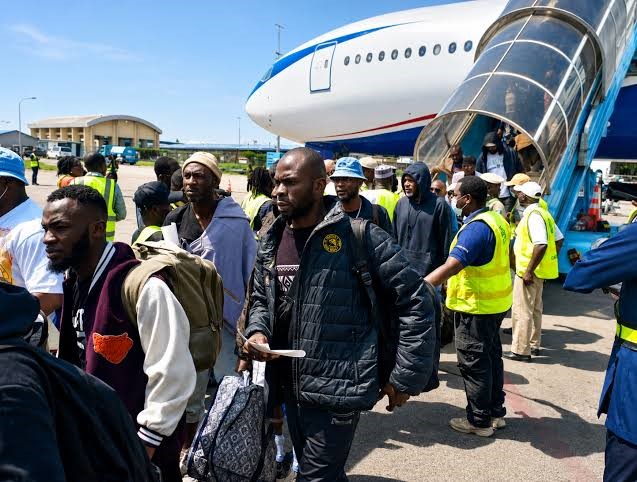
FG Urges Nigerians in South Africa to Use Evacuation Flights, Demands Justice for Slain Citizens
The Federal Government has appealed to Nigerians in South Africa to utilise evacuation flights amid rising xenophobic attacks and demanded justice for those killed during the violence.
 News
News
NANS Gives South African Companies in Nigeria 7-Day Ultimatum to Condemn Xenophobia or Face Shutdown
The National Association of Nigerian Students (NANS) has issued a 7-day ultimatum to South African businesses operating in Nigeria. They must publicly condemn xenophobic attacks on Nigerians or risk nationwide protests and closure of their operations.
 News
News
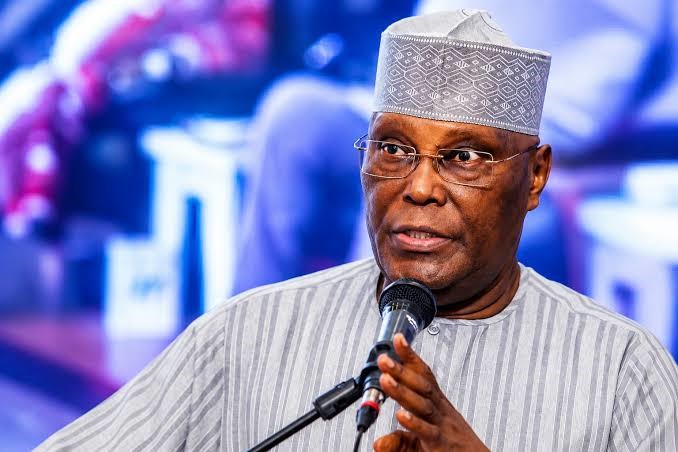
Atiku’s Aide Blasts Tinubu Govt as Incompetent Over ₦1.3bn Ghost Agency Scandal
An aide to Atiku Abubakar has criticised the Tinubu administration over the allocation of ₦1.3 billion to a non-existent presidential council, calling it proof of reckless governance.
 News
News
Peter Obi Claims Tinubu Hasn’t Called Gov Makinde 50 Days After Oyo Abduction
The 2027 presidential candidate of the Nigeria Democratic Congress (NDC), Mr. Peter Obi, has slammed President Bola Ahmed Tinubu for what he described as a "shocking lack of empathy," alleging that the President has failed to reach out to the Oyo State Governor, Seyi Makinde, since the mass abduction of schoolchildren 50 days ago.
Comments (0)
Leave a comment
All comments are moderated before publishing. Your email is never published.