
UNICAL Disowns Fake Distance Learning Centre in Port Harcourt
The University of Calabar has warned the public against Bori Business School in Port Harcourt, which allegedly used UNICAL’s name and logo to advertise unapproved diploma, degree and postgraduate programmes.
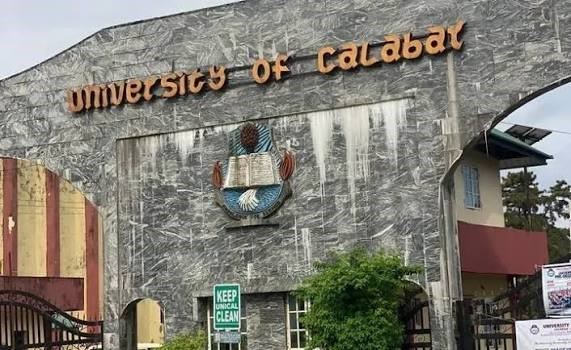
The University of Calabar has raised the alarm over an illegal distance learning centre operating in Port Harcourt, Rivers State, and warned prospective students and parents against dealing with the organisation.
The institution said the centre, known as Bori Business School, was falsely presenting itself as an affiliate of the University of Calabar and using the university’s name and logo to attract unsuspecting members of the public.
According to a circular issued by the Registrar of the University of Calabar, Dr Chukwuka Icha, the centre is located at the NUJ Press Centre on Moscow Road, Port Harcourt. It reportedly claims to offer Diploma, Bachelor of Science, Bachelor of Arts, Postgraduate Diploma and Doctor of Philosophy programmes for UNICAL.
The university said Bori Business School had never been affiliated with the institution and had no authority to admit students, conduct lectures or run academic programmes on its behalf.
The registrar issued the warning in a circular with reference number UC/REG/CIR/138 and dated August 6, 2026. The document stated that the University of Calabar had completely dissociated itself from the activities of the centre and would not recognise certificates or qualifications issued through the organisation.
UNICAL also reminded the public that it discontinued all satellite campuses in 2003 after the Federal Ministry of Education and the National Universities Commission directed universities to end such operations. Since then, the institution said, it has not approved any satellite campus or external academic centre outside its recognised campuses.
The university stressed that it has no coordinator, agent or representative authorised to admit students or operate academic programmes anywhere outside its approved campuses. It warned that anyone who deals with the Port Harcourt centre does so at their own risk.
The warning comes amid growing concern over illegal institutions and fraudulent admission schemes across Nigeria. Many unapproved centres use the names of established universities to convince applicants that their programmes are legitimate. Students may pay admission and tuition fees for years before discovering that their courses are not recognised and that the certificates issued to them have no academic value.
The University of Calabar advised prospective students to verify all admission information through its official communication channels before making payments or submitting personal documents. It said applicants should not rely solely on social media advertisements, handwritten notices or claims made by individuals who describe themselves as agents of the university.
The institution also called on the Rivers State Ministry of Education to investigate the activities of Bori Business School and take steps to ensure its closure. UNICAL accused the centre of unlawfully impersonating the university and damaging its reputation.
The university’s action follows another recent case involving a suspected fake distance-learning institution in Lagos. The Nigeria Security and Civil Defence Corps reportedly uncovered an illegal centre operating in Ilado, Olorunda Local Council Development Area, and rescued 106 students who had allegedly been lured with promises of admission to a foreign university.
Preliminary findings in that case indicated that some victims paid between N200,000 and N1.5 million, while foreign applicants reportedly paid between $400 and $500. The centre was also accused of operating an arrangement that required participants to recruit new students for commissions.
The incidents show how vulnerable admission seekers can be, particularly young people who are unable to secure places in established universities or who want flexible distance-learning options. Fraudsters often exploit the demand for affordable and convenient higher education by offering programmes that appear cheaper or easier to access.
Distance learning itself is a legitimate form of education when delivered by an institution approved by the appropriate regulators. However, students must confirm that the provider, programme and certificate are recognised by the National Universities Commission or other relevant authorities before enrolling.
Applicants should also check whether the university officially lists the centre on its website, whether the programme appears in the institution’s approved prospectus and whether payments are made through official channels. Any centre that refuses to provide verifiable documentation or insists on cash payments should be treated with suspicion.
For parents and students, the UNICAL warning is a reminder that attractive promises do not guarantee academic legitimacy. A certificate from an unapproved centre may not qualify the holder for employment, further study, professional registration or participation in the National Youth Service Corps programme.
The University of Calabar has now placed the public on notice that Bori Business School is not affiliated with it. The next step will be for relevant authorities to investigate the centre, protect potential victims and prevent similar organisations from operating under the names of recognised universities.
Sponsored

Related stories
 Tech & Education
Bamidele Unveils N200m Renovated Science College
Senate Leader Opeyemi Bamidele has commissioned the renovated Government Science College, Iyin-Ekiti, personally funded at over N200 million, donating buses to the school and nearby FUTESI while promising a second phase of upgrades.
 Tech & Education
Abia Students Crowned Global Debate Champions
Students from public schools in Abia State, representing Nigeria, have emerged overall champions at the 2026 International Schools Debate Championship in Doha, Qatar, winning four major trophies and 12 laurels after defeating teams from Jordan, India, Qatar, the Philippines, Kenya and others. The historic victory has been hailed as proof that Governor Alex Otti's education reforms are producing world-class scholars.
 Tech & Education
WAEC Appoints Suleiman Kum as New Head of Nigeria National Office
The West African Examinations Council has appointed 56-year-old Suleiman Danlami Kum as the new Head of the Nigeria National Office, succeeding Dr Amos Josiah Dangut, who has assumed office as the council’s Registrar and Chief Executive Officer. A seasoned test developer, administrator and executive with 28 years of service, Kum is expected to drive technological innovation and examination security across Nigeria’s foremost examinations body.
 Tech & Education
Emmanuel College ’88 Set Renovates Classrooms, Pays Exam Fees
The Progressives of the Unique 1988 Set of Emmanuel College Owerri have unveiled a renovated five-classroom block and paid NECO and WAEC fees for financially disadvantaged students at their alma mater.
Comments (0)
Leave a comment
All comments are moderated before publishing. Your email is never published.