
Telecom Policy Review Could Generate ₦1.6 Trillion Revenue, Create 2 Million Jobs — NCC
The NCC says a proposed review of Nigeria’s National Telecommunications Policy could generate about ₦1.6 trillion in tax revenue and create up to two million jobs by 2028, driven by expanded digitalisation and improved broadband infrastructure across key sectors.

The Nigerian Communications Commission (NCC) says a proposed review of the National Telecommunications Policy could significantly boost Nigeria’s economy, with projections estimating about ₦1.6 trillion in additional tax revenue and up to two million new jobs by 2028.
According to the commission, deeper digitalisation across key sectors such as agriculture, trade, manufacturing, transport, and public services is expected to drive stronger economic output and improve productivity nationwide.
Officials explained that the telecom sector has evolved from basic voice communication into a critical infrastructure supporting banking, e-commerce, education, healthcare, and government services.
They also noted that the policy review is necessary because the current framework, introduced in 2000, no longer fully reflects modern realities such as 5G technology, artificial intelligence, cloud systems, and satellite broadband.
However, the industry still faces challenges including high operating costs, infrastructure damage, regulatory bottlenecks, and uneven access between urban and rural areas.
The NCC added that the new policy aims to strengthen broadband expansion, improve service quality, encourage investment, and ensure wider digital inclusion across the country.
Related stories
 Tech & Education
Zamfara Warns 250 Trained Teachers Against Negligence, Vows Strict Classroom Monitoring
Zamfara State has warned teachers who completed a two-week Global Standard Teacher Transformation Programme that negligence will attract disciplinary action, as the government intensifies monitoring under Gov. Dauda Lawal's education emergency declaration.
 Tech & Education
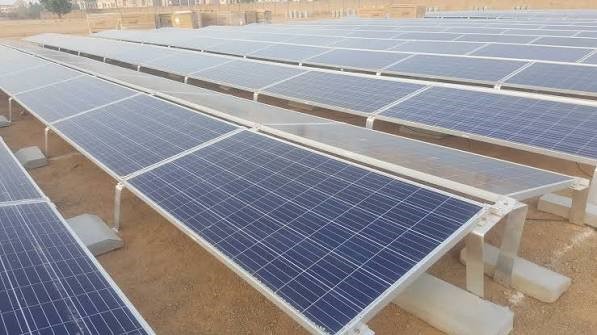
Adeleke University Commissions 200kWp Solar System to Ensure Reliable Power Supply
Adeleke University has inaugurated a 200-kilowatt peak solar power system to guarantee uninterrupted electricity supply and reduce dependence on the national grid and diesel generators.
 Tech & Education
ASUU-PLASU Declares Indefinite Strike Over Six Unresolved Demands, Shuts Down Plateau Varsity
ASUU's Plateau State University chapter has begun an indefinite strike after a 14-day ultimatum expired, citing unresolved demands including pension scheme commencement, unpaid wage award arrears, and alleged intimidation of union leaders.
 Tech & Education
WAEC Result Crisis Worsens as Official Alleges Irregularities, Glitches
The crisis over WAEC’s 2026 school-candidate results has deepened after a senior WAEC official, Olanrewaju Fadehan, alleged glitches and irregularities in the computer-based examination, claiming affected candidates were disadvantaged in Mathematics, English and Igbo.
Comments (0)
Leave a comment
All comments are moderated before publishing. Your email is never published.