
Reps Demand Breakdown of ₦34tn Customs Waivers, Query Revenue Discrepancies
The House of Representatives has directed the Nigeria Customs Service to disclose beneficiaries of ₦34tn import duty waivers and explain revenue reporting inconsistencies despite consistently exceeding collection targets.
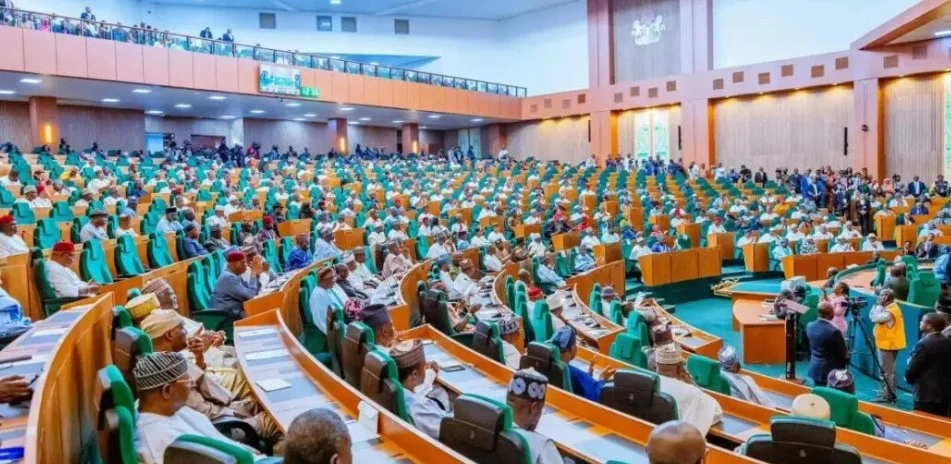
The House of Representatives Committee on Finance has directed the Nigeria Customs Service (NCS) to provide a detailed breakdown of the estimated ₦34tn worth of import duty waivers granted in 2025, including the beneficiaries, legal basis for the approvals and the economic objectives behind the concessions.
The directive was issued on Wednesday when the management of the Nigeria Customs Service appeared before the committee as part of the National Assembly’s ongoing oversight of revenue-generating agencies and the implementation of the 2025 budget.
Chairman of the committee and member representing Ikeja Federal Constituency, James Faleke, said lawmakers were not opposed to the Federal Government’s policy of granting import duty waivers but insisted that the process must be transparent and subject to proper legislative scrutiny.
According to him, the committee wants to determine whether the waivers achieved their intended economic goals and whether due process was followed in approving them.
“Waiver is good. It is not a bad thing to grant a waiver. But we want to know those who benefited from the waiver and the purpose of such a waiver. It is okay if you grant a waiver on medical and agricultural products.
“If you grant a waiver, it is aimed at helping the economy to grow. For example, if you grant a waiver on agricultural products, it is aimed at reducing the cost of food. So, we are not against the waiver. But we want to know the beneficiaries of this ₦34tn waiver,” Faleke said.
Import duty waivers are fiscal incentives that exempt selected imports from customs duties to encourage investment and support key sectors such as agriculture, healthcare, manufacturing and infrastructure. However, the policy has repeatedly attracted criticism over concerns about transparency, possible abuse and its effect on government revenue.
The committee also questioned the Nigeria Customs Service over what it described as inconsistencies in its revenue reporting, despite the agency consistently exceeding its annual revenue targets.
While acknowledging the Customs Service’s strong revenue performance, Faleke said the financial documents submitted to the committee failed to adequately explain how collections surpassed approved projections.
He requested a detailed month-by-month revenue analysis to enable lawmakers properly assess the agency’s financial performance.
“We are not going to applaud your efforts now because your account books are not balanced. We know that you want to be transparent, but you have not told us how the excess money you are reporting came about.
“I can see that in some months, you under-declare your revenue collection and in other months, you overshoot the collection. We want to know what is responsible for this. You have to provide these little details that will help us properly assess your performance,” he said.
The Deputy Chairman of the committee, Saidu Abdullahi, also called on the Federal Government to review the revenue targets assigned to the Nigeria Customs Service, arguing that the agency had consistently demonstrated a higher capacity to generate revenue than its current benchmarks reflected.
Related stories
 News
News
NDLEA Secures Seven-Year Jail Term for Man Who Advertised Cannabis Online
A Federal High Court in Kano sentenced a man to seven years in prison for advertising cannabis on social media, as the NDLEA vowed sustained action against drug-related offences.
 News
News
Kogi Govt Begins Manhunt After Abduction of School Principal, Students
Kogi State Government has launched a multi-agency manhunt following the abduction of a school principal, NECO official and students, pledging to rescue the victims and arrest the kidnappers.
 News
News
Eno Orders New Flood Master Plan, Demolition of Buildings on Drainage Channels in Akwa Ibom
Governor Umo Eno ordered a new flood master plan, demolition of buildings blocking drainage channels and stricter sanitation enforcement as Akwa Ibom intensifies efforts to tackle perennial flooding and environmental challenges.
 News
News
Govt Has Abandoned Education, Atiku Reacts to Kogi School Kidnappings
Atiku Abubakar accused the Federal Government of abandoning education after gunmen abducted students and examination officials in Kogi, calling for urgent action to secure schools and protect learners nationwide.
Comments (0)
Leave a comment
All comments are moderated before publishing. Your email is never published.