
NUC Directs Universities to Adopt AI Policies for Teaching, Research, Administration
The National Universities Commission has issued a formal directive requiring all Nigerian universities to develop and implement comprehensive artificial intelligence policies, warning that institutions without clear frameworks for AI use, ethics, and academic integrity risk producing graduates unprepared for a world already transformed by the technology. With concerns mounting over plagiarism, data privacy, and the digital divide, the NUC says the time for deliberation is over and the time for a
National Universities Commission (NUC) has directed all universities in Nigeria to develop and adopt comprehensive artificial intelligence policies, in a decisive regulatory move aimed at aligning the country's higher education system with the realities of a rapidly evolving technological landscape.
The directive, issued on Wednesday, November 25, 2026, through a circular addressed to vice-chancellors and governing councils of all public and private universities, requires institutions to establish clear frameworks governing the use of AI in teaching, learning, research, and administration. The NUC said the policies must address academic integrity, data privacy, ethical considerations, faculty training, and equitable access to AI tools, and must be submitted to the commission for review within 90 days.
The commission's executive secretary, in the circular, framed the directive as both an urgent necessity and a strategic opportunity. "Artificial intelligence is no longer a future possibility. It is a present reality that is reshaping how knowledge is created, disseminated, and assessed," the circular stated. "Universities that fail to adapt will produce graduates who are unprepared for the world they are entering. We cannot afford that outcome".
The NUC's intervention comes amid growing anxiety across Nigerian academia about the unregulated use of AI tools by students and faculty. Concerns have mounted over AI-assisted plagiarism, the authenticity of academic work, and the potential for the technology to deepen existing inequalities between well-resourced and underfunded institutions. At the same time, the commission has acknowledged that AI offers transformative opportunities for research, personalised learning, and administrative efficiency, and that a blanket prohibition would be both impractical and counterproductive.
The directive requires each university to establish an AI policy committee comprising academic staff, ICT specialists, librarians, legal officers, and student representatives. The committee is expected to draft policies tailored to the institution's context while adhering to national minimum standards to be issued by the NUC. Key areas of focus include: defining permissible and impermissible uses of AI in coursework and examinations; establishing citation and disclosure requirements for AI-generated content; safeguarding student and staff data; ensuring that AI tools are accessible to students regardless of economic background; and providing training for faculty to integrate AI into their teaching practices responsibly.
For Nigeria, the directive carries implications that extend beyond the campus. The country has been positioning itself as a leader in Africa's digital economy, with initiatives such as the iDICE programme, the National AI Strategy, and the National Digital Economy Policy and Strategy. Universities are expected to supply the workforce for that vision. Without clear AI frameworks, the NUC argues, institutions risk producing graduates who are either illiterate in AI or indiscriminate in its use, neither of which is acceptable.
The circular also addresses the digital divide, a persistent challenge in a country where many universities lack reliable internet access, functional computer laboratories, and electricity. It directs institutions to prioritise investment in digital infrastructure and to develop strategies for supporting students who lack access to AI tools outside campus. The NUC said it would work with the Federal Ministry of Education, the Tertiary Education Trust Fund, and development partners to mobilise resources for infrastructure upgrades.
Reactions from the academic community have been mixed. Some vice-chancellors have welcomed the directive as long overdue, noting that individual institutions have been developing their own policies in an ad hoc manner, creating inconsistencies across the system. Others have expressed concern about the cost of compliance, particularly for state-owned universities already struggling with inadequate funding. The Academic Staff Union of Universities (ASUU) has called for a broader consultation with lecturers, arguing that AI policies imposed from above without adequate teacher input risk being ignored or poorly implemented.
Student groups have largely welcomed the move, with the National Association of Nigerian Students (NANS) describing it as a step toward preparing students for the future. NANS has, however, urged the NUC to ensure that policies are not used to penalise students who use AI tools for legitimate learning purposes, rather than to cheat. The association also called for investment in campus-wide internet access, without which students cannot use AI tools even if they are permitted.
The global context is instructive. Universities in the United States, the United Kingdom, and across Europe have been grappling with AI policies for several years, and the approaches have varied widely, from outright bans on AI-generated essays to permissive frameworks that encourage responsible experimentation. The NUC's directive appears to favour the latter, while leaving room for institutions to calibrate their own restrictions. The 90-day deadline for submission of policies is tight, but the commission has indicated it will provide templates and guidance to support institutions that are starting from scratch.
For Nigeria's universities, the directive is a wake-up call. The AI revolution is not coming. It is here. Students are already using ChatGPT, Gemini, and other tools to research, write, and study, often without guidance from their institutions. Faculty members are experimenting with AI for lesson planning and assessment. Administrators are exploring AI for admissions and record-keeping. The NUC's intervention is an attempt to bring order to that experimentation, to ensure that it is ethical, equitable, and aligned with Nigeria's national priorities.
The commission's message is unambiguous. Universities must act now. The policies must be drafted, the committees must be constituted, the infrastructure must be built, and the training must begin. The AI future is not waiting for Nigeria to catch up. It is already here, and the NUC has made clear that universities have no choice but to adapt.
Sponsored

Related stories
 Tech & Education
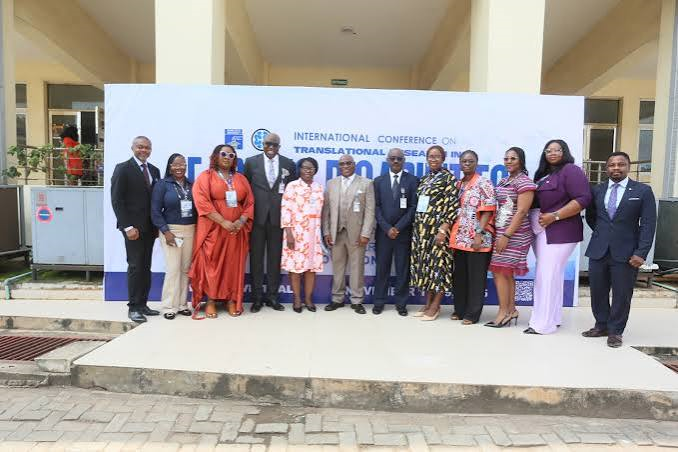
Babcock Conference Raises Awareness on Dyslexia, Challenges Misconceptions About Learning Difficulties
Babcock University’s learning disabilities conference has called for inclusive teaching reforms to support children with dyslexia, dyscalculia and other neurodivergent conditions. With 60% of learning disabilities linked to specific learning challenges and two-thirds of teachers lacking adequate knowledge, experts warned that rigid classroom practices are wrongly branding struggling pupils as lazy or unintelligent.
 Tech & Education
SACOETEC Graduates 4,944 Students, Produces 31 First-Class Graduates
Sikiru Adetona College of Education, Science and Technology (SACOETEC), Omu-Ajose, Ogun State, will today graduate 4,944 students at its second combined convocation, with 31 earning first-class honours. Provost Dr Modupe Oba-Adenuga says the ceremony is more than a certificate presentation; it is a celebration of a college delivering competent, professionally equipped teachers and degree holders under its NCE-Degree Dual Mandate. Governor Dapo Abiodun’s support, including increased subvention, h
 Tech & Education
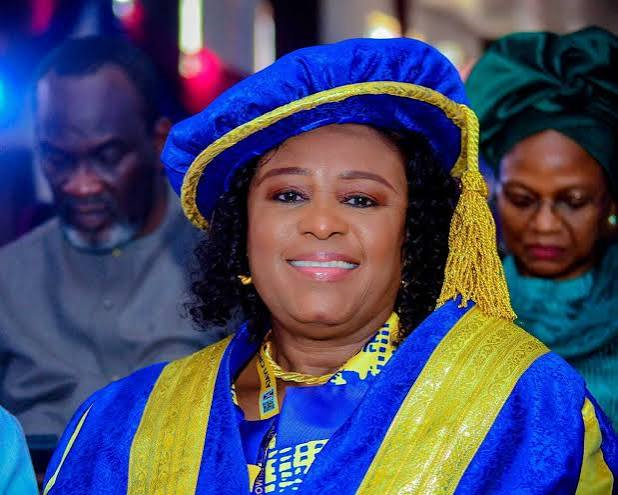
Ajayi Crowther VC Urges NELFUND to Extend Student Loans to Private Universities
Professor Ebunoluwa Oduwole, Vice-Chancellor of Ajayi Crowther University, has challenged the Federal Government to extend the Nigerian Education Loan Fund to students in accredited private universities, arguing that excluding them defeats the scheme’s fundamental purpose of making higher education accessible to all qualified Nigerians. With 4,104 graduands at its 18th convocation, including 116 First Class degrees and 87 doctoral awards, Oduwole says private institutions are shouldering a signi
 Tech & Education
YABATECH Becomes University After 20-Year Wait, Pledges Technical Education Reform
Yaba College of Technology (YABATECH) has officially transformed from a polytechnic into a specialised university after nearly two decades of advocacy, with President Bola Tinubu approving the conversion. Rector Dr Ibraheem Adedotun Abdul says the new status is not a trophy but a mandate: to deepen specialised technological education, research, innovation, and industry partnerships, and to produce the highly skilled manpower Nigeria’s economy desperately needs. The announcement came at the insti
Comments (0)
Leave a comment
All comments are moderated before publishing. Your email is never published.