
Ajayi Crowther VC Urges NELFUND to Extend Student Loans to Private Universities
Professor Ebunoluwa Oduwole, Vice-Chancellor of Ajayi Crowther University, has challenged the Federal Government to extend the Nigerian Education Loan Fund to students in accredited private universities, arguing that excluding them defeats the scheme’s fundamental purpose of making higher education accessible to all qualified Nigerians. With 4,104 graduands at its 18th convocation, including 116 First Class degrees and 87 doctoral awards, Oduwole says private institutions are shouldering a signi
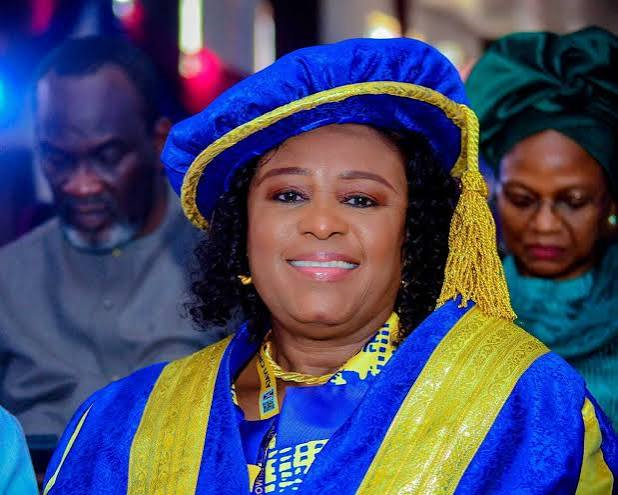
Vice-Chancellor of Ajayi Crowther University (ACU), Oyo, Professor Ebunoluwa Oduwole, has called on the Federal Government to extend the Nigerian Education Loan Fund (NELFUND) to students of accredited private universities, describing their exclusion as a policy blind spot that undermines the scheme’s core mission.
Speaking at a press conference on the university campus in Oyo town on Monday, November 24, 2026, to herald the institution’s 18th Convocation Ceremony, Oduwole framed the demand not as a plea for institutional favour but as a matter of equity for Nigerian students. Her argument was direct and unsparing: “Federal Government support for education should be about the Nigerian student, not about the ownership of institutions. If a student is a Nigerian, is admitted through the Joint Admissions and Matriculation Board, and is studying in an accredited university in Nigeria, that student deserves support.”
The Vice-Chancellor did not stop at moral suasion. She urged the Federal Government and NELFUND management to review the existing legal framework and establish a mechanism through which accredited private universities could participate in the student loan scheme. “Students in private institutions in Nigeria are still waiting for the full outcome of this initiative,” she said, pointing to the thousands of Nigerians enrolled in private universities who remain outside the reach of a fund designed to democratise access to higher education.
NELFUND, established under the Student Loans (Access to Higher Education) Act, 2024, currently covers students in public universities, polytechnics, and colleges of education. Private institution students, regardless of their accreditation status or the regulatory rigour they undergo, are excluded. For Oduwole, that exclusion is not merely unfair. It is illogical.
She used the scale of ACU’s own contribution to illustrate her point. A total of 4,104 graduands will be awarded degrees and other qualifications at the 18th convocation. At the undergraduate level, 116 students will receive First Class degrees, 1,207 will receive Second Class Upper degrees, 693 Second Class Lower degrees, and 45 Third Class degrees. At the postgraduate level, 158 graduands will receive postgraduate diplomas, 1,798 will receive master’s degrees, and 87 will receive doctoral degrees. “These figures demonstrate that private universities are shouldering a significant proportion of Nigeria’s higher education responsibilities and deserve corresponding recognition in the country’s educational funding framework,” Oduwole said.
She preemptively dismantled the argument that private universities are excluded because of concerns about academic standards. “If there are objections, if there are issues, there is a formal process we follow. When we talk about quality assurance, it means there is something you are assuring. We ensure that quality is not compromised. So when we say First Class, we mean First Class,” she said. ACU, she noted, is fully accredited by JAMB and has deployed information and communications technology not only in teaching and learning but also in conducting credible examinations. The university has adopted a blend of face-to-face and virtual learning to enhance academic delivery and improve access to educational resources.
The regulatory record supports her contention. The National Universities Commission recently approved new academic programmes for ACU for the 2026/2027 academic session, including Bachelor of Medicine and Bachelor of Surgery (MBBS), Pharmacy, B.Sc. Anatomy, B.Sc. Physiology, B.Sc. Pharmacology, B.Sc. Public Health, and B.Sc. Artificial Intelligence. “These are not just numbers. They are a resounding vote of confidence in our academic and infrastructural standards,” Oduwole said.
The Vice-Chancellor’s intervention lands at a sensitive moment in Nigeria’s higher education policy. NELFUND was conceived as a response to the cost barrier that keeps thousands of qualified Nigerians out of tertiary institutions. By restricting its coverage to public institutions, the scheme has created a two-tier system in which students who choose private universities, often because public institutions are oversubscribed or geographically inaccessible, are left to shoulder the full cost of their education without state support.
For Oduwole, the solution is not complicated. It requires political will, a legal amendment, and a regulatory framework that treats accreditation, not ownership, as the criterion for eligibility. Private universities that meet the same standards as their public counterparts should be treated as partners in the national education project, not as outsiders. The 4,104 graduands walking the stage this week are a reminder of what private institutions contribute. The question is whether the Federal Government is listening.
Sponsored

Related stories
 Tech & Education
YABATECH Becomes University After 20-Year Wait, Pledges Technical Education Reform
Yaba College of Technology (YABATECH) has officially transformed from a polytechnic into a specialised university after nearly two decades of advocacy, with President Bola Tinubu approving the conversion. Rector Dr Ibraheem Adedotun Abdul says the new status is not a trophy but a mandate: to deepen specialised technological education, research, innovation, and industry partnerships, and to produce the highly skilled manpower Nigeria’s economy desperately needs. The announcement came at the insti
 Tech & Education
OSPOHAS Plans Nigeria’s First Polytechnic Teaching Hospital as 4,817 Graduates Celebrate 50 Years
The Ogun State Polytechnic of Health and Allied Sciences (OSPOHAS), Ilese-Ijebu, has announced plans to establish Nigeria's first polytechnic teaching hospital, a facility Rector Dr Rasaki Yinka Akinbo says will provide specialised clinical training for students and comprehensive healthcare for surrounding communities. The disclosure came as the institution unveiled a 4,817-strong graduating class and a week-long programme marking its 50th anniversary, from a 1976 health technology school to a f
 Tech & Education
NUC Restricts “Professor of Practice” Title, Warns Universities Against Misuse
The National Universities Commission (NUC) has barred universities from introducing or conferring the title “Professor of Practice,” insisting that the professorial cadre remains strictly regulated and reserved for academics who meet established criteria. The directive, communicated to vice chancellors nationwide, is a blow to institutions seeking to bring industry experts into the classroom under a prestigious title, and it raises fresh questions about how Nigerian universities can balance acad
 Tech & Education
JOSTUM Makes Historic Debut in the Interdisciplinary Science Rankings
Joseph Sarwuan Tarka University, Makurdi (JOSTUM) has made its debut in the Times Higher Education Interdisciplinary Science Rankings, landing in the 601–700 band globally—a milestone that places the Benue-based institution among 27 Nigerian universities featured in the 2027 edition. Vice-Chancellor Prof. Isaac Itodo credits TETFund-backed infrastructure, a surge in research output, and a deliberate shift toward problem-solving science. But with only two Nigerian universities in the global top 3
Comments (0)
Leave a comment
All comments are moderated before publishing. Your email is never published.