
YABATECH Becomes University After 20-Year Wait, Pledges Technical Education Reform
Yaba College of Technology (YABATECH) has officially transformed from a polytechnic into a specialised university after nearly two decades of advocacy, with President Bola Tinubu approving the conversion. Rector Dr Ibraheem Adedotun Abdul says the new status is not a trophy but a mandate: to deepen specialised technological education, research, innovation, and industry partnerships, and to produce the highly skilled manpower Nigeria’s economy desperately needs. The announcement came at the insti
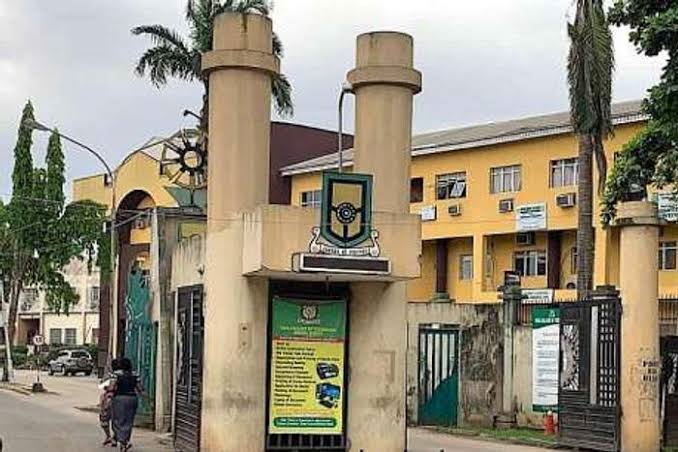
Yaba College of Technology (YABATECH), one of Nigeria’s most storied technical institutions, has completed its long-awaited transformation from a polytechnic into a specialised university, ending nearly two decades of advocacy and signalling a new chapter for technical education in the country.
The conversion, approved by President Bola Ahmed Tinubu, was announced by the institution’s Rector, Dr Ibraheem Adedotun Abdul, at YABATECH’s 38th convocation dinner and awards in Lagos. Abdul described the development as a defining moment in the institution’s history, noting that it represented the culmination of sustained efforts by successive governing councils, management teams, and stakeholders since 2006. He particularly commended the current governing council for its strategic direction, commitment, and support, which he said contributed significantly to the realisation of the long-awaited transformation.
But the Rector was careful to frame the new status as a beginning, not an ending. “The new status comes with greater responsibilities,” Abdul said, requiring the institution to intensify its focus on specialised technological education, vocational studies, research, innovation, entrepreneurship, and the production of highly skilled manpower. The college, he explained, will build on its longstanding reputation for practical learning while adapting its programmes, facilities, teaching methods, and partnerships to meet the demands of its new university status.
The physical transformation is already underway. Abdul disclosed that the institution is undergoing changes across its classrooms, laboratories, workshops, studios, and administrative structures as part of efforts to meet contemporary educational needs and contribute to national development. “We are practical, innovative, forward-thinking and driven by an enduring ambition to push boundaries,” he said. “Tonight, we are also celebrating the spirit of innovation and the remarkable transformation taking place constantly within our workshops, studios and classrooms.” The message was clear: YABATECH is not content to rest on its history. It intends to build a new one.
The convocation dinner was organised to recognise individuals and organisations whose contributions had strengthened the institution, with the administration reaffirming its commitment to rewarding excellence, discipline, and meritorious service. Abdul also used the occasion to signal the university’s intention to deepen existing partnerships and explore new collaborations with industries, government agencies, international organisations, philanthropists, alumni, and professional bodies. Such collaborations, he noted, would promote innovation, practical training, research, entrepreneurship, employability, and sustainable development. For a specialised university, these partnerships are not optional extras. They are the connective tissue between the classroom and the economy.
A major highlight of the ceremony was the presentation of Distinguished Service Awards to six Federal Government-appointed members of the Governing Council in recognition of their contributions to the development, stability, and transformation of the institution. The college also honoured individuals and corporate organisations under its Award of Excellence in Community Service and Social Impact category for their contributions to educational development, student empowerment, and institutional advancement. The awards recognised interventions in scholarships, financial assistance, grants, mentorship, fellowships, and professional development initiatives that had expanded opportunities for students.
In his remarks, the Speaker of the Lagos State House of Assembly, Hon. Mudashiru Obasa, who chaired the occasion, commended the institution’s transformation and urged its management and Governing Council not to rest on their achievements. Obasa, who was also recognised for his contributions to educational development and support for the college, encouraged the leadership to remain focused on its new mandate as a specialised university. The Chairman of the Governing Council, Prof. Funso Isolaowa Afolabi, acknowledged the collective efforts of stakeholders in driving the institution’s transformation and urged them to sustain their commitment. “There is need for unity, institutional stability, strategic leadership and collective ownership of the college’s achievements as it begins a new phase,” Afolabi said.
For YABATECH, the conversion is a vindication of a long struggle. For Nigeria’s technical education sector, it is a test case. If a polytechnic with YABATECH’s reputation can successfully reinvent itself as a specialised university without losing its practical, workshop-based identity, it will offer a template for other institutions seeking to bridge the gap between academic theory and industrial application. If it fails, the conversion will be remembered as a change of name rather than a change of substance.
The Rector’s closing message was a pledge and a warning. The institution will deepen its focus on research, innovation, and industry partnerships. It will produce graduates who can build, maintain, design, and lead. But the new status demands new standards, new investment, and a sustained commitment from government, the private sector, and the institution itself. YABATECH has spent 20 years asking for a university. It now has one. The harder work of proving it deserves the title has just begun.
Sponsored

Related stories
 Tech & Education
Ajayi Crowther VC Urges NELFUND to Extend Student Loans to Private Universities
Professor Ebunoluwa Oduwole, Vice-Chancellor of Ajayi Crowther University, has challenged the Federal Government to extend the Nigerian Education Loan Fund to students in accredited private universities, arguing that excluding them defeats the scheme’s fundamental purpose of making higher education accessible to all qualified Nigerians. With 4,104 graduands at its 18th convocation, including 116 First Class degrees and 87 doctoral awards, Oduwole says private institutions are shouldering a signi
 Tech & Education
OSPOHAS Plans Nigeria’s First Polytechnic Teaching Hospital as 4,817 Graduates Celebrate 50 Years
The Ogun State Polytechnic of Health and Allied Sciences (OSPOHAS), Ilese-Ijebu, has announced plans to establish Nigeria's first polytechnic teaching hospital, a facility Rector Dr Rasaki Yinka Akinbo says will provide specialised clinical training for students and comprehensive healthcare for surrounding communities. The disclosure came as the institution unveiled a 4,817-strong graduating class and a week-long programme marking its 50th anniversary, from a 1976 health technology school to a f
 Tech & Education
NUC Restricts “Professor of Practice” Title, Warns Universities Against Misuse
The National Universities Commission (NUC) has barred universities from introducing or conferring the title “Professor of Practice,” insisting that the professorial cadre remains strictly regulated and reserved for academics who meet established criteria. The directive, communicated to vice chancellors nationwide, is a blow to institutions seeking to bring industry experts into the classroom under a prestigious title, and it raises fresh questions about how Nigerian universities can balance acad
 Tech & Education
JOSTUM Makes Historic Debut in the Interdisciplinary Science Rankings
Joseph Sarwuan Tarka University, Makurdi (JOSTUM) has made its debut in the Times Higher Education Interdisciplinary Science Rankings, landing in the 601–700 band globally—a milestone that places the Benue-based institution among 27 Nigerian universities featured in the 2027 edition. Vice-Chancellor Prof. Isaac Itodo credits TETFund-backed infrastructure, a surge in research output, and a deliberate shift toward problem-solving science. But with only two Nigerian universities in the global top 3
Comments (0)
Leave a comment
All comments are moderated before publishing. Your email is never published.