
Babcock Conference Raises Awareness on Dyslexia, Challenges Misconceptions About Learning Difficulties
Babcock University’s learning disabilities conference has called for inclusive teaching reforms to support children with dyslexia, dyscalculia and other neurodivergent conditions. With 60% of learning disabilities linked to specific learning challenges and two-thirds of teachers lacking adequate knowledge, experts warned that rigid classroom practices are wrongly branding struggling pupils as lazy or unintelligent.
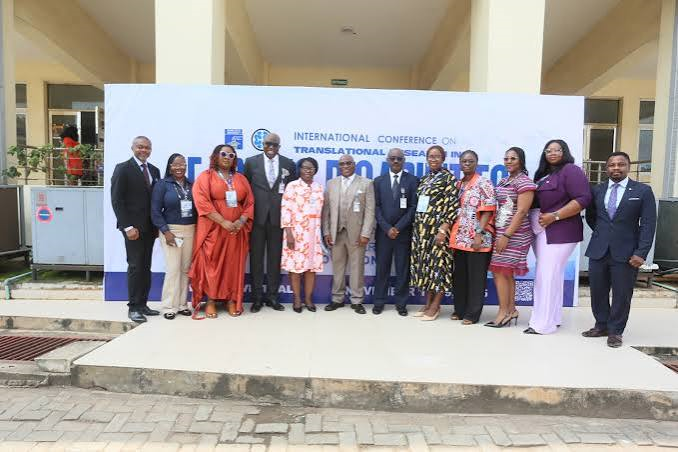
Babcock University has hosted a landmark international conference on learning disabilities, with educators, clinicians, researchers, policymakers, and parents converging on its campus to demand a radical shift in how Nigerian schools treat children whose brains learn differently.
The International Conference on Translational Research in Learning Disabilities (ICTR-LD 2026), held from November 17 to 19 and themed “Neurodiversity: Helping Different Minds Learn Better,” brought together a coalition of stakeholders to examine how research on conditions such as dyslexia, dyscalculia, and dysgraphia can be translated into practical interventions in classrooms, campuses, and homes. The conference’s central message was unambiguous: the one-size-fits-all model of Nigerian education is failing a significant portion of its students, and the cost of that failure is measured in buried potential, damaged self-esteem, and thousands of children wrongly labelled as lazy or unintelligent.
Professor Afolarin Ojewole, President and Vice-Chancellor of Babcock University, delivered the keynote challenge, urging participants to reconsider conventional assumptions about intelligence and learning. He described the conference as both a moral and pedagogical turning point, noting that learners with dyslexia, dyscalculia, and slow learning processes have suffered in silence because their challenges are routinely misunderstood. “For too long, learners with dyslexia, dyscalculia, or slow learning processes have suffered in silence,” Ojewole said. “Their struggles have often been mistaken for laziness, while their immense potential has remained buried under rigid and punitive classroom systems”.
The scale of the problem is staggering. Research cited at the conference indicates that specific learning disabilities account for 60 per cent of all learning disabilities in Nigeria, with dyslexia affecting 26 per cent of pupils, dyscalculia 18 per cent, and dysgraphia 16 per cent. Perhaps more damning is the finding that approximately two-thirds of Nigerian teachers lack adequate knowledge of specific learning disabilities, leading to widespread misdiagnosis and the persistent mislabelling of affected children as lazy or stupid. The conference heard that many Nigerian schools desire inclusive systems but lack the tools, funding, and specialised personnel needed to implement them effectively.
The policy dimension was addressed by Professor Salisu Shehu, Executive Secretary of the Nigerian Educational Research and Development Council (NERDC), who described the conference as a platform for strategic partnerships in education, research, and development. He reaffirmed education’s role in sustainable development, particularly in an era shaped by digital technology and artificial intelligence, and expressed the council’s readiness to collaborate with Babcock University and other institutions. The Teachers Registration Council of Nigeria (TRCN) echoed the call, emphasising through its representative, Princess Adaobi Ekwuno, that research must extend beyond academic publications and translate into tangible improvements in educational quality. The council reaffirmed every child’s right to quality, inclusive, and equitable education, regardless of individual learning needs, and stressed the responsibility of teachers to acquire the competencies required to support diverse learners.
The conference’s communiqué set out a practical agenda: stronger institutional commitment to inclusive education through teacher training, sensory-friendly learning environments, peer support initiatives, clear referral pathways, and improved collaboration among educators, families, clinicians, and policymakers. It also called for the involvement of learners in shaping policies and services affecting them, and insisted that technology and interventions be responsibly implemented and guided by evidence and professional judgment.
For Nigeria, the implications are profound. The country’s education system is already grappling with overcrowded classrooms, underfunded schools, and a chronic shortage of trained teachers. Adding neurodiversity to the agenda is not an optional refinement but a fundamental question of justice. A child with dyslexia who is punished for struggling to read, or a child with dyscalculia who is shamed for failing to grasp mathematics, is not a failure. The system is. Babcock University’s conference has provided the evidence, the language, and the moral clarity. The question now is whether Nigeria’s schools, from the ministry to the classroom, will act on it.
Sponsored

Related stories
 Tech & Education
NUC Directs Universities to Adopt AI Policies for Teaching, Research, Administration
The National Universities Commission has issued a formal directive requiring all Nigerian universities to develop and implement comprehensive artificial intelligence policies, warning that institutions without clear frameworks for AI use, ethics, and academic integrity risk producing graduates unprepared for a world already transformed by the technology. With concerns mounting over plagiarism, data privacy, and the digital divide, the NUC says the time for deliberation is over and the time for a
 Tech & Education
SACOETEC Graduates 4,944 Students, Produces 31 First-Class Graduates
Sikiru Adetona College of Education, Science and Technology (SACOETEC), Omu-Ajose, Ogun State, will today graduate 4,944 students at its second combined convocation, with 31 earning first-class honours. Provost Dr Modupe Oba-Adenuga says the ceremony is more than a certificate presentation; it is a celebration of a college delivering competent, professionally equipped teachers and degree holders under its NCE-Degree Dual Mandate. Governor Dapo Abiodun’s support, including increased subvention, h
 Tech & Education
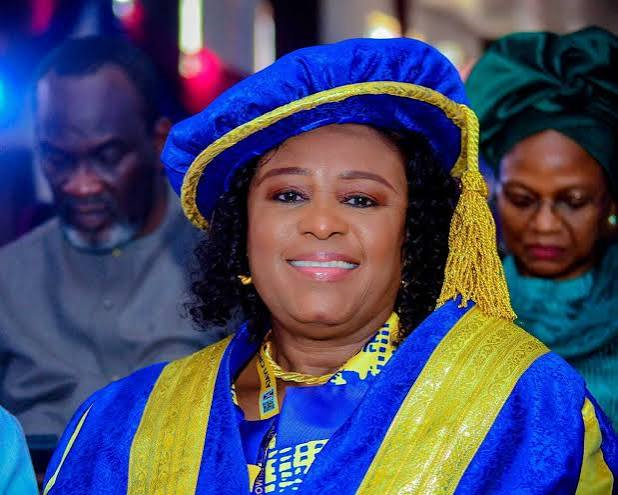
Ajayi Crowther VC Urges NELFUND to Extend Student Loans to Private Universities
Professor Ebunoluwa Oduwole, Vice-Chancellor of Ajayi Crowther University, has challenged the Federal Government to extend the Nigerian Education Loan Fund to students in accredited private universities, arguing that excluding them defeats the scheme’s fundamental purpose of making higher education accessible to all qualified Nigerians. With 4,104 graduands at its 18th convocation, including 116 First Class degrees and 87 doctoral awards, Oduwole says private institutions are shouldering a signi
 Tech & Education
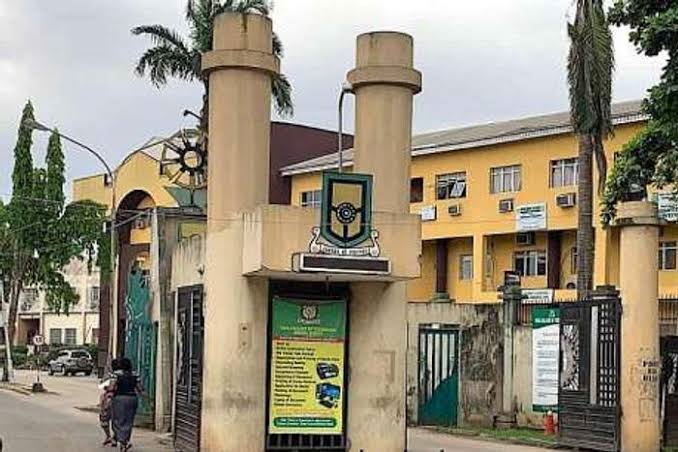
YABATECH Becomes University After 20-Year Wait, Pledges Technical Education Reform
Yaba College of Technology (YABATECH) has officially transformed from a polytechnic into a specialised university after nearly two decades of advocacy, with President Bola Tinubu approving the conversion. Rector Dr Ibraheem Adedotun Abdul says the new status is not a trophy but a mandate: to deepen specialised technological education, research, innovation, and industry partnerships, and to produce the highly skilled manpower Nigeria’s economy desperately needs. The announcement came at the insti
Comments (0)
Leave a comment
All comments are moderated before publishing. Your email is never published.