
Northern Governors Alliance Launches N15 Billion Emergency Out-of-School Child Campaign
A coalition of Northern governors has launched a N15 billion emergency regional fund designed to pull millions of out-of-school children off the streets through a combined approach of infrastructural upgrades, school feeding initiatives, and the integration of traditional Almajiri education with standard Western literacy.
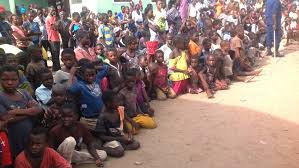
Spurred by increasingly alarming demographic metrics regarding regional literacy rates, child destitution, and the volatile security implications of an uneducated youth populace, a powerful coalition of Northern State Governors has officially ratified a joint fifteen billion naira emergency intervention fund to aggressively reduce the out-of-school child population across the region. The comprehensive humanitarian and educational campaign, which was formally launched during a high-level regional summit in Kaduna, is meticulously engineered to directly target highly vulnerable rural communities and border towns where extreme poverty, displacement from communal clashes, and the persistent activities of bandit groups have historically forced millions of children completely out of the academic loop.
A deep dive into the strategic asset allocation of the fifteen billion naira fund reveals that the resources will be divided across three critical, interconnected intervention pillars designed to address the root socio-economic causes of school dropout rates. The first pillar focuses on the immediate physical rehabilitation of thousands of dilapidated primary schools, the construction of secure perimeter fencing, and the provision of modern textbooks and learning aids. The second pillar tackles household economic vulnerability through the implementation of a fully funded, community-driven school feeding programme, providing children with free, highly nutritious daily meals to incentivize parents to send their wards to school rather than deploying them for street hawking or child labor.
The third, and perhaps most complex, pillar involves the execution of extensive community sensitization drives to systematically integrate traditional Quranic education systems, popularly known as the Almajiri system, with standard basic Western literacy, numeracy, and vocational skill curricula. Regional coordinators emphasized that by transforming these traditional settings into standardized basic education centers, the government can effectively shield millions of vulnerable children from the manipulative recruitment networks of insurgent groups and bandits. The Northern Governors Alliance has established a strict, independent monitoring and evaluation committee comprised of civil society organizations and international development partners to track the implementation metrics across all target local government areas, ensuring total transparency and accountability in the utilization of the emergency fund.
Sponsored

Related stories
 Tech & Education
African Universities Urged to Rethink Teaching in AI Era
At UNILAG's International Week, leaders from the University of Ghana, UNILAG and UNDP argued that AI makes memorisation-based teaching obsolete and urged universities to reform curricula, assessment and incentives to reward critical thinking and innovation.
 Tech & Education
Otti’s Wife Supports 1,000 Abia Pupils With School Materials
The wife of the Abia State Governor, Mrs. Priscilla Otti, has distributed back-to-school materials to 1,000 indigent pupils from 50 public schools across the state's 17 local government areas, declaring that a child's background should never be a barrier to greatness. The intervention, organised by the Safe Tent Care Initiative in collaboration with the Abia State Universal Basic Education Board, is designed to support families struggling to provide essential educational materials for their chil
 Tech & Education
AI Era: Experts Warn Nigerian Graduates Face Skills Gap
Education experts have warned that Nigerian universities risk producing graduates who are ill-prepared for an AI-driven global job market unless curricula are urgently overhauled. At the StudyIn Global Study Conference 2026 in Lagos, stakeholders called for proactive curriculum reform, ethical AI adoption, and a shift from producing AI users to nurturing AI innovators who can solve real-world problems.
 Tech & Education
YABATECH, Threatremeter Launch Filmmaking Centre
Yaba College of Technology has signed a partnership with Threatremeter Nigeria Limited to establish a Centre for Filmmaking and Production, offering certified training in acting, directing and film production for students and the public.
Comments (0)
Leave a comment
All comments are moderated before publishing. Your email is never published.