
Nigerian Oluwami Dosunmu-Ogunbi Becomes First Black Woman to Earn PhD in Robotics at Michigan
Nigerian-born Oluwami Dosunmu-Ogunbi has made history as the first Black woman to earn a PhD in Robotics Engineering from the University of Michigan, capping a doctoral journey marked by mentorship, outreach and academic distinction.
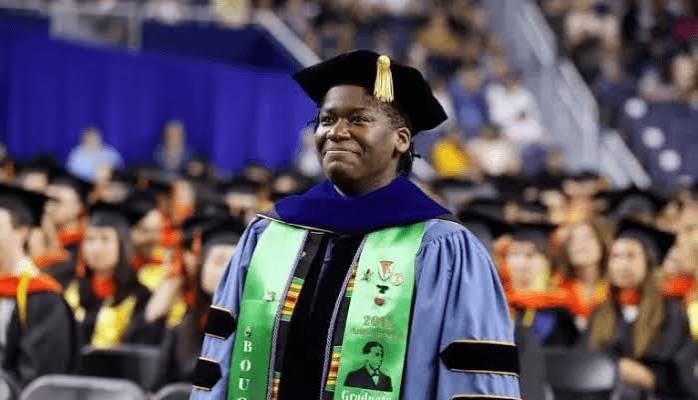
A Nigerian woman, Oluwami Dosunmu-Ogunbi, has made history as the first Black woman to earn a PhD in Robotics Engineering from the University of Michigan, marking a milestone that has drawn widespread admiration among Nigerians both at home and in the diaspora.
Dosunmu-Ogunbi achieved the feat during the University of Michigan College of Engineering's convocation ceremony, where she delivered a reflective speech to fellow graduates centred on gratitude, purpose and the responsibility of using an education to make a meaningful difference in the world.
The daughter of Nigerian immigrants, she used part of her address to acknowledge that no one reaches such a milestone entirely through individual effort, crediting the teachers, mentors, family members and friends who supported her throughout her doctoral journey. She noted that success, in her view, is never achieved alone, but is instead shaped by the collective support of the people who believe in someone long before the outcome is certain.
Beyond the historic nature of her achievement, Dosunmu-Ogunbi used her platform to emphasise that she hopes her legacy will extend well beyond simply being "the first." She spoke about what she considers the deeper responsibilities of a Michigan-trained engineer — someone who provides not just scientific and technological leadership, but who also remains intellectually curious, socially conscious, and committed to building collaborative solutions to real societal problems. She described this as part of a broader duty engineers carry to make a positive contribution to the world, reflecting on how her own motivations for pursuing engineering evolved over time from something comparatively minor into a much deeper sense of purpose.
According to the University of Michigan's Robotics Department, Dosunmu-Ogunbi's path through her doctoral programme reflects an experience common to many PhD students , beginning the journey without a clearly defined destination, but gradually developing into an accomplished researcher through sustained persistence and hard work. Her time at Michigan was defined by far more than research output alone, as she also built a reputation as a mentor and leader within the university's broader robotics community.
Among her notable distinctions, Dosunmu-Ogunbi received the MLK Spirit Award from the College of Engineering, presented in recognition of her mentorship and leadership contributions. She also served as a Robotics Outreach Ambassador for three consecutive years, from 2021 to 2023, a role focused on championing diversity and mentorship within STEM education and encouraging younger students, particularly those from underrepresented backgrounds, to pursue careers in robotics and engineering.
Her list of achievements extends further still. She finished as runner-up in the College of Engineering's Three-Minute Thesis Competition, a format that challenges doctoral candidates to distil years of complex research into a concise, accessible presentation. She was also inducted into the Bouchet Society, an honour that recognises outstanding scholarly achievement while actively promoting diversity within graduate education , a distinction reserved for graduate students and alumni who exemplify both academic excellence and a commitment to inclusion within their fields.
Looking ahead, Dosunmu-Ogunbi is now pursuing the next stage of her academic career. According to the university, she is currently interviewing for faculty positions as she seeks to continue her research work in robotics while also focusing on mentorship and engineering education for the next generation of students. Her trajectory suggests she intends to remain closely engaged with the kind of outreach and mentorship work that defined much of her time as a doctoral student, rather than moving purely into research in isolation.
Her achievement adds to a growing list of Nigerians making significant contributions to science, technology and engineering on the global stage, at a time when conversations about the "japa" phenomenon — the emigration of skilled Nigerians abroad — often focus heavily on the challenges driving that trend. Stories like Dosunmu-Ogunbi's offer a different, more celebratory dimension to that broader narrative, highlighting how Nigerians continue to break new ground and achieve historic firsts within some of the world's most competitive academic and research institutions.
As she prepares to transition into a faculty role, Dosunmu-Ogunbi's journey is likely to continue serving as a source of inspiration for young Nigerians, and particularly young Nigerian women, considering careers in robotics, engineering and the broader STEM fields, both within Nigeria and across the diaspora.
Sponsored

Related stories
 Tech & Education
Bamidele Unveils N200m Renovated Science College
Senate Leader Opeyemi Bamidele has commissioned the renovated Government Science College, Iyin-Ekiti, personally funded at over N200 million, donating buses to the school and nearby FUTESI while promising a second phase of upgrades.
 Tech & Education
Abia Students Crowned Global Debate Champions
Students from public schools in Abia State, representing Nigeria, have emerged overall champions at the 2026 International Schools Debate Championship in Doha, Qatar, winning four major trophies and 12 laurels after defeating teams from Jordan, India, Qatar, the Philippines, Kenya and others. The historic victory has been hailed as proof that Governor Alex Otti's education reforms are producing world-class scholars.
 Tech & Education
WAEC Appoints Suleiman Kum as New Head of Nigeria National Office
The West African Examinations Council has appointed 56-year-old Suleiman Danlami Kum as the new Head of the Nigeria National Office, succeeding Dr Amos Josiah Dangut, who has assumed office as the council’s Registrar and Chief Executive Officer. A seasoned test developer, administrator and executive with 28 years of service, Kum is expected to drive technological innovation and examination security across Nigeria’s foremost examinations body.
 Tech & Education
Emmanuel College ’88 Set Renovates Classrooms, Pays Exam Fees
The Progressives of the Unique 1988 Set of Emmanuel College Owerri have unveiled a renovated five-classroom block and paid NECO and WAEC fees for financially disadvantaged students at their alma mater.
Comments (0)
Leave a comment
All comments are moderated before publishing. Your email is never published.