
Nigeria to Host First Global AMR Conference in Africa
Nigeria is set to make history by hosting the 5th Global High-Level Ministerial Conference on Antimicrobial Resistance in Abuja from December 6 to 8, 2026—the first time the global gathering will be held in Africa. Coordinating Minister of Health Prof. Muhammad Ali Pate has described AMR as a "silent pandemic" that kills quietly, as four federal ministries commit to a unified One Health strategy to combat a crisis linked to 1.3 million deaths annually worldwide.

Nigeria is set to make history as the first African nation to host the Global High-Level Ministerial Conference on Antimicrobial Resistance, with the 5th edition scheduled to hold at the Transcorp Hilton in Abuja from December 6 to 8, 2026, bringing together ministers and global health, agriculture and environmental stakeholders from over 100 countries to review progress and develop practical solutions to a crisis linked to an estimated 1.3 million deaths annually worldwide.
The conference, themed “One Health — Advancing Global AMR Commitments through Local Action,” was announced at a press briefing held at the Conference Room of the Federal Ministry of Agriculture and Food Security on Monday, October 12, 2026. Speaking at the briefing, the Coordinating Minister of Health and Social Welfare, Prof. Muhammad Ali Pate, described AMR as a “silent pandemic” and a complicated problem that kills quietly, stressing that the threat requires a combined attack across human health, animal health, agriculture and the environment.
Pate noted that when antibiotics and other antimicrobials stop working, routine infections become dangerous, surgery and childbirth carry greater risk, and the cost of care rises for every family. He said Nigeria is proud to host the 5th edition to deliver on global promises already made — the 2024 UN Political Declaration on AMR, the Muscat Manifesto and the Jeddah Commitments — with the Abuja conference billed to adopt the Abuja Compact on AMR. The Coordinating Minister added that Nigeria’s approach goes beyond healthcare, adopting a One Health strategy that brings together health, agriculture, livestock and environment, warning against indiscriminate and wrong use of antibiotics and urging Nigerians to avoid self-medication and complete their doctor’s prescription to the end.
Also speaking, the Minister of Environment, Malam Balarabe Abbas Lawal, stressed that resistance does not respect boundaries between sectors as it moves from people to animals, from farms to food, and through water, soil and waste, hence no single ministry can win the fight alone. He said the four ministries — Health and Social Welfare, Agriculture and Food Security, Livestock Development, and Environment — are committing to acting as one government through a joint One Health coordination mechanism that will outlast the conference, delivering local action in every sector through responsible antimicrobial use in hospitals, on farms and in animal production, and safe management of waste and water.
The Minister also emphasised the importance of hosting an inclusive conference that gives voice to governments, scientists, civil society, youth, the private sector and communities, while committing to accountability by reporting publicly on Nigeria’s progress and supporting follow-up of the Abuja Compact through the Troika mechanism. He stressed that a clean environment, improved sanitation, personal and community hygiene are critical to preventing infections that drive the need for antibiotics.
On his part, the Minister of Livestock Development, Idi Mukhtar Maiha, represented by the Chief Veterinary Officer, Dr. Abdukareem Durosunlorun, stressed the need for farmer education, warning farmers not to prioritise profit over human health. He urged poultry and livestock farmers to use antibiotics only on prescription and to strictly observe withdrawal periods before taking their products to the market.
The briefing highlighted the broader context of Nigeria’s fight against AMR. The country launched its Second National Action Plan on Antimicrobial Resistance (NAP 2.0) in 2024, covering 2024 to 2028, which outlines strategies for improving antimicrobial stewardship, enhancing surveillance and detection capabilities, promoting research and development and strengthening healthcare systems. A World Health Organisation evidence brief published in 2026 identified weak regulatory enforcement, fragmented surveillance, inadequate antimicrobial stewardship and limited multisectoral coordination as core barriers to an effective One Health response in Nigeria.
The WHO has described AMR as one of the top global public health threats facing humanity, with 4.95 million human deaths estimated to be associated with bacterial AMR worldwide in 2019. Without urgent action, the crisis is predicted to cause over 39 million deaths in the next 25 years, surpassing current mortality rates. For Nigeria, which ranks 20th globally in AMR cases, the Abuja conference represents both a moment of leadership and a critical opportunity to mobilise global action. As Pate put it, the silent pandemic demands a loud and coordinated response, and Nigeria is determined to lead that charge from the front.
Sponsored

Related stories
 Health
Dementia Crisis: Global New Cases to Hit 24.7 Million Annually by 2050
A landmark Australian-led study published in JAMA Neurology has revealed that global dementia cases will more than double by 2050, rising from 11.4 million new diagnoses in 2023 to a staggering 24.7 million annually. With women and low- and middle-income countries bearing the heaviest burden, experts warn that health systems—particularly in Africa and Nigeria—are dangerously unprepared for the coming surge.
 Health
Gbenga Daniel Sponsors Free Surgeries for 754 Ogun Residents
Senator Gbenga Daniel's Gateway Front Foundation, working with a US-based medical mission and Redeemer's Health Village, is providing free surgeries to at least 754 Ogun residents as part of a wider outreach for Ogun East.
 Health
Diri Orders Free Quarterly Health Checks for All Bayelsa Residents at Secondary Facilities
Governor Douye Diri has directed Bayelsa's Ministry of Health to begin free quarterly medical check-ups across all eight local government areas, aimed at helping residents who cannot afford routine screening and promoting early detection of diseases.
 Health
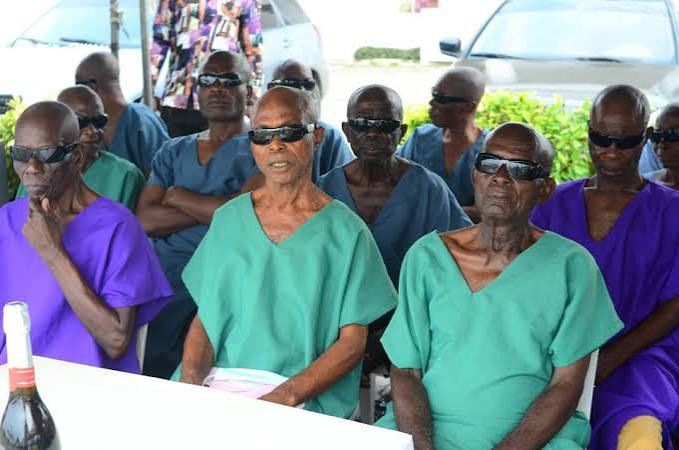
‘Priceless Gift of Sight’ Reaches 400,000 Beneficiaries
FCMB and the Tulsi Chanrai Foundation say their 15-year eye care partnership has reached over 400,000 Nigerians, as a World Sight Day roundtable in Abuja pushes for private-sector funding to sustain and expand care.
Comments (0)
Leave a comment
All comments are moderated before publishing. Your email is never published.