
Bayelsa Community Raises Alarm Over Spreading Skin Disease, Fears Mpox
Residents of Ondewari in Southern Ijaw, Bayelsa State, are battling a mysterious skin disease that doctors at a neighbouring facility suspect is monkeypox, but no test has confirmed it. The community has no functional health centre—an Agip-built hospital has sat idle for over a decade—forcing patients to travel by boat for care. As Nigeria’s mpox caseload ticks upward and Bayelsa is named a priority vaccination state, Ondewari’s outbreak exposes a brutal truth: for riverine communities, the gap
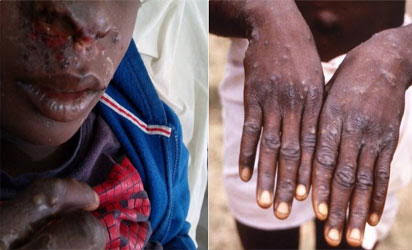
A strange skin disease is spreading through Ondewari, a riverine community in Southern Ijaw Local Government Area of Bayelsa State, and no one can say with certainty what it is. The symptoms—widespread skin eruptions, discomfort, sensitivity to heat, and alternating chills—resemble both chickenpox and monkeypox. A doctor at a nearby health facility in Korokorosei reportedly identified one elderly patient’s condition as monkeypox and referred him to Niger Delta University Teaching Hospital, Okolobiri. But without laboratory confirmation, the diagnosis remains a guess, and the community remains in limbo.
The alarm was raised by the Ondewari Health Education and Environmental Project (OHEEP), a community-based organisation that issued a field report on Sunday documenting the spread of the unidentified illness among children and adults. OHEEP’s programme officer, Woyeinbrakemi Adaka, said several residents had been affected, though the nature of the disease had not been confirmed by medical experts. One resident, Fredrick Simon, said symptoms varied among victims, with some appearing to recover. Another, Seitonkumo Erefawei, public relations officer of the Ondewari youth body, confirmed that some affected residents had withdrawn from public activities.
What makes the outbreak especially alarming is not the disease itself, but the conditions in which it is unfolding. Ondewari has no functional health facility. A health centre constructed and equipped by the Nigerian Agip Oil Company (NAOC) more than a decade ago stands idle, unused for want of medical personnel. Residents must travel roughly 30 minutes by boat to reach the nearest health centre at Ogborodo. For a community already vulnerable—OHEEP cited the recent death of a 43-year-old resident from a snake bite as evidence of the healthcare vacuum—the suspected outbreak is a test of a system that has already failed.
The timing is deeply uncomfortable. Bayelsa State is one of Nigeria’s mpox hotspots. The Nigeria Centre for Disease Control and Prevention has recorded dozens of confirmed cases nationwide, with Bayelsa consistently among the states reporting infections. The National Primary Health Care Development Agency has named Bayelsa and Rivers as the first states to initiate mpox vaccination. The Federal Government has prioritised Bayelsa among five states with the highest mpox burden. Yet in Ondewari, the response to a suspected outbreak has been outsourced to a community organisation with no laboratory, no hospital, and no certainty.
OHEEP’s demands are modest and urgent: that the Bayelsa State Government, Southern Ijaw Local Government Council, and relevant health agencies investigate the suspected outbreak and provide medical assistance; that the Bayelsa State Hospital Management Board activate the Agip-sponsored facility by deploying medical personnel to the community. The organisation warned that failure to act promptly could expose more residents to health risks.
For now, Ondewari waits. The symptoms may be chickenpox. They may be monkeypox. They may be something else entirely. But the uncertainty is not merely clinical—it is structural, the product of a healthcare system that has left a riverine community without a functioning clinic while a vaccine rollout begins elsewhere in the same state. The Agip hospital is built. The equipment is there. The only thing missing is the political will to staff it. Until that changes, Ondewari’s residents will keep travelling by boat for care, and the next outbreak—whatever it turns out to be—will find them just as exposed.
Sponsored

Related stories
 Health
Ash Biomedical, GenBody Partner to Produce HIV Self-Test Kits in Abuja
A Nigerian diagnostics manufacturer, Ash Biomedical Diagnostics Limited, has partnered with South Korea’s GenBody Inc. to introduce and locally produce the ConfiSign HIV Self-Test, with manufacturing set to begin at a new facility in Idu, Abuja, once commissioning is completed in the first quarter of 2027. The deal includes technology transfer, training, and the potential for Nigeria to serve as a distribution hub for West Africa,a significant step toward reducing dependence on imported test kit
 Health
Celeb Laser Clinic Introduces Laser Dentistry in Lagos
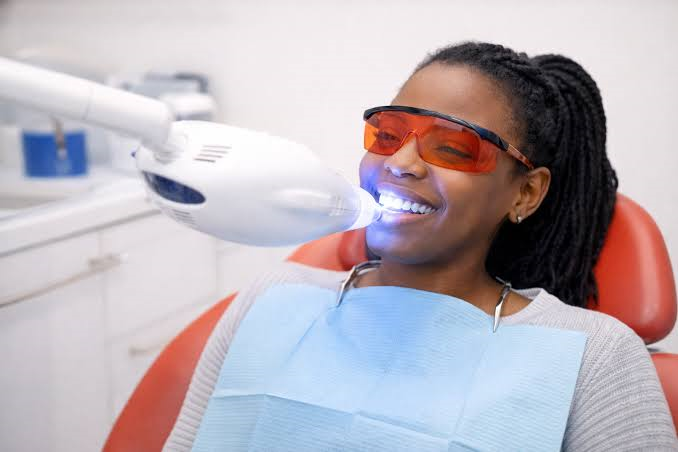
Celeb Laser Clinic has expanded into laser dentistry, offering laser teeth whitening, gum treatment, and specialised dental procedures from its Ikeja base—a move that positions advanced technology against a grim backdrop: 23.9 per cent of Nigerians have untreated cavities, 25.1 per cent suffer severe gum disease, and public primary healthcare facilities remain ill-equipped for basic oral care. Founder Dr Collins Okwu says the technology is a tool, not a substitute for clinical judgment.
 Health
Nigeria Unveils Second Robotic Surgery Platform in Northern Region
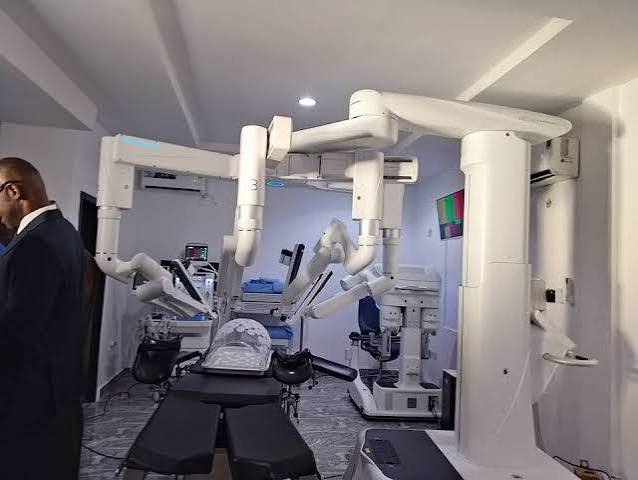
The Federal Government has unveiled Nigeria’s second robotic surgery platform at Eleos Specialist Hospital, Abuja—a milestone that places the country’s capital at the forefront of advanced medical technology in Northern Nigeria. With precision surgery, reduced recovery times, and improved patient outcomes, the platform signals a new era in Nigerian healthcare. But with cost, access, and training still looming large, the question is whether this is a genuine transformation or a gleaming showpiece
 Health
JOHESU Gives FCTA Seven-Day Ultimatum Over Unpaid Health Workers’ Allowances
The Joint Health Sector Unions (JOHESU) has issued a seven-day ultimatum to the Federal Capital Territory Administration (FCTA) to pay outstanding allowances owed to health workers or face an indefinite strike that would paralyse Abuja’s hospitals and clinics. The ultimatum, which expires on November 27, 2026, follows the expiration of a previous 14-day warning and a FCT Minister’s directive that remains unimplemented. With CONHESS adjustment arrears, skipping allowances, and promotion arrears s
Comments (0)
Leave a comment
All comments are moderated before publishing. Your email is never published.