
Nigeria Unveils Second Robotic Surgery Platform in Northern Region
The Federal Government has unveiled Nigeria’s second robotic surgery platform at Eleos Specialist Hospital, Abuja—a milestone that places the country’s capital at the forefront of advanced medical technology in Northern Nigeria. With precision surgery, reduced recovery times, and improved patient outcomes, the platform signals a new era in Nigerian healthcare. But with cost, access, and training still looming large, the question is whether this is a genuine transformation or a gleaming showpiece
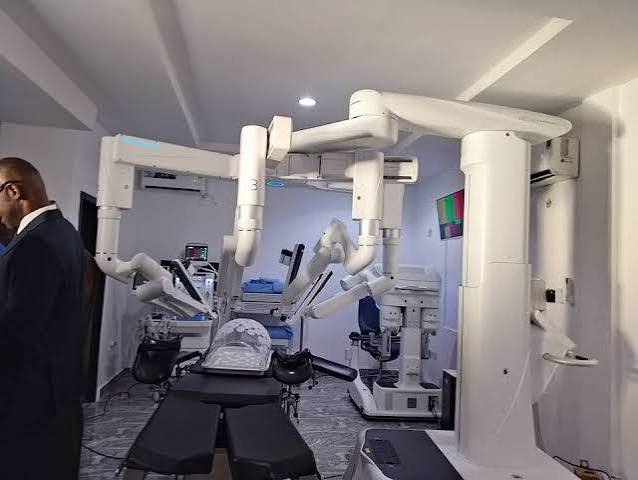
Nigeria’s march toward advanced medical technology has taken a significant step forward with the unveiling of the country’s second robotic surgery platform at Eleos Specialist Hospital in Abuja, marking a major boost for specialised healthcare delivery in Northern Nigeria and the Federal Capital Territory.
The platform, unveiled on Friday, November 20, 2026, by the Federal Ministry of Health and Social Welfare in collaboration with Eleos Specialist Hospital, represents the second installation of its kind in Northern Nigeria and the third in the country, following earlier deployments at the National Hospital, Abuja, and a facility in Lagos. The development is being hailed as a landmark achievement in Nigeria’s quest to reduce medical tourism, improve surgical outcomes, and position the country as a hub for advanced healthcare in West Africa.
Robotic surgery, which uses minimally invasive techniques guided by a surgeon at a console, offers significant advantages over traditional open surgery: smaller incisions, reduced blood loss, lower risk of infection, shorter hospital stays, and faster recovery times. For patients requiring complex procedures—particularly in urology, gynaecology, cardiology, and general surgery—the platform opens access to treatments that were previously available only through medical tourism to countries such as India, Turkey, and the United Kingdom.
Speaking at the unveiling ceremony, the Minister of State for Health, Dr. Tunji Alausa, described the development as a testament to the Federal Government’s commitment to advancing healthcare infrastructure and improving access to quality medical services. He noted that the deployment of robotic surgery platforms across the country was part of a broader strategy to harness technology for healthcare transformation, reduce outbound medical tourism, and build the capacity of Nigerian healthcare professionals to deliver world-class services.
“This is not just about acquiring machines,” Alausa said. “It is about building a healthcare system that can compete globally, retain our best professionals, and offer Nigerians the quality of care they deserve. Robotic surgery is the future, and Nigeria is stepping into that future”.
The Chief Medical Director of Eleos Specialist Hospital, Dr. Chukwuemeka Okonkwo, expressed pride in the hospital’s role as a pioneer in the deployment of robotic surgery in the FCT and Northern Nigeria. He disclosed that the platform was acquired through a partnership with a global medical technology firm and would be available to both public and private patients. He also announced plans to train a cohort of Nigerian surgeons in robotic-assisted techniques, with the first batch already undergoing certification.
The significance of the Eleos platform extends beyond the hospital’s operating theatres. For Abuja, it reinforces the city’s growing status as a medical hub within Nigeria and the West African sub-region. For patients who have long borne the financial and emotional burden of seeking advanced surgical care abroad, it offers a domestic alternative that is both more affordable and more accessible. For the healthcare system, it represents a potential antidote to the brain drain that has seen thousands of Nigerian doctors and nurses emigrate in search of better pay, training, and equipment.
Yet the platform also raises familiar questions about equity and access. Robotic surgery is expensive, and the cost of procedures is likely to be beyond the reach of most Nigerians, particularly those who rely on the underfunded public health system. Without a clear financing mechanism—whether through the National Health Insurance Authority or public-private partnerships—the technology risks becoming a luxury service for the urban elite, leaving the majority of patients behind. The Federal Ministry of Health has acknowledged this challenge, hinting at plans to integrate robotic surgery into select public tertiary institutions and explore subsidised models for indigent patients.
Training is another critical factor. The success of robotic surgery depends on highly skilled surgeons, and Nigeria’s training infrastructure must expand to meet the demands of the new technology. The Eleos partnership includes a training component, but scaling it across the country will require sustained investment, collaboration with global technology partners, and a curriculum that integrates robotic techniques into surgical residency programmes.
For now, the unveiling at Eleos Specialist Hospital is a moment of optimism. It signals that Nigerian healthcare is not static, that local institutions are willing to invest in cutting-edge technology, and that the Federal Government sees innovation as central to its health sector agenda. But the gap between announcement and impact is wide. Whether this platform becomes a genuine catalyst for improved surgical care or another gleaming machine in a system starved of basic resources will depend on the policies, funding, and training that follow.
The message from Abuja is clear: Nigeria is ready to compete in the age of robotic surgery. The challenge now is to ensure that the benefits reach beyond the operating theatre—and into the lives of the patients who need them most.
Sponsored

Related stories
 Health
JOHESU Gives FCTA Seven-Day Ultimatum Over Unpaid Health Workers’ Allowances
The Joint Health Sector Unions (JOHESU) has issued a seven-day ultimatum to the Federal Capital Territory Administration (FCTA) to pay outstanding allowances owed to health workers or face an indefinite strike that would paralyse Abuja’s hospitals and clinics. The ultimatum, which expires on November 27, 2026, follows the expiration of a previous 14-day warning and a FCT Minister’s directive that remains unimplemented. With CONHESS adjustment arrears, skipping allowances, and promotion arrears s
 Health
FESTAC Fit Walk 2026 Turns Lagos Streets Into Fitness Hub, Free Clinic
ShakaraSquare’s 2026 Festac Fit Walk brought residents, Nollywood actor Seun Akindele, Peninsula Medicare, and a coalition of corporate partners together for a day of fitness and free health screenings,blood pressure, blood sugar, eye exams, and dental checks,in a deliberate attempt to shift Lagos’ health conversation from costly cure to accessible prevention. With Festival Mall as the finish line and Prospera Finance linking wellness to financial responsibility, the event was part fitness festi
 Health
Manipal Hospitals Opens Lagos Centre to Attract Nigerian Medical Travellers
Indian healthcare powerhouse Manipal Hospitals has opened a patient information centre in Ikeja GRA, Lagos, in partnership with LinkMi Nigeria, offering Nigerian patients access to online consultations, medical visa support, travel arrangements, and follow-up care across its 50-hospital network in India. With over 11,000 doctors, 55 specialties, and robotic-assisted surgery capabilities, the move signals a deepening competition for Nigeria’s medical tourism spending,and a tacit admission that th
 Health
DUFUHS Invests ₦450m in Ebonyi Hospital, Provides Free Care to 1,500 Patients
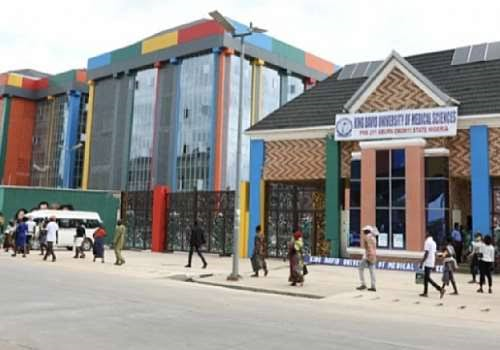
The David Umahi Federal University of Health Sciences has handed over ₦450 million worth of medical equipment to its teaching hospital, including a ₦32 million handheld blood analyser, incubators, defibrillators, and vital signs monitors. Vice-Chancellor Prof. Jesse Uneke says the TETFund-backed intervention will transform medical training and clinical services—and the hospital’s Chief Medical Director has revealed that over 1,500 patients have already received free treatment, including MRI sca
Comments (0)
Leave a comment
All comments are moderated before publishing. Your email is never published.