
Ash Biomedical, GenBody Partner to Produce HIV Self-Test Kits in Abuja
A Nigerian diagnostics manufacturer, Ash Biomedical Diagnostics Limited, has partnered with South Korea’s GenBody Inc. to introduce and locally produce the ConfiSign HIV Self-Test, with manufacturing set to begin at a new facility in Idu, Abuja, once commissioning is completed in the first quarter of 2027. The deal includes technology transfer, training, and the potential for Nigeria to serve as a distribution hub for West Africa,a significant step toward reducing dependence on imported test kit
Nigeria’s push to localise the production of essential medical diagnostics has received a significant boost, with a Nigerian manufacturer, Ash Biomedical Diagnostics Limited, announcing a partnership with South Korea-based GenBody Inc. to introduce and locally manufacture the ConfiSign HIV Self-Test.
Under the agreement, Ash Biomedical will serve as GenBody’s strategic partner for the local manufacturing and distribution of the product in Nigeria once its manufacturing facility in Idu, Abuja, is completed. The partnership will involve technology transfer and training, providing the Nigerian company with access to international expertise and technical capacity to support local production.
The development comes amid growing calls for increased domestic manufacturing of essential healthcare products to reduce dependence on imports and strengthen Nigeria’s healthcare supply chain. The HIV self-test is designed to allow individuals to check their HIV status privately and conveniently, potentially addressing some of the barriers that discourage people from accessing conventional testing services—including stigma, confidentiality concerns, and limited access to healthcare facilities.
Chief Executive Officer and Managing Director of Ash Biomedical Diagnostics, Adetoyese Shodeinde, said the partnership went beyond introducing a new diagnostic product into the Nigerian market. “For us, this partnership is about more than bringing a new product into Nigeria. It is about building confidence in what Nigerian companies can deliver in healthcare,” Shodeinde said. “We want Nigerians to know that quality, reliability and innovation can be part of the healthcare solutions available to them, while also building the local capacity to manufacture and support these solutions here in Nigeria”.
On the manufacturing component, Ash Biomedical said its diagnostics production facility in Idu, Abuja, had entered the final phase of development. The facility’s structure has been completed, production equipment is being installed, and cleanroom development is underway. Commissioning is targeted for the first quarter of 2027. The facility is expected to support the company’s long-term ambition of expanding local production of rapid diagnostic products and reducing reliance on imported test kits.
Ash Biomedical’s track record lends credibility to the new venture. The company said it had supplied 15 million test kits over 15 years through more than 66 government and institutional contracts across 27 states, with its products reaching all 36 states of the federation. Independent hospital evaluations involving the APIN Reference Laboratory, NISA Premier, Garki Hospital, Police Clinics, and the National Hospital, Abuja, recorded 100 per cent concordance between its rapid-test results and reference laboratory results across infectious diseases, pregnancy, and malaria testing. “We have spent years building the systems, products and relationships that give us the confidence to take this next step,” Shodeinde said. “Our responsibility now is to continue earning the trust of the Nigerian healthcare system and, most importantly, the people whose lives depend on accurate and timely diagnosis”.
The significance of the partnership extends beyond a single product. Nigeria has one of the world’s largest HIV burdens, and while self-testing uptake among young Nigerians has risen sharply—from 7 per cent to 80 per cent in two years, according to a Nigeria Institute of Medical Research study—barriers such as cost, limited awareness, and poor kit availability persist. Local manufacturing could help drive down costs, improve supply chain resilience, and ensure that self-test kits reach the communities that need them most, rather than being concentrated in urban centres or dependent on donor funding.
Nigeria has incorporated HIV self-testing into its national guidelines since 2019, positioning it as a complement to facility-based testing. The ConfiSign kit, described as one of a limited number of globally approved products of its kind, could strengthen that strategy—particularly if Nigeria realises its potential to serve as a production and distribution base for the wider West African market.
For now, the partnership is a statement of intent: that Nigerian companies can build the capacity to manufacture, not just distribute, essential diagnostics. The Idu facility is not yet operational, and the first locally produced ConfiSign kits will not reach the market until after commissioning in 2027. But the architecture is in place—technology transfer, training, a completed facility, and a partner with global reach. In a country where healthcare supply chains remain fragile and import dependence is a persistent vulnerability, that is not a small achievement. The test now is whether the promise of local production translates into affordable, accessible kits for the Nigerians who need them most.
Sponsored

Related stories
 Health
Bayelsa Community Raises Alarm Over Spreading Skin Disease, Fears Mpox
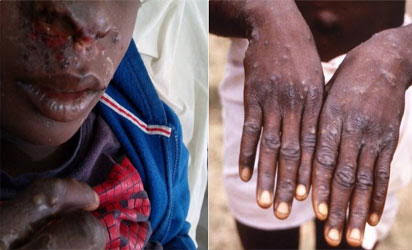
Residents of Ondewari in Southern Ijaw, Bayelsa State, are battling a mysterious skin disease that doctors at a neighbouring facility suspect is monkeypox, but no test has confirmed it. The community has no functional health centre—an Agip-built hospital has sat idle for over a decade—forcing patients to travel by boat for care. As Nigeria’s mpox caseload ticks upward and Bayelsa is named a priority vaccination state, Ondewari’s outbreak exposes a brutal truth: for riverine communities, the gap
 Health
Celeb Laser Clinic Introduces Laser Dentistry in Lagos
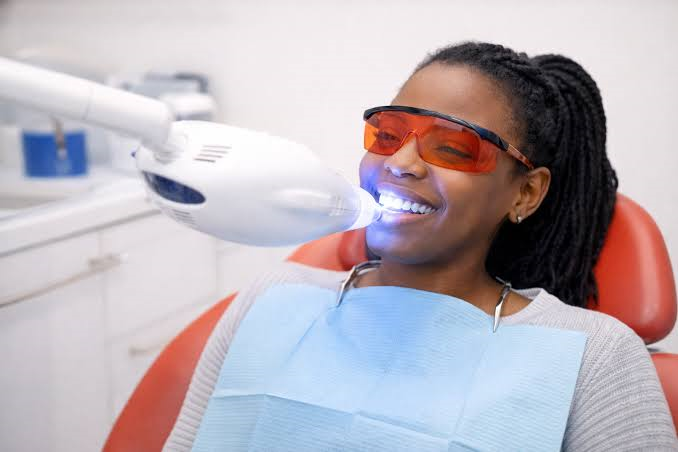
Celeb Laser Clinic has expanded into laser dentistry, offering laser teeth whitening, gum treatment, and specialised dental procedures from its Ikeja base—a move that positions advanced technology against a grim backdrop: 23.9 per cent of Nigerians have untreated cavities, 25.1 per cent suffer severe gum disease, and public primary healthcare facilities remain ill-equipped for basic oral care. Founder Dr Collins Okwu says the technology is a tool, not a substitute for clinical judgment.
 Health
Nigeria Unveils Second Robotic Surgery Platform in Northern Region
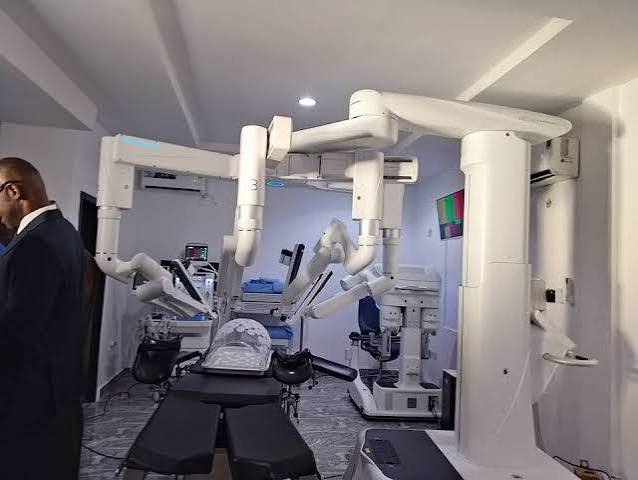
The Federal Government has unveiled Nigeria’s second robotic surgery platform at Eleos Specialist Hospital, Abuja—a milestone that places the country’s capital at the forefront of advanced medical technology in Northern Nigeria. With precision surgery, reduced recovery times, and improved patient outcomes, the platform signals a new era in Nigerian healthcare. But with cost, access, and training still looming large, the question is whether this is a genuine transformation or a gleaming showpiece
 Health
JOHESU Gives FCTA Seven-Day Ultimatum Over Unpaid Health Workers’ Allowances
The Joint Health Sector Unions (JOHESU) has issued a seven-day ultimatum to the Federal Capital Territory Administration (FCTA) to pay outstanding allowances owed to health workers or face an indefinite strike that would paralyse Abuja’s hospitals and clinics. The ultimatum, which expires on November 27, 2026, follows the expiration of a previous 14-day warning and a FCT Minister’s directive that remains unimplemented. With CONHESS adjustment arrears, skipping allowances, and promotion arrears s
Comments (0)
Leave a comment
All comments are moderated before publishing. Your email is never published.