
Nigeria Must Drive Home-Grown Sickle Cell Solutions, Foundation Tells UN
The Sickle Cell Foundation Nigeria has called on the Federal Government to position the country as a global leader in sickle cell care, leveraging its experience, institutions, and expertise to shape the international response to the disease. Speaking at the launch of the OneSCD partnership at the United Nations General Assembly, National Director Dr Annette Akinsete said Nigeria brings far more to the table than its disease burden, revealing that over 40 million Nigerians are healthy carriers o
The Sickle Cell Foundation Nigeria has called for greater Nigerian leadership in developing and implementing home-grown solutions to the challenges of sickle cell disease, urging the Federal Government to leverage the country's experience, institutions, and technical expertise to help shape the global response to the condition.
The call was made by the National Director and Chief Executive Officer of the foundation, Dr Annette Akinsete, at the official launch of OneSCD, a global partnership to advance equity and transform sickle cell care, held at the United Nations Headquarters in New York during the 81st United Nations General Assembly. According to a statement released on Tuesday, Akinsete anchored her appeal on Nigeria's substantial sickle cell burden, decades of advocacy and service delivery, growing technical and institutional capacity, specialist centres, and active civil society and patient networks.
The Sickle Cell Foundation Nigeria disclosed that more than 25 per cent of Nigerians carry the sickle cell trait, translating to more than 40 million citizens being healthy carriers of the sickle cell gene. This statistic underscores the scale of the challenge facing the country and the urgent need for coordinated action. "Nigeria brings far more to OneSCD than its disease burden. Nigeria brings experience, institutions, technical expertise, civil society, lived experience and solutions that have been developed in our own context," Akinsete said. "Nigeria therefore has both an opportunity and a responsibility to help demonstrate what country-led implementation of OneSCD can look like."
The foundation's national director, who joined the Nigerian delegation to the United Nations General Assembly, argued that Nigeria should be considered an early demonstration country for transformative sickle cell care. She stressed that countries, particularly those in sub-Saharan Africa, should be recognised as co-creators and partners in the global sickle cell response rather than simply recipients of solutions developed in other parts of the world. According to her, such countries should play active roles in designing, adapting, testing, and implementing interventions suited to their populations and health systems.
The OneSCD partnership was launched by the Federal Government of Nigeria in collaboration with global health partners, including the World Health Organisation, UNICEF, and St Jude Children's Research Hospital. The initiative seeks to strengthen global coordination, resource mobilisation, and shared learning around sickle cell disease, with a focus on improving equity and access to quality care. Akinsete emphasised that country-level ownership would be critical to the success of the initiative, adding that OneSCD could provide a platform for countries to coordinate efforts and share experiences.
The foundation's work in Nigeria has been extensive and multifaceted, encompassing genetic counselling, early detection, prenatal diagnosis, Transcranial Doppler screening, access to treatment, health-worker training, community mobilisation, research, and advocacy. According to the foundation, it has supported more than 32,000 Transcranial Doppler screenings, 259,000 haemoglobin investigations, 70,000 medication interventions, 3,500 prenatal diagnosis interventions, and more than 10,000 genetic counselling engagements. These figures reflect the foundation's longstanding commitment to improving the lives of Nigerians living with sickle cell disease and their families.
Akinsete said the ultimate goal should be to ensure that access to quality sickle cell care was not determined by where a child was born. "Where a child is born should not determine whether that child survives and thrives with sickle cell disease," she said. This statement captures the essence of the equity agenda that underpins the OneSCD partnership and the foundation's broader advocacy efforts.
The foundation said it welcomed the launch of OneSCD and the opportunity it presented for stronger collaboration among governments, health institutions, civil society organisations, patients, and global health partners. The initiative represents a significant step forward in the global fight against sickle cell disease, which affects millions of people worldwide, with the highest burden concentrated in sub-Saharan Africa. For Nigeria, which has the largest population of people living with sickle cell disease globally, the OneSCD partnership offers an opportunity to transform the narrative from one of burden to one of leadership and innovation.
Sickle cell disease is a genetic blood disorder that causes red blood cells to become misshapen and break down, leading to anaemia, pain crises, organ damage, and reduced life expectancy. In Nigeria, the disease has historically been neglected, with limited access to comprehensive care, inadequate funding for treatment and research, and widespread stigma surrounding the condition. The foundation's call for home-grown solutions reflects a growing recognition that sustainable progress requires not just external support but also domestic investment and leadership.
As the global community rallies around the OneSCD partnership, Nigeria's role as a co-creator and early demonstration country will be critical to its success. The foundation's decades of experience, its network of specialist centres, and its deep understanding of the local context position it as a valuable partner in the global effort to improve sickle cell care. For the millions of Nigerians affected by the disease, the promise of OneSCD is not just about better treatment and outcomes; it is about dignity, equity, and the recognition that their lives matter, regardless of where they were born.
Sponsored
Related stories
 Health
Borno Hires 2,000 Health Workers, Still Faces Staff Shortage
Borno State has recruited nearly 2,000 doctors, nurses and other health professionals in two years, but the head of its contributory health agency says manpower gaps persist as demand grows under the state health insurance scheme.
 Health
Lassa Fever Kills 268 in Nigeria as Cases Hit 1,138
Nigeria has recorded 1,138 confirmed Lassa fever cases and 268 deaths across 24 states in 2026, with the case fatality rate rising to 23.6 per cent—significantly higher than the 18.6 per cent recorded during the same period in 2025. The NCDC has identified five states accounting for 88 per cent of all confirmed cases, as it intensifies preparedness efforts ahead of the peak transmission season.
 Health
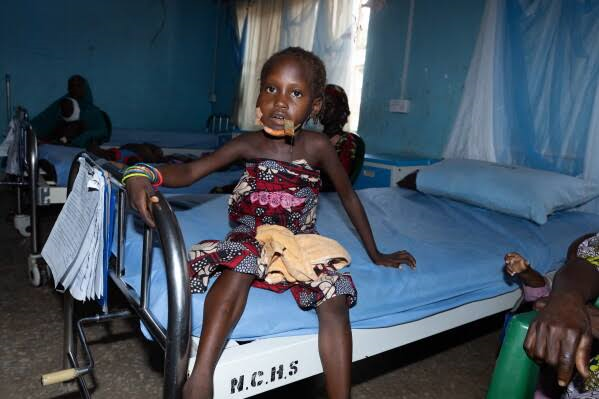
MSF Calls for Routine Noma Surveillance in Nigeria
Doctors Without Borders says noma, a fast-moving and often fatal facial infection linked to malnutrition and poverty, remains largely missing from Nigeria's routine child health programmes despite its 2023 recognition as a neglected tropical disease.
 Health
Oyo Rejects Diphtheria Outbreak Claims, Accuses APC
The Oyo State Government has dismissed claims by the Senator Sharafadeen Alli Campaign Organisation that diphtheria has affected 16 local government areas, describing the allegation as false and politically motivated. Commissioner for Health Dr. Oluwaserimi Ajetunmobi confirmed that while suspected cases have been recorded in 10 LGAs, none have been confirmed, and accused the APC campaign group of distorting immunisation data to score political points.
Comments (0)
Leave a comment
All comments are moderated before publishing. Your email is never published.