
NDHII Saved 10,000 Nigerian Lives, Trained 2,000 Health Workers — Minister
The Minister of State for Health, Dr Iziaq Adekunle Salako, says the National Diaspora Health Impact Initiative has saved 10,000 Nigerian lives and trained 2,000 frontline health workers across the country's six geopolitical zones.
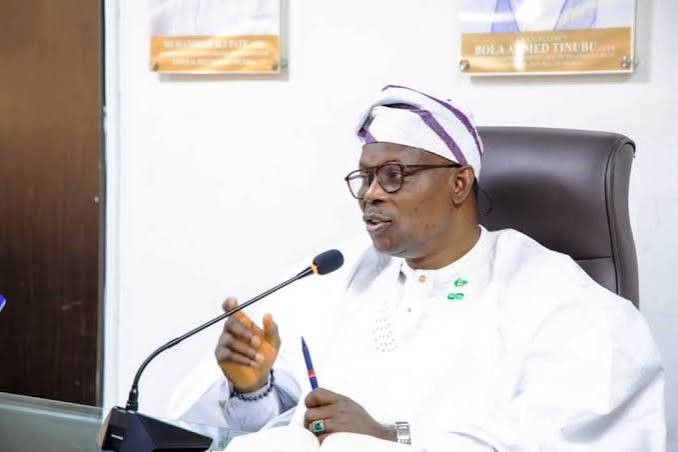
The Minister of State for Health and Social Welfare, Dr Iziaq Adekunle Salako, has disclosed that the National Diaspora Health Impact Initiative (NDHII) has saved 10,000 Nigerian lives and trained 2,000 frontline health workers across the country's six geopolitical zones.
He made the disclosure at the National Diaspora Merit Award held on Saturday in Abuja, themed "Harnessing Global Diaspora Medical Expertise to Strengthen Local Health Systems for National Development."
The event brought together diaspora-based Nigerian medical professionals and government officials to recognise contributions made toward strengthening the country's healthcare delivery system, particularly in underserved states.
Dr Salako said UK-based obstetricians, paediatricians and midwives, drawn from the Medical Association of Nigerians Across Great Britain (MANSAG) and the Nigerian Nurses Charitable Association UK (NNCA-UK), have been working in Kano, Kaduna and Sokoto States.
According to him, the groups invested several millions of naira in personnel and material resources to train more than a thousand frontline healthcare workers in the Safer Births Bundle of Care (SBBC), bringing the same evidence-based approach credited with saving lives in British labour wards to nurses and midwives serving high-burden communities in the North-West.
In Enugu, Imo and Abia States, he said, doctors from the Association of Nigerian Physicians in the Americas (ANPA) invested several thousand US dollars to run specialist medical missions. These missions delivered 4,000 medical consultations and over 500 surgeries, while also training 350 health workers and 150 community responders in the South-East region.
The minister said the initiative reflects a growing trend of Nigerian medical professionals abroad channelling their expertise and resources back home, rather than limiting their contributions to remittances alone. He described the collaboration as a model for how diaspora professionals can directly strengthen local health systems without requiring permanent relocation.
Dr Salako reaffirmed the Federal Government's commitment to continue working with diaspora health professionals, pledging to simplify licensing and locum arrangements for diaspora clinicians, and to ease customs and visa processes that have historically slowed their engagement. He added that government would also invest in hospital infrastructure, diagnostic centres and pharmaceutical industries as part of a broader healthcare investment drive on Nigerian soil.
He noted that the government was committed to removing practical bottlenecks around registration, licensing and logistics that have historically made it difficult for diaspora professionals to give back to the country's health sector.
The minister highlighted that diaspora health professionals have consulted, treated, operated on, trained and mentored health workers, as well as offered free skills transfer, in teaching and general hospitals spanning Lagos, Edo, Kaduna, Kano, Sokoto, Borno, Imo, Abia, Enugu, Nasarawa, Gombe and the Federal Capital Territory.
The National Diaspora Merit Award has increasingly become a platform for the Federal Government to publicly acknowledge the scale of unpaid and philanthropic medical support flowing into Nigeria's health system from abroad, at a time when the country continues to grapple with a shortage of frontline health workers due to sustained emigration of medical personnel, commonly referred to as the "japa" trend.
Officials say initiatives like NDHII are intended to help bridge that gap by turning outward migration into a two-way exchange of skills, resources and training, rather than a pure loss to the health system.
Sponsored
Related stories
 Health
Borno Hires 2,000 Health Workers, Still Faces Staff Shortage
Borno State has recruited nearly 2,000 doctors, nurses and other health professionals in two years, but the head of its contributory health agency says manpower gaps persist as demand grows under the state health insurance scheme.
 Health
Lassa Fever Kills 268 in Nigeria as Cases Hit 1,138
Nigeria has recorded 1,138 confirmed Lassa fever cases and 268 deaths across 24 states in 2026, with the case fatality rate rising to 23.6 per cent—significantly higher than the 18.6 per cent recorded during the same period in 2025. The NCDC has identified five states accounting for 88 per cent of all confirmed cases, as it intensifies preparedness efforts ahead of the peak transmission season.
 Health
MSF Calls for Routine Noma Surveillance in Nigeria
Doctors Without Borders says noma, a fast-moving and often fatal facial infection linked to malnutrition and poverty, remains largely missing from Nigeria's routine child health programmes despite its 2023 recognition as a neglected tropical disease.
 Health
Oyo Rejects Diphtheria Outbreak Claims, Accuses APC
The Oyo State Government has dismissed claims by the Senator Sharafadeen Alli Campaign Organisation that diphtheria has affected 16 local government areas, describing the allegation as false and politically motivated. Commissioner for Health Dr. Oluwaserimi Ajetunmobi confirmed that while suspected cases have been recorded in 10 LGAs, none have been confirmed, and accused the APC campaign group of distorting immunisation data to score political points.
Comments (0)
Leave a comment
All comments are moderated before publishing. Your email is never published.