
MSF Calls for Routine Noma Surveillance in Nigeria
Doctors Without Borders says noma, a fast-moving and often fatal facial infection linked to malnutrition and poverty, remains largely missing from Nigeria's routine child health programmes despite its 2023 recognition as a neglected tropical disease.
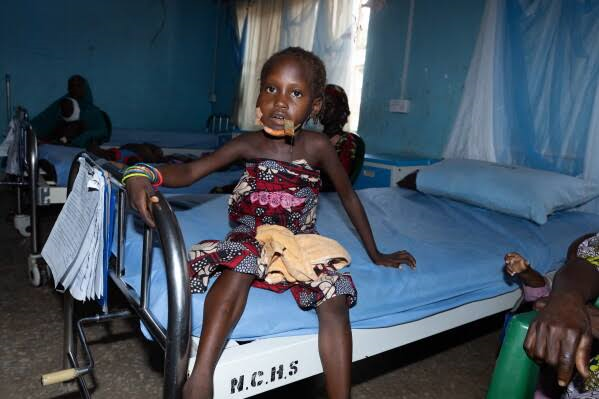
Médecins Sans Frontières (MSF), also known as Doctors Without Borders, has warned that malnutrition and extreme poverty are leaving Nigerian children exposed to noma, a preventable and treatable disease that can destroy a child's face within days, and has called for it to be built into routine health surveillance and primary healthcare.
An MSF representative, identified in reports as Ajamah, said noma can progress rapidly, causing severe facial damage and life-threatening complications. He stressed that early detection and treatment are critical, and that the disease should no longer be claiming children's lives.
Noma is a rapidly progressing infection of the mouth and face. It typically begins as gum inflammation in malnourished children and spreads quickly to destroy soft tissue and bone. MSF says it mainly affects young children under seven, most commonly those between two and six years old, and is closely associated with extreme poverty, malnutrition, poor oral hygiene, low immunisation coverage, recurrent infections, and limited access to healthcare. Children in remote and underserved communities are especially at risk. The disease is not contagious.
The World Health Organization recognised noma as a neglected tropical disease in 2023. Ajamah said that although the step was important, noma remains largely absent from routine healthcare and child health programmes in Nigeria. "Recognition alone is not enough," he said, describing noma as a marker of inequality. MSF is therefore urging stronger action to integrate noma prevention, detection, treatment, referral, and surveillance into primary healthcare systems and child health programmes.
The stakes are high because of how quickly the disease can turn deadly. Research literature reports that without treatment in its early stages, noma carries a mortality rate of about 90 per cent, while survivors are often left with severe disfigurement that affects eating, speech, and social life. The WHO estimates that roughly 140,000 children develop noma worldwide each year, though knowledge gaps remain because the disease has been so little studied.
Many Nigerian families reach care late. Earlier this year, MSF's Nigeria medical coordinator, Bukola Oluyide, told the Associated Press that clinicians are seeing more acute cases, and that the priority is raising community awareness so children arrive sooner, before tissue loss makes reconstructive surgery necessary later. In the AP report, data showed that more than 500 children with noma from across northern Nigeria were treated at the specialist hospital in Sokoto between 2023 and 2025.
MSF has supported the Noma Children's Hospital in Sokoto, run by the Nigerian Ministry of Health, since 2014. The facility is one of very few specialised noma centres in the world, offering inpatient care, reconstructive surgery, nutritional support, and mental health care, alongside community outreach aimed at early detection. MSF also supported the government in drafting the National Noma Control Plan,
which seeks to raise awareness of the disease. A WHO official has noted that Nigeria reports more noma cases than other countries, partly because of its specialist hospitals, large population, and government-led response, which likely means more cases are recorded than elsewhere.
The warning lands against a backdrop of worsening child malnutrition in northern Nigeria. MSF said it treated more than 357,000 children for malnutrition in the region in 2024, a 35 per cent rise on 2023, and attributed the persistent crisis to inflation, food insecurity, weak healthcare infrastructure, insecurity, and disease outbreaks aggravated by low vaccine coverage. Because noma feeds on malnutrition, rising hunger raises the risk that more children will be affected.
In practical terms, MSF's recommendations focus on the frontline. It wants health workers and communities trained to recognise early warning signs, noma added to routine disease surveillance so cases are counted and tracked, and clear referral pathways so suspected cases reach specialist care quickly. Without those links, children in rural areas may never reach a facility equipped to treat them.
Public health experts generally agree that the disease is a preventable one in principle. Better nutrition, oral hygiene, vaccination, and access to basic healthcare reduce the conditions in which it takes hold, and early antibiotic treatment can halt its progress when caught in the first stages.
Whether Nigeria acts on MSF's call will depend on government follow-through. The Federal Ministry of Health and the Sokoto State health ministry did not respond to an earlier AP request for comment on plans to combat the disease, and no official reaction to MSF's latest statement was available in the reports reviewed.
Sponsored

Related stories
 Health
Borno Hires 2,000 Health Workers, Still Faces Staff Shortage
Borno State has recruited nearly 2,000 doctors, nurses and other health professionals in two years, but the head of its contributory health agency says manpower gaps persist as demand grows under the state health insurance scheme.
 Health
Lassa Fever Kills 268 in Nigeria as Cases Hit 1,138
Nigeria has recorded 1,138 confirmed Lassa fever cases and 268 deaths across 24 states in 2026, with the case fatality rate rising to 23.6 per cent—significantly higher than the 18.6 per cent recorded during the same period in 2025. The NCDC has identified five states accounting for 88 per cent of all confirmed cases, as it intensifies preparedness efforts ahead of the peak transmission season.
 Health
Oyo Rejects Diphtheria Outbreak Claims, Accuses APC
The Oyo State Government has dismissed claims by the Senator Sharafadeen Alli Campaign Organisation that diphtheria has affected 16 local government areas, describing the allegation as false and politically motivated. Commissioner for Health Dr. Oluwaserimi Ajetunmobi confirmed that while suspected cases have been recorded in 10 LGAs, none have been confirmed, and accused the APC campaign group of distorting immunisation data to score political points.
 Health
Dementia Crisis: Global New Cases to Hit 24.7 Million Annually by 2050
A landmark Australian-led study published in JAMA Neurology has revealed that global dementia cases will more than double by 2050, rising from 11.4 million new diagnoses in 2023 to a staggering 24.7 million annually. With women and low- and middle-income countries bearing the heaviest burden, experts warn that health systems—particularly in Africa and Nigeria—are dangerously unprepared for the coming surge.
Comments (0)
Leave a comment
All comments are moderated before publishing. Your email is never published.