
NASHGODAN Calls for Nationwide Sheep, Goat Farms
The National Sheep and Goat Development Association of Nigeria (NASHGODAN) has called on the Federal Government to establish demonstration farms across the country's six geopolitical zones to strengthen small ruminant production, combat transboundary diseases, and unlock the sector's vast economic potential. National President Abdullateef Ahmed said the centres would serve as practical learning platforms for farmers, students, and investors while providing routine vaccination and treatment servi
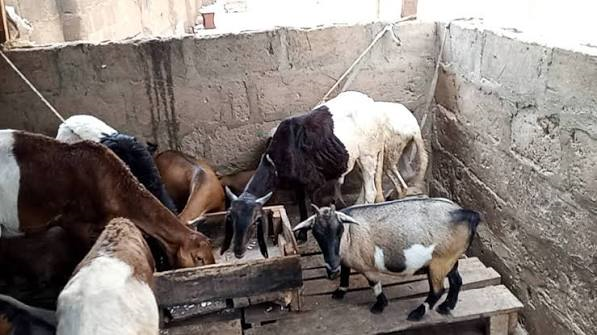
The National Sheep and Goat Development Association of Nigeria (NASHGODAN) has called on the Federal Government to establish demonstration farms in each of the country's six geopolitical zones to strengthen sheep and goat production, improve farmers' earnings, and promote modern livestock management practices across the country.
National President of NASHGODAN, Abdullateef Ahmed, made the call in an interview with the News Agency of Nigeria (NAN) in Abuja, explaining that the centres would provide practical learning platforms where farmers, students, and prospective investors could access and test modern, efficient, and sustainable livestock production methods. He said the farms would also promote knowledge sharing through practical training in improved breeding techniques, animal health management, and better feeding practices.
According to Ahmed, the demonstration farms would serve as training centres to empower youth and women farmers while providing routine vaccination and treatment of sick animals when necessary. "The centres will boost production by showcasing methods to increase output to farmers and demonstrate profitable agribusiness models to reduce poverty and improve food security," he said. He further noted that the farms could support efforts to control Peste des Petits Ruminants (PPR), sheep and goat pox, and other transboundary and zoonotic diseases affecting small ruminants.
The NASHGODAN president identified disease outbreaks, inadequate breeding programmes, limited market access, insufficient financing, insecurity, and weak value-chain development among the major constraints limiting growth in the sheep and goat industry. He stressed that farmers and livestock producers had an important role to play in protecting the country from PPR and other zoonotic diseases, adding that greater inclusion of farmers in government programmes and policy formulation would help address some of the challenges confronting the sector.
"It will ensure the slaughtering of healthy animals for sale and consumption rather than diseased animals, to the detriment of human health," Ahmed stated. "If demonstration farms are established, farmers can take their sick animals to the centres for treatment, and this will be of immense value to farmers and consumers."
On the economic importance of sheep and goats, Ahmed said the sector's value chain presented significant opportunities that had yet to be fully exploited. He noted that the industry remained an important contributor to food security and rural livelihoods despite its largely untapped economic potential. He encouraged young Nigerians to consider sheep and goat farming as a viable modern agribusiness rather than viewing it solely as a traditional occupation, saying investment in the sector could support wealth creation, employment generation, poverty reduction, and broader economic development.
"The industry is one of the most accessible and profitable agricultural enterprises for rural households, women, youths and retirees. It provides income, employment, nutrition and economic resilience for millions of Nigerians," he said.
The call for demonstration farms comes amid growing concerns over food security and the rising cost of animal protein in Nigeria. The livestock sector has long been identified as a critical component of the agricultural economy, yet it continues to underperform due to a combination of structural challenges, including inadequate veterinary services, poor access to credit, and the persistent threat of disease outbreaks. The establishment of demonstration farms would not only bridge the knowledge gap between traditional practices and modern techniques but also create a network of centres capable of responding rapidly to disease outbreaks through vaccination and treatment services.
The proposal aligns with broader national efforts to diversify the economy away from oil dependence and strengthen agricultural value chains. Sheep and goat production, in particular, offers significant potential for poverty reduction, given the low barriers to entry and the cultural acceptance of small ruminants as a source of livelihood across Nigeria's diverse communities. For women, youth, and retirees, sheep and goat farming represents an accessible pathway to economic independence, requiring relatively modest capital compared to larger livestock operations.
However, the success of such demonstration farms would depend on sustained government investment and the active participation of farmers themselves. Ahmed's emphasis on the inclusion of farmers in policy formulation reflects a recognition that top-down approaches to agricultural development have often failed because they do not account for the practical realities facing those who work the land. By placing farmers at the centre of the design and implementation of the demonstration farms, the initiative could serve as a model for how government and the private sector can collaborate to drive meaningful change in the livestock sector.
As Nigeria continues to grapple with food inflation and the need to boost local production, the establishment of demonstration farms for sheep and goat production represents a strategic intervention that could deliver both immediate and long-term benefits. For the millions of Nigerians who depend on small ruminants for their livelihoods, the realisation of this vision would be a welcome development—one that could transform a traditional occupation into a modern, profitable agribusiness capable of feeding the nation and creating wealth for generations to come.
Sponsored

Related stories
 Agriculture
Abakaliki Rice Mill: Ebonyi’s N171bn Neglected Goldmine
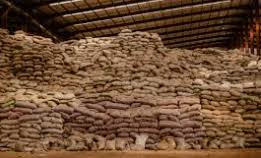
Nigeria's largest rice mill, operating since 1967, processes 132,000 tonnes of rice annually—worth over N171 billion—yet operates without power, safe working conditions, or good roads. As the state's entire IGR sits at just N17.18 billion, analysts ask how a facility generating ten times that amount has been allowed to decay into a "prostrate goldmine."
 Agriculture
Seaweed Could Transform Nigeria’s Agricultural Energy Sector
SMEFUNDS CEO Dr. Femi Oye advocates for seaweed as a renewable energy source to power Nigeria’s food production, offering a circular solution for farmers and small businesses.
 Agriculture
Babalola’s Farmer Support Hits N98m
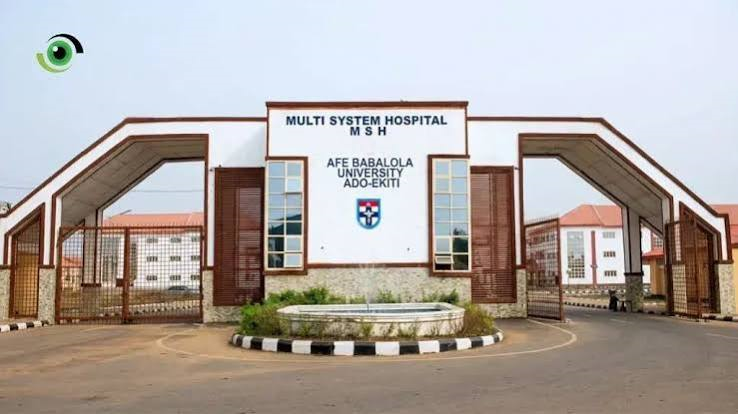
Legal icon Aare Afe Babalola has disbursed N11.2 million to 81 outstanding farmers across Ekiti State's 16 local government areas, bringing total awards under his annual agricultural scheme since 2015 to N98 million.
 Agriculture
FG Launches African Swine Fever Control Campaign in Southwest
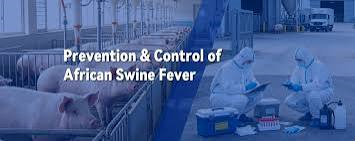
The Federal Government has launched a major African Swine Fever control and biosecurity campaign at the Oke-Aro Pig Farm Estate, distributing protective kits to farmers and pledging comprehensive training to prevent future outbreaks. The intervention by the Livestock Productivity and Resilience Support Project (L-PRES) targets one of Nigeria's largest pig production clusters, which has suffered devastating losses from the highly contagious disease in the past.
Comments (0)
Leave a comment
All comments are moderated before publishing. Your email is never published.