
Moody’s Positive Outlook Validates Tinubu’s Reforms — FG
Moody’s positive outlook signals confidence in Nigeria’s reforms, stronger reserves, improved FX market and economic resilience.
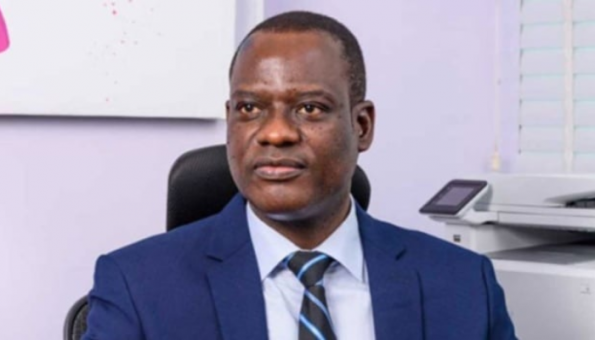
The Federal Government has described Moody’s Ratings’ decision to revise Nigeria’s sovereign credit outlook from stable to positive as external validation of the economic reforms implemented by President Bola Tinubu’s administration.
The Minister of Finance and Coordinating Minister of the Economy, Taiwo Oyedele, said the latest assessment reflected improvements achieved through reforms introduced over the past three years.
Moody’s retained Nigeria’s long-term foreign and local currency issuer ratings at B3 but changed the outlook to positive. The rating agency cited improvements in Nigeria’s external position and stronger-than-expected economic growth as key factors behind the decision.
Oyedele said the assessment recognised major reforms, including the removal of fuel subsidy, exchange-rate reforms and the recently introduced tax reforms.
He described the positive outlook as an important signal that the reforms were beginning to strengthen Nigeria’s macroeconomic fundamentals.
According to him, the country has recorded stronger foreign exchange reserves, an improved external position and better monetary policy transmission.
“Our medium-term ambition is to place Nigeria firmly on the path to investment grade,” Oyedele said, stressing that the government would need to sustain improvements in revenue mobilisation, spending efficiency and debt affordability.
He said the objective was not simply to secure a better sovereign rating but to create conditions that would lower the country’s cost of capital, attract private investment and improve economic prosperity.
Moody’s said Nigeria’s external position had strengthened significantly, supported by sizeable current account surpluses, increased foreign exchange reserves and improved functioning of the foreign exchange market.
The agency also pointed to stronger-than-expected economic growth, with real GDP growth reaching four per cent in 2025.
The Federal Ministry of Finance said Nigeria’s current account surplus was projected to widen to about 6.1 per cent of GDP in 2026, while gross external reserves had risen to $53.30 billion as of August 26.
Headline inflation also moderated to 15.4 per cent in July 2026 from 25.3 per cent a year earlier, according to ministry figures.
Despite the positive outlook, Moody’s maintained the B3 rating, indicating that significant challenges remain, including fiscal pressures, limited government revenue and debt affordability.
Oyedele said the government would continue implementing reforms aimed at strengthening public finances, increasing domestic revenue and improving debt management.
He added that maintaining a disciplined foreign exchange regime and promoting non-oil economic growth would remain important priorities.
The minister expressed confidence that sustained implementation of the reforms could further strengthen Nigeria’s credit profile and move the country closer to investment-grade status.
Sponsored

Related stories
 News
News
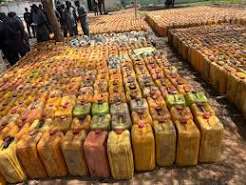
Customs Seizes 38,700 Litres of Petrol in Adamawa
The Nigeria Customs Service has intercepted 38,700 litres of petrol and a vehicle valued collectively at ₦63.115 million during a six-week crackdown on suspected fuel smuggling in Adamawa State.
 News
News
FG Links 15.6 Million Nigerians to National Social Register Through NIN
The Federal Government has integrated the National Identification Numbers of 15.65 million Nigerians into the National Social Register, as it expands efforts to improve beneficiary verification and strengthe In transparency in social protection programmes.
 News
News
Dangote Cement Drivers Raise Safety, Welfare Concerns at Ogun Retreat
Dangote Cement drivers at the company’s Ibese plant have discussed road safety, rising living costs and workplace challenges at a retreat, as management reaffirmed its commitment to improving their welfare and promoting safer transport operations.
 News
News
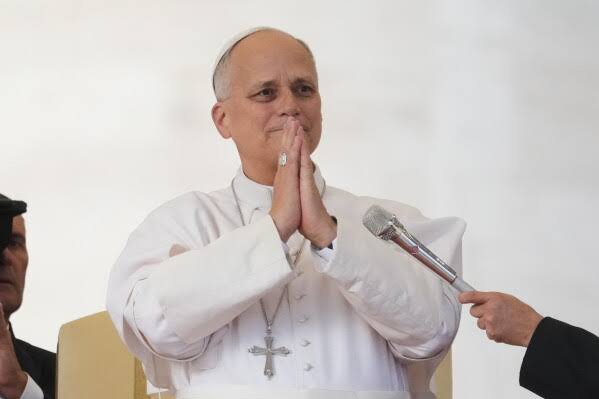
Pope Leo XIV Requires No Further Treatment for Lung Cancer, Vatican Says
Pope Leo XIV will not require additional cancer treatment after surgery successfully removed localised lung cancer, with final laboratory tests confirming that the disease had not spread beyond the affected area.
Comments (0)
Leave a comment
All comments are moderated before publishing. Your email is never published.