
Shettima Demands Accountability For Food Security Interventions
Shettima demands stronger accountability as government reviews food interventions, production, markets and support for Nigerian farmers.
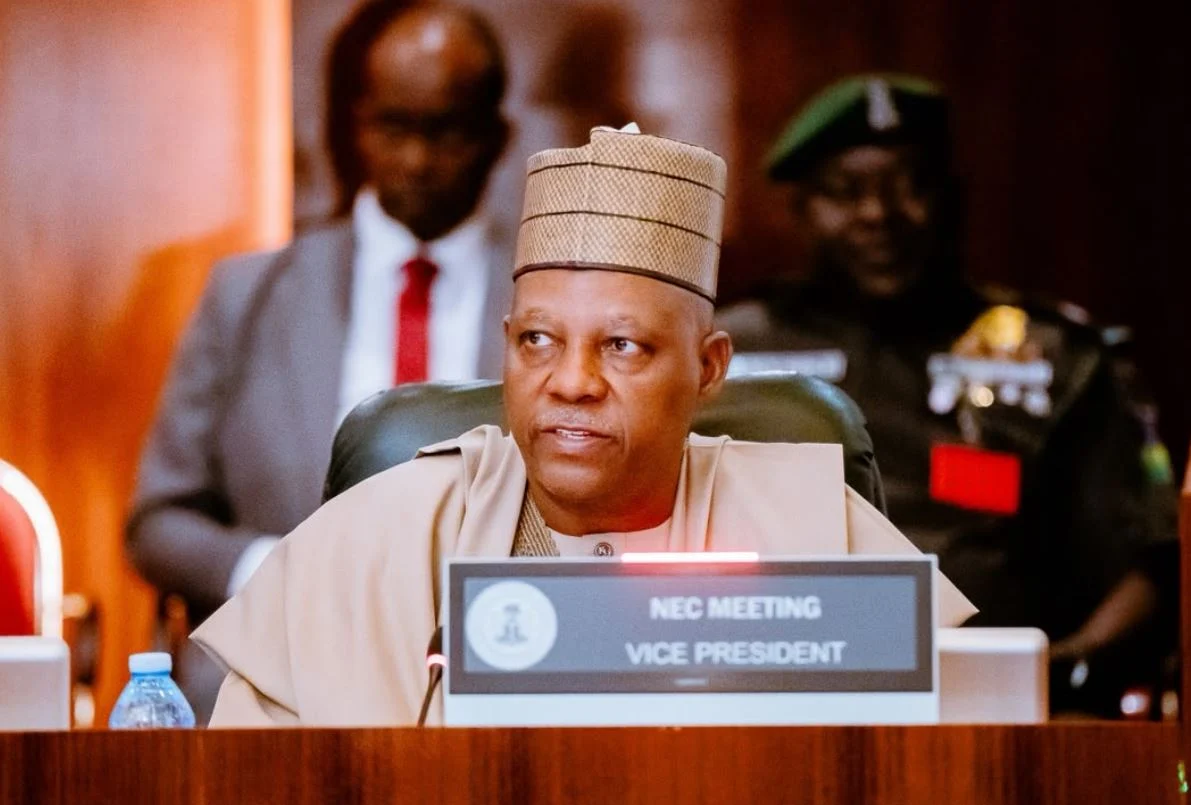
Vice President Kashim Shettima has demanded greater accountability in the Federal Government’s food security interventions, insisting that public resources must translate into measurable benefits for farmers, markets and Nigerian households.
Shettima made the demand while chairing the seventh meeting of the Steering Committee of the Presidential Food Systems Coordinating Unit at the State House in Abuja on Friday.
The meeting brought together state governors, federal ministers, private-sector representatives and development partners to review Nigeria’s food systems outlook and coordinate measures to improve domestic production and food availability.
The Vice President called for stronger monitoring and visibility across ongoing interventions, stressing that government programmes must deliver tangible outcomes.
He also emphasised the need to increase domestic food production and improve food affordability, particularly as Nigerians continue to face pressure from rising food prices.
With the main harvest season approaching, the committee reviewed measures to support farmers, improve the movement of agricultural produce from farming communities to consumers and strengthen strategic food reserves.
Participants also examined transportation, logistics, market access and levies affecting the cost of moving food from producing areas to major consumption centres.
Shettima stressed the importance of stronger coordination among federal and state governments, private-sector operators and development partners to ensure that food security policies produce measurable results.
The Executive Secretary of the Presidential Food Systems Coordinating Unit, Marion Moon, said the government would increasingly rely on data and evidence to identify emerging risks and direct interventions to areas where they would have the greatest impact.
She said the approach would help government support farmers, improve food distribution, strengthen preparedness and respond more effectively to threats to food availability.
Jigawa State Governor Umar Namadi called for farmers to remain at the centre of agricultural policies. He highlighted irrigation, agricultural inputs, financing, production support and access to markets as critical areas requiring sustained attention.
The committee also reviewed the $500m Sustainable Agricultural Value-Chains for Growth programme, known as AGROW. The programme has completed its design phase and is moving towards implementation.
Other initiatives reviewed included measures to strengthen agricultural productivity, improve understanding of farmers’ production plans and monitor food output during the farming season.
The committee also considered the role of trade measures in addressing verified food supply gaps while maintaining incentives for Nigerian farmers and agribusinesses.
The Federal Government’s renewed emphasis on accountability is aimed at ensuring that food security interventions produce practical improvements in production, distribution and affordability.
Shettima’s directive comes as the government intensifies efforts to build a more resilient food system capable of supporting farmers, strengthening markets and improving access to affordable food for Nigerians.
Sponsored

Related stories
 News
Global Warming Indicators Hit Record Levels as COP31 Calls for Urgent Action
The World Meteorological Organization says rising global temperatures, ocean heat and greenhouse gases underscore the urgent need for stronger climate action.
 News
Vulnerable Island Nations Demand More Climate Finance at COP31
Small island nations at COP31 have called for stronger climate financing, warning that storms, floods and rising seas threaten livelihoods and development.
 News
War, Conflicts Must Not Distract World From Climate Action — Leaders Warn at COP31
Brazil and Türkiye have urged world leaders to maintain climate commitments despite wars, trade disputes and competing global political and economic crises.
 News
COP31: Energy Transition Takes Centre Stage as Countries Map Path Beyond Fossil Fuels
Countries at COP31 are pushing for faster electrification, renewable energy investment and practical roadmaps to reduce dependence on fossil fuels.
Comments (0)
Leave a comment
All comments are moderated before publishing. Your email is never published.