
Minister Unveils 10-Year Agrifood Strategy
Nigeria’s Agriculture Ministry has unveiled a 10-year agrifood strategy and action plan to align food security reforms with the African Union’s Kampala Declaration, targeting higher output, lower losses and major investment inflows.
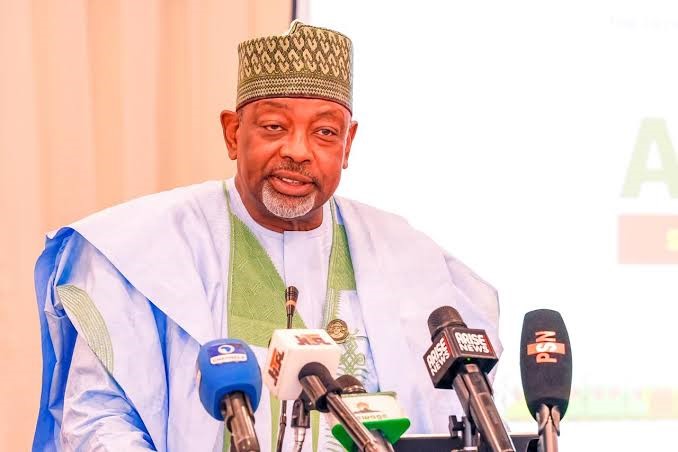
The Federal Ministry of Agriculture and Food Security has unveiled a 10-Year Agrifood System Strategy and Action Plan, which it plans to submit to the Federal Executive Council for approval. The proposal is meant to align Nigeria’s food security agenda with the African Union’s CAADP Kampala Declaration for 2026 to 2035.
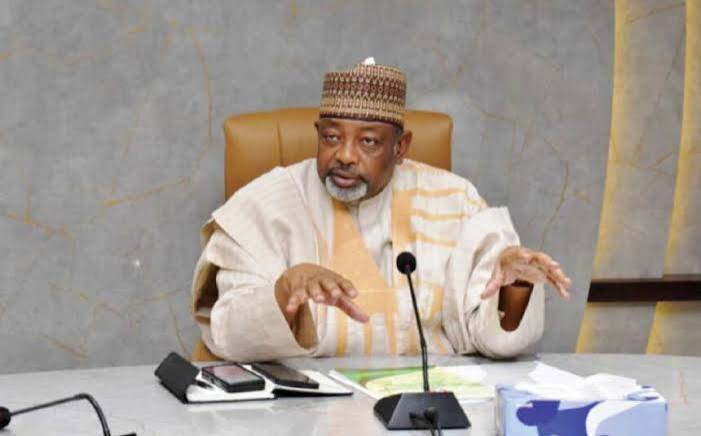
Minister of Agriculture and Food Security, Senator Abubakar Kyari, announced the plan during an Agrifood System Working Group meeting in Abuja. He said President Bola Tinubu had directed the ministry to go beyond rhetoric, pilot projects and fragmented interventions and produce a coherent, bankable and implementable plan for transforming Nigeria’s agrifood system.
Kyari framed food security as a national security issue, not just an agricultural one. He argued that governance is the foundation of the entire strategy, because sustainable production, investment, inclusivity, resilience and food security all depend on how well the system is coordinated and managed.
The strategy was developed after consultations and validations across all six geopolitical zones and at the national level. According to the ministry, that process was designed to ensure participation, inclusivity and national ownership rather than imposing a top-down plan without broad input.
The targets in the document are ambitious. They include a 2.45 per cent increase in agrifood output, a 50 per cent reduction in post-harvest losses, tripling intra-African trade, attracting $100 billion in public and private investment, and reinvesting at least 15 per cent of agrifood GDP annually.
Those targets show the scale of the government’s ambitions for the sector. If achieved, they could significantly change how food is produced, processed and traded in Nigeria, while also linking the country more strongly to regional African markets.
The minister also said the strategy is intended to align ministries, departments and agencies around one common vision. That matters because agricultural policy in Nigeria has often been weakened by scattered programmes, overlapping responsibilities and poor coordination between federal and state actors.
Kyari highlighted several achievements under the Renewed Hope Agenda, including the distribution of more than 10 million bags of fertiliser and the rollout of a guaranteed price model for 2 million smallholder farmers. He also said another 1.9 million bags of fertiliser had been distributed to over one million farmers, while over half a million bags of free fertiliser had gone to 120,000 farmers in 25 states and the FCT.
The ministry says these interventions have already had some effect on food prices. According to Kyari, essential food commodities have recorded price reductions of up to 50 per cent nationwide, although the long-term durability of those gains will depend on sustained implementation.
The strategy also places emphasis on infrastructure and processing. The Special Agro-Industrial Processing Zones are meant to bring facilities closer to farming communities so farmers can move beyond raw produce and into packaged goods, which should improve value addition and income.
Mechanisation is another key pillar. The ministry says the Renewed Hope Agricultural Mechanisation Programme has deployed 2,000 tractors and other equipment, while the rollout of one million improved hybrid cocoa seedlings is intended to strengthen Nigeria’s cocoa industry and boost competitiveness.
The plan now moves to the next stage of approval and implementation. The Agrifood System Working Group, which includes government officials, private sector actors, development partners, academics, farmers and civil society, will meet twice a year to review progress and solve problems. Officials also said a community of practice for state commissioners will be launched later in 2026 to support domestication at sub-national level.
The bigger message is that Nigeria wants a more structured, data-driven and better-financed food system. Whether the plan succeeds will depend less on the announcement itself and more on execution, coordination and sustained political will.
Sponsored

Related stories
 Agriculture
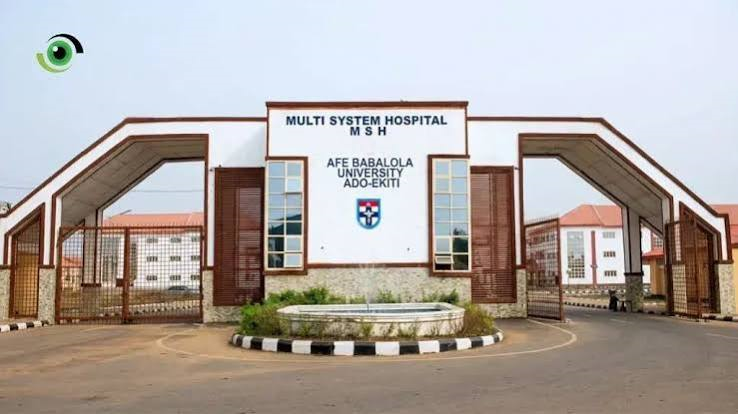
Babalola’s Farmer Support Hits N98m
Legal icon Aare Afe Babalola has disbursed N11.2 million to 81 outstanding farmers across Ekiti State's 16 local government areas, bringing total awards under his annual agricultural scheme since 2015 to N98 million.
 Agriculture
FG Launches African Swine Fever Control Campaign in Southwest
The Federal Government has launched a major African Swine Fever control and biosecurity campaign at the Oke-Aro Pig Farm Estate, distributing protective kits to farmers and pledging comprehensive training to prevent future outbreaks. The intervention by the Livestock Productivity and Resilience Support Project (L-PRES) targets one of Nigeria's largest pig production clusters, which has suffered devastating losses from the highly contagious disease in the past.
 Agriculture
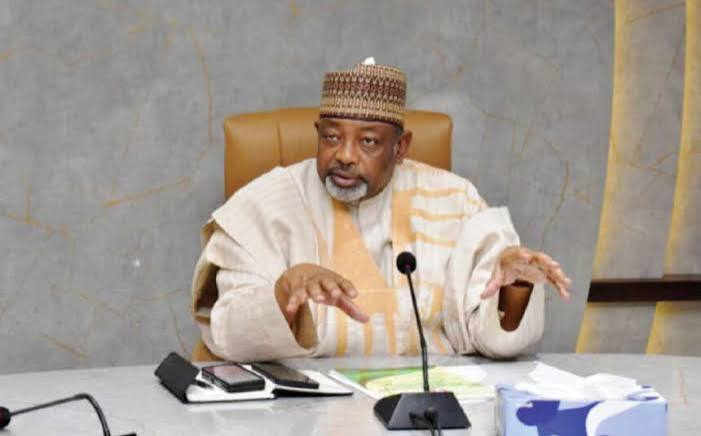
Kyari: More Farmland Won’t Feed 400 Million Nigerians
Agriculture Minister Abubakar Kyari says Nigeria must treat agricultural extension as critical infrastructure, disclosing that over 100,000 farmers already receive weekly digital advisories as the country's population heads toward 400 million by 2050.
 Agriculture
Farmland Expansion Alone Won’t Feed Nigeria
Agriculture Minister Abubakar Kyari says Nigeria must shift to demand-driven, AI-enabled agricultural extension services to boost farm yields, warning that expanding farmland alone can no longer feed the country's growing population.
Comments (0)
Leave a comment
All comments are moderated before publishing. Your email is never published.