
LUTH Unveils West Africa’s First EyeSi Surgical Simulator
Lagos University Teaching Hospital has launched West Africa’s first EyeSi Surgical Simulator and a new ophthalmic training centre, aiming to improve surgical precision, reduce complications and expand continuous medical education for eye surgeons
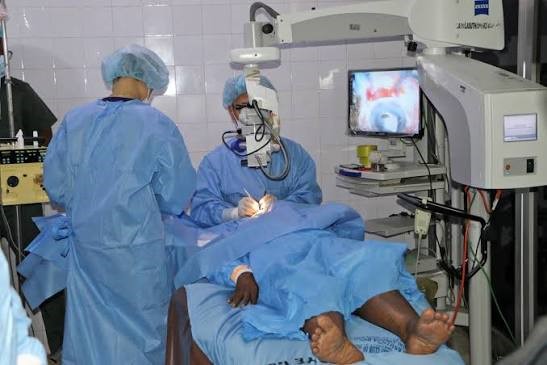
Lagos University Teaching Hospital (LUTH) has unveiled West Africa’s first EyeSi Surgical Simulator, marking a major milestone in ophthalmic medical education in Nigeria and the wider region. The simulator was launched alongside the Gbemisola Olowolafe Centre for Ophthalmic Surgical Simulation at the Guinness Eye Centre in Lagos.
The new facility is designed to strengthen specialist training in eye surgery by allowing ophthalmologists to practise complex procedures in a virtual, risk-free environment before working on real patients. According to the organisers, the goal is to improve surgical precision, reduce complications and enhance patient outcomes across Nigeria and West Africa.
The simulator was delivered through a partnership involving the Faculty of Ophthalmology of the National Postgraduate Medical College of Nigeria, LUTH and the Tunji Olowolafe Foundation. That collaboration reflects a growing recognition that medical training needs more advanced tools if doctors are to keep pace with modern standards of care.
The centre will focus on training in phacoemulsification cataract surgery and vitreoretinal procedures, two important areas in ophthalmology. Cataract remains one of the leading causes of blindness in Africa, while vitreoretinal surgery requires very high precision and is difficult to master without repeated supervised practice.
One of the biggest advantages of simulation-based learning is that it gives trainees repeated exposure to procedures without endangering patients. Residents can make mistakes, correct them and refine their techniques in a controlled environment, which is especially valuable for high-stakes surgeries where even small errors can have serious consequences.
The Gbemisola Olowolafe Centre has already admitted its inaugural cohort of six trainees, including participants from Kaduna and Onitsha. Their inclusion suggests the programme is not intended only for Lagos-based doctors but for ophthalmologists from across the country. Over time, the centre could become a regional hub for specialist eye training.
The launch also fits into LUTH’s wider push for continuous medical education. In a system where medical knowledge and surgical techniques evolve rapidly, hospitals need more than classrooms and lecture halls; they need tools that help doctors practise new techniques and maintain competence throughout their careers. The new simulator gives LUTH a stronger platform for that kind of ongoing professional development.
The involvement of the Tunji Olowolafe Foundation is also significant because it shows how private philanthropy can support public medical institutions. In many parts of the health sector, advanced training equipment is expensive and difficult for teaching hospitals to acquire on their own. Partnerships like this can help close that gap and improve the quality of specialist training.
The importance of the EyeSi technology is backed by broader experience in global ophthalmology training. Simulation-based tools have been used elsewhere to help trainees build confidence, improve technical skill and reduce errors before they operate on patients. That makes the LUTH launch part of a wider international shift toward more technology-driven surgical education.
For Nigeria, the development is especially important because the country faces a large burden of eye disease and a need for more highly trained specialists. By enabling structured, hands-on virtual practice, the simulator can help produce surgeons who are better prepared for the realities of the operating theatre and more capable of handling complex cases safely
The centre’s focus on continuous medical education is equally important. Health systems improve when doctors are able to update their skills regularly rather than rely only on what they learned in school years earlier. In that sense, the new facility is not only about training new surgeons; it is also about keeping experienced practitioners sharp.
If the model succeeds, it could have ripple effects beyond LUTH. Other teaching hospitals may follow with similar investments, and more public-private partnerships could emerge around specialist medical education. That would help strengthen Nigeria’s capacity in eye care while positioning the country as a leader in ophthalmic simulation training in West Africa.
For now, the launch represents a meaningful step forward. It combines technology, training and collaboration in a way that could improve eye surgery education and, ultimately, patient care across the region.
Sponsored

Related stories
 Health
Borno Hires 2,000 Health Workers, Still Faces Staff Shortage
Borno State has recruited nearly 2,000 doctors, nurses and other health professionals in two years, but the head of its contributory health agency says manpower gaps persist as demand grows under the state health insurance scheme.
 Health
Lassa Fever Kills 268 in Nigeria as Cases Hit 1,138
Nigeria has recorded 1,138 confirmed Lassa fever cases and 268 deaths across 24 states in 2026, with the case fatality rate rising to 23.6 per cent—significantly higher than the 18.6 per cent recorded during the same period in 2025. The NCDC has identified five states accounting for 88 per cent of all confirmed cases, as it intensifies preparedness efforts ahead of the peak transmission season.
 Health
MSF Calls for Routine Noma Surveillance in Nigeria
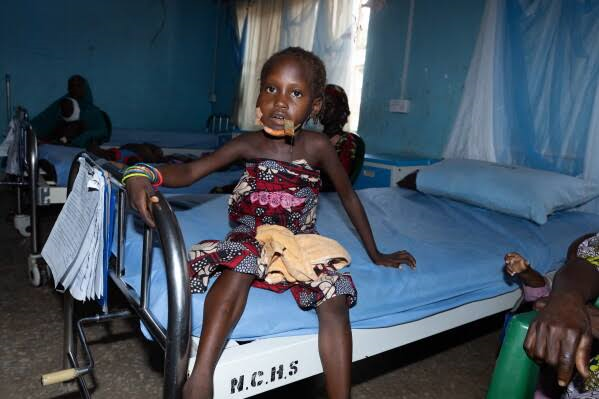
Doctors Without Borders says noma, a fast-moving and often fatal facial infection linked to malnutrition and poverty, remains largely missing from Nigeria's routine child health programmes despite its 2023 recognition as a neglected tropical disease.
 Health
Oyo Rejects Diphtheria Outbreak Claims, Accuses APC
The Oyo State Government has dismissed claims by the Senator Sharafadeen Alli Campaign Organisation that diphtheria has affected 16 local government areas, describing the allegation as false and politically motivated. Commissioner for Health Dr. Oluwaserimi Ajetunmobi confirmed that while suspected cases have been recorded in 10 LGAs, none have been confirmed, and accused the APC campaign group of distorting immunisation data to score political points.
Comments (0)
Leave a comment
All comments are moderated before publishing. Your email is never published.