
Lagos Signs Five-Year Blood Screening Deal With Roche, Targets Safer Transfusions Statewide
The Lagos State Government has signed a five-year concession agreement with Roche Products Limited and approved private partners to standardise blood screening across public hospitals, aiming to close gaps in testing capacity and strengthen the safety of every unit of blood used in the state.
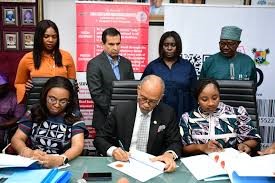
The Lagos State Government has entered a five-year concession agreement designed to standardise blood screening across public hospitals statewide, following long-standing concerns over uneven testing capacity, inconsistent equipment, conflicting results and weak traceability within the state's blood transfusion system.
The agreement, signed last week between the state government, the Lagos State Blood Transfusion Service and a group of approved private concessionaires, establishes a uniform, technology-driven framework for screening and certifying blood before it is used in transfusions anywhere in the state's public health system.
Under the arrangement, Roche Products Limited will supply fully automated blood screening systems through a reagent rental model, while the state government retains full regulatory oversight throughout the five-year concession period. The deal was formally executed at a ceremony at the Lagos State Ministry of Health in Alausa-Ikeja, attended by government officials, development partners and industry stakeholders.
The programme is expected to strengthen detection of transfusion-transmissible infections, including HIV, Hepatitis B, Hepatitis C and syphilis, while improving quality assurance, accountability and traceability across public facilities. Speaking at the signing, the Commissioner for Health, Prof. Akin Abayomi, described blood as effectively a "liquid organ" that demands the same level of oversight as any other critical medical intervention, given that errors in screening can directly affect whether a patient survives. He explained that the state could not leave blood safety entirely to market forces, and said the concession was designed to ensure that every unit of blood collected and used within the Lagos system is screened to internationally accepted standards, so that the state's official certification carries genuine, verifiable confidence for both clinicians and patients. He noted that advances in diagnostic technology have also helped narrow the "window period" during which an infection may not yet be detectable through conventional testing, further reducing transmission risk.
Abayomi also appealed to healthy residents to donate blood voluntarily and regularly, describing a dependable supply as just as important as the screening technology itself, and said the state hopes to eventually position Lagos as a regional hub for safe blood supply capable of supporting neighbouring states.
The Permanent Secretary of the Lagos State Ministry of Health, Dr Dayo Lajide, described the concession as a genuine reform of the state's blood screening system rather than a simple procurement exercise, aimed at ensuring blood is screened with reliable technology under standardised, auditable procedures. She said the agreement followed an extensive procurement process involving technical, financial and legal assessments, resulting in a contract covering service delivery, equipment harmonisation, quality assurance, revenue management, performance monitoring and accountability. She noted that the initiative aligns with the health and environment pillar of the state's THEMES+ Development Agenda, but cautioned that signing the agreement was only the beginning, adding that the true measure of its success would ultimately lie in the quality, reliability and safety of the services actually delivered to residents.
The clearest account of the problems the new concession was designed to fix came from the Executive Secretary of the Lagos State Blood Transfusion Service, Dr Bodunrin Osikomaiya, who explained that the previous concession agreement had expired in June 2023, creating an urgent need for a more structured framework. She said disparities in screening capacity between facilities, inconsistent equipment, conflicting test results, weak traceability and gaps in quality assurance had all been identified as key operational weaknesses under the old arrangement.
As a result, the new contract has grown substantially in scope and detail — from a 15-page agreement previously to a 97-page performance-based framework carrying stronger legal, financial and operational safeguards. Osikomaiya said the procurement process for the new concession began in November 2024 with a public call for expressions of interest, which drew nine prospective bidders before technical evaluation narrowed the field to five successful concessionaires, including Roche Products Limited.
The General Manager of Roche Products Limited, Roberto Taboada, said the company's existing operations in Nigeria, including its engineering personnel, warehousing and logistics infrastructure, would support continuous equipment maintenance and reagent supply, pledging that technical disruptions would not be allowed to undermine the programme. Among the concessionaires, the Managing Director of Banner Diagnostics, Adetunji Kolawole-Moradeyo, commended Lagos for sustaining a blood screening programme that has run for more than two decades, while flagging the availability of adequate operational space as an immediate challenge as more advanced diagnostic equipment is rolled out.
Officials say the arrangement , combining continued public regulatory oversight with private-sector technology and operational capacity ,reflects an understanding that safe transfusion depends on far more than testing equipment alone, requiring standardised procedures, trained personnel, reliable reagents and systems capable of tracing and correcting errors. The Director of Healthcare Planning, Research and Statistics, Dr Olajumoke Oyenuga, said the agreement followed a lengthy reform process involving government officials, health professionals and private-sector partners, expressing confidence that the new framework would strengthen the safety, accountability and sustainability of blood screening services across Lagos over the coming five years.
Sponsored
Related stories
 Health
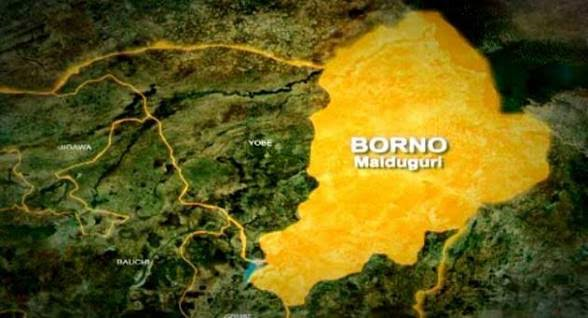
Borno Hires 2,000 Health Workers, Still Faces Staff Shortage
Borno State has recruited nearly 2,000 doctors, nurses and other health professionals in two years, but the head of its contributory health agency says manpower gaps persist as demand grows under the state health insurance scheme.
 Health
Lassa Fever Kills 268 in Nigeria as Cases Hit 1,138
Nigeria has recorded 1,138 confirmed Lassa fever cases and 268 deaths across 24 states in 2026, with the case fatality rate rising to 23.6 per cent—significantly higher than the 18.6 per cent recorded during the same period in 2025. The NCDC has identified five states accounting for 88 per cent of all confirmed cases, as it intensifies preparedness efforts ahead of the peak transmission season.
 Health
MSF Calls for Routine Noma Surveillance in Nigeria
Doctors Without Borders says noma, a fast-moving and often fatal facial infection linked to malnutrition and poverty, remains largely missing from Nigeria's routine child health programmes despite its 2023 recognition as a neglected tropical disease.
 Health
Oyo Rejects Diphtheria Outbreak Claims, Accuses APC
The Oyo State Government has dismissed claims by the Senator Sharafadeen Alli Campaign Organisation that diphtheria has affected 16 local government areas, describing the allegation as false and politically motivated. Commissioner for Health Dr. Oluwaserimi Ajetunmobi confirmed that while suspected cases have been recorded in 10 LGAs, none have been confirmed, and accused the APC campaign group of distorting immunisation data to score political points.
Comments (0)
Leave a comment
All comments are moderated before publishing. Your email is never published.