
Lagos Presents Certificates to 63 MDAs for Complying with Mandatory Health Insurance Order
Lagos State has recognised 63 Ministries, Departments and Agencies for meeting requirements under Governor Sanwo-Olu's Executive Order on mandatory health insurance, with non-compliant MDAs given until November 30 to fall in line.

Sixty-three Ministries, Departments and Agencies (MDAs) of the Lagos State Government have received Certificates of Compliance for meeting requirements under the state's Executive Order on mandatory subscription to social health insurance, in what officials describe as the first exercise of its kind by any state in Nigeria.
The certificates were presented on Tuesday by the Head of Service, Mr Bode Agoro, at an event organised by the Lagos State Health Management Agency (LASHMA).
The Executive Order, signed by Governor Babajide Sanwo-Olu on July 16, 2024, makes enrolment in the Lagos State Social Health Insurance Scheme mandatory for residents. It is aimed at accelerating Universal Health Coverage and reducing financial barriers to accessing healthcare across the state.
Speaking at the event, LASHMA Permanent Secretary, Dr Emmanuella Zamba, said Lagos was beginning enforcement from its own public institutions, ensuring that MDAs complied with the provisions of the Executive Order before extending enforcement more broadly. She identified four key requirements for compliance: presentation of proof of ILERA EKO enrolment by residents accessing government services; enrolment of all staff, including non-Oracle and non-pensionable workers; inclusion of LASHMA's official website URL on MDA websites; and provision of dedicated spaces for LASHMA personnel to verify enrolment and provide support.
Zamba explained that LASHMA constituted an MDA Engagement Team in October 2024 to create awareness and promote institutional compliance. That engagement was subsequently strengthened through meetings with the Body of Permanent Secretaries in September 2025 and with Heads of Agencies in December 2025. She added that the Lagos State Health Scheme Enforcement Team was formally inaugurated by the Head of Service on January 21, 2026, to coordinate compliance monitoring across the public service.
According to Zamba, the enforcement team conducted a baseline assessment of MDAs, followed by subsequent visits to evaluate progress. She said 62 MDAs were initially found fully compliant, with another 21 achieving compliance following a later assessment. However, Agoro clarified that 63 MDAs were being formally recognised at Tuesday's event.
"History is being made today as these 63 MDAs will be recognised and presented with Certificates of Compliance. No State in the country has ever done this," Agoro said, stressing that the certificate was more than a ceremonial document, describing it instead as evidence of institutional compliance and leadership by example.
Agoro said compliance monitoring would continue periodically to ensure that MDAs sustain the requirements over time, rather than treating the certification as a one-off achievement. He disclosed that implementation of the Executive Order would proceed in phases, beginning with MDAs before extending to other sectors and categories of residents.
The Head of Service directed MDAs yet to achieve full compliance to do so by November 30, 2026, urging Accounting Officers and Heads of Agencies to treat the directive as an institutional priority rather than a routine administrative matter.
LASHMA has also trained Verification Officers and designated ILERA EKO Focal Persons across MDAs to verify enrolment and assist residents who are yet to register under the scheme, part of a broader effort to embed enrolment support directly within the public institutions residents already interact with.
Agoro commended LASHMA, the enforcement team, and the compliant MDAs, saying their efforts would contribute to expanding health insurance coverage and advancing Universal Health Coverage across Lagos State.
The certification exercise adds to a broader pattern of health insurance expansion efforts across Nigerian states in 2026, with Lagos's approach, starting enforcement within government institutions before extending to the wider public, offering a model that officials suggest other states could look to as they work toward their own Universal Health Coverage targets. With a firm November 30 deadline now set for the remaining non-compliant MDAs, attention will turn to whether Lagos can maintain the momentum needed to bring its full public service into compliance before shifting enforcement focus to private sector employers and other categories of residents.
Sponsored
Related stories
 Health
Borno Hires 2,000 Health Workers, Still Faces Staff Shortage
Borno State has recruited nearly 2,000 doctors, nurses and other health professionals in two years, but the head of its contributory health agency says manpower gaps persist as demand grows under the state health insurance scheme.
 Health
Lassa Fever Kills 268 in Nigeria as Cases Hit 1,138
Nigeria has recorded 1,138 confirmed Lassa fever cases and 268 deaths across 24 states in 2026, with the case fatality rate rising to 23.6 per cent—significantly higher than the 18.6 per cent recorded during the same period in 2025. The NCDC has identified five states accounting for 88 per cent of all confirmed cases, as it intensifies preparedness efforts ahead of the peak transmission season.
 Health
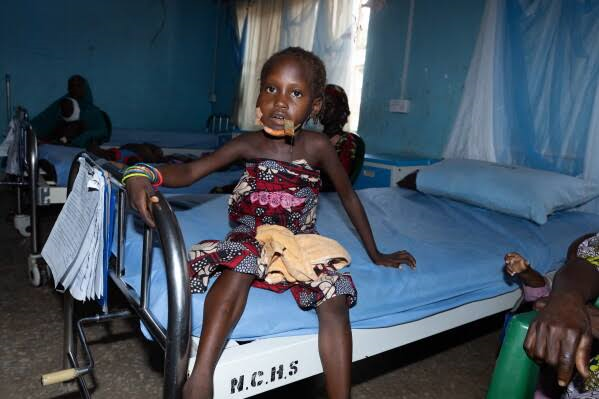
MSF Calls for Routine Noma Surveillance in Nigeria
Doctors Without Borders says noma, a fast-moving and often fatal facial infection linked to malnutrition and poverty, remains largely missing from Nigeria's routine child health programmes despite its 2023 recognition as a neglected tropical disease.
 Health
Oyo Rejects Diphtheria Outbreak Claims, Accuses APC
The Oyo State Government has dismissed claims by the Senator Sharafadeen Alli Campaign Organisation that diphtheria has affected 16 local government areas, describing the allegation as false and politically motivated. Commissioner for Health Dr. Oluwaserimi Ajetunmobi confirmed that while suspected cases have been recorded in 10 LGAs, none have been confirmed, and accused the APC campaign group of distorting immunisation data to score political points.
Comments (0)
Leave a comment
All comments are moderated before publishing. Your email is never published.