
Lagos Makes Health Insurance Compulsory at N15,000
The Lagos State Government has reiterated that health insurance is now mandatory for all residents, with the subsidised Ilera Eko scheme costing just N15,000 annually — about N1,250 per month — against an unsubsidised value of N100,000. Commissioner for Health Prof. Akin Abayomi says a 2024 executive order has made coverage compulsory, warning that uninsured residents risk crippling out-of-pocket expenses during medical emergencies.

The Lagos State Government has reiterated that health insurance is now mandatory for all residents, with its subsidised Ilera Eko scheme available at N15,000 annually for an individual — a fraction of the estimated N100,000 it would cost without government intervention.
Commissioner for Health, Prof. Akin Abayomi, disclosed this during an unannounced visit to Shomolu General Hospital, where he inspected the construction of the new 150-bed Shomolu Specialist General Hospital and engaged patients and healthcare workers on their experiences with health insurance. He explained that a 2024 executive order domesticating the National Health Insurance Authority Act 2022 had made health insurance compulsory across Lagos, and urged residents to understand the benefits and limitations of their coverage.
According to Abayomi, the subsidised Ilera Eko plan costs N15,000 per year, equivalent to about N1,250 monthly for an individual, a premium made possible through government subsidies and risk pooling. The package covers doctors' consultations, antenatal and childbirth services, treatment for malaria and fever, and management of chronic conditions such as hypertension and diabetes. It also includes laboratory investigations, simple surgeries, specialist consultations and up to 15 days of hospitalisation annually. Residents seeking broader coverage can opt for other insurance packages, while corporate residents can access unsubsidised private health insurance plans.
The commissioner warned that residents without insurance must pay out of pocket for hospital registration cards, laboratory tests, admission, medication and other medical services, expenses that could place considerable financial pressure on families, particularly during medical emergencies. He cautioned, however, that even policyholders might still incur out-of-pocket expenses for treatments excluded from their packages or services exceeding the applicable annual limits.
Abayomi urged residents to familiarise themselves with the terms, benefits and limitations of their insurance plans before seeking medical attention, stressing that understanding one's coverage was essential to avoiding unexpected costs. He also encouraged residents to provide feedback on their experiences and identify barriers preventing them from enrolling in health insurance, noting that such input would help the government improve the scheme and expand access.
The Lagos State Health Management Agency (LASHMA), under the state's Ministry of Health, administers the insurance schemes. The compulsory insurance policy is part of a broader effort by the Lagos State Government to reduce the financial burden of healthcare on households and move the state towards universal health coverage. Under the Ilera Eko scheme, which has already enrolled over 1.5 million residents, the government has sought to make healthcare affordable for the millions of Lagosians who would otherwise be unable to access quality medical services.
The enforcement of compulsory health insurance marks a significant policy shift for Lagos, Nigeria's commercial capital and most populous state. Governor Babajide Sanwo-Olu has repeatedly emphasised that health insurance is essential to achieving universal health coverage, describing it as a social contract between the government and the people. The state has also introduced the Lagos State Health Scheme, which provides free healthcare for the vulnerable, including children under five, pregnant women and the elderly.
The 150-bed Shomolu Specialist General Hospital, currently under construction, is part of the state's ongoing investment in healthcare infrastructure to accommodate the growing number of insured residents. Once completed, it is expected to ease pressure on existing facilities and improve access to specialist care in the densely populated Shomolu area.
Abayomi's engagement with patients during the visit highlighted the human dimension of the policy. Patients shared their experiences, both positive and negative, and raised concerns about coverage limits and accessibility. The commissioner reiterated that the government was committed to addressing these concerns and ensuring that every resident could access quality healthcare without financial hardship.
As Lagos moves towards full enforcement of compulsory health insurance, the coming months will test the state's capacity to enrol millions of uninsured residents, strengthen the healthcare infrastructure, and ensure that the promise of affordable, quality healthcare becomes a reality for all. For a state that is home to over 20 million people, the success of the Ilera Eko scheme could serve as a model for healthcare financing across Nigeria, demonstrating that with the right policies, universal health coverage is within reach.
Sponsored

Related stories
 Health
Borno Hires 2,000 Health Workers, Still Faces Staff Shortage
Borno State has recruited nearly 2,000 doctors, nurses and other health professionals in two years, but the head of its contributory health agency says manpower gaps persist as demand grows under the state health insurance scheme.
 Health
Lassa Fever Kills 268 in Nigeria as Cases Hit 1,138
Nigeria has recorded 1,138 confirmed Lassa fever cases and 268 deaths across 24 states in 2026, with the case fatality rate rising to 23.6 per cent—significantly higher than the 18.6 per cent recorded during the same period in 2025. The NCDC has identified five states accounting for 88 per cent of all confirmed cases, as it intensifies preparedness efforts ahead of the peak transmission season.
 Health
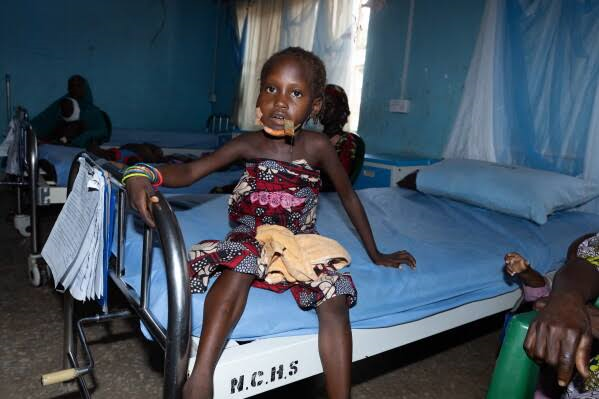
MSF Calls for Routine Noma Surveillance in Nigeria
Doctors Without Borders says noma, a fast-moving and often fatal facial infection linked to malnutrition and poverty, remains largely missing from Nigeria's routine child health programmes despite its 2023 recognition as a neglected tropical disease.
 Health
Oyo Rejects Diphtheria Outbreak Claims, Accuses APC
The Oyo State Government has dismissed claims by the Senator Sharafadeen Alli Campaign Organisation that diphtheria has affected 16 local government areas, describing the allegation as false and politically motivated. Commissioner for Health Dr. Oluwaserimi Ajetunmobi confirmed that while suspected cases have been recorded in 10 LGAs, none have been confirmed, and accused the APC campaign group of distorting immunisation data to score political points.
Comments (0)
Leave a comment
All comments are moderated before publishing. Your email is never published.