
Kurmawa Prison Cholera Outbreak Kills Six
Amnesty International Nigeria has called on the Federal Government to immediately declare an emergency at the 115-year-old Kurmawa Maximum Prison in Kano after at least six inmates died within one week from a suspected cholera outbreak. The rights group warned that the death toll could rise as the disease spreads among an overcrowded population of mostly awaiting-trial detainees, and said failure to act could amount to a violation of international law.
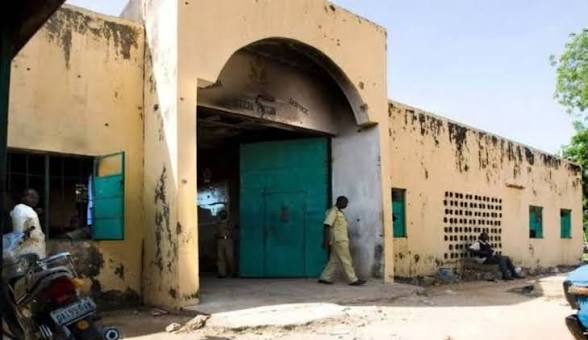
Amnesty International Nigeria has called on the Nigerian authorities to immediately declare an emergency at the 115-year-old Kurmawa Maximum Custodial Centre in Kano following the deaths of at least six inmates within one week from a suspected cholera outbreak.
In a statement posted on its official Facebook page on Friday, the human rights organisation said several other inmates were currently receiving treatment, warning that the death toll could be higher as the disease continues to spread among prisoners, most of whom are awaiting trial. “The number of those who died could be higher as the disease infects more inmates — mostly on awaiting trial,” Amnesty International said.
The organisation urged the authorities to immediately transfer critically ill prisoners to hospitals, stressing that failure to intervene urgently could result in further deaths and potentially amount to arbitrary deprivation of life, which it described as a serious human rights violation under international law. “Immediate hospital transfers must be done for critically ill prisoners,” Amnesty International Nigeria stated.
The outbreak at Kurmawa, one of Nigeria’s oldest and most notorious custodial facilities, has thrown a spotlight on the broader crisis of conditions in the country’s correctional system. Amnesty International criticised the situation in Nigerian prisons, saying many inmates spend years awaiting trial in overcrowded and unhygienic cells without adequate food or healthcare. “The reality is that in Nigeria those in prison stand little chance of their rights being respected. Those without money stand even less chance,” the organisation said. It added that “some could end up spending the rest of their lives behind bars in appalling conditions without ever having been convicted of a crime”.
Kurmawa Maximum Prison, built over a century ago, has long been emblematic of the systemic failures plaguing Nigeria’s correctional facilities. Designed to hold a fraction of its current population, the facility is severely overcrowded, a condition that creates ideal conditions for the transmission of waterborne diseases such as cholera. The prison’s ageing infrastructure, inadequate sanitation, and limited access to clean water have compounded the crisis, leaving inmates — many of whom have not been convicted of any crime — vulnerable to preventable disease and death.
The suspected cholera outbreak at Kurmawa is not an isolated incident. In recent years, Nigerian prisons have recorded multiple outbreaks of cholera, tuberculosis, and other infectious diseases, prompting repeated calls from human rights organisations for urgent reforms. The Nigeria Centre for Disease Control and Prevention has consistently identified overcrowding, poor sanitation, and inadequate healthcare as key drivers of disease transmission in custodial settings. Yet, despite these warnings, successive governments have failed to implement the structural changes needed to protect the health and dignity of inmates.
Amnesty International’s call for an emergency declaration at Kurmawa underscores the gravity of the situation and the urgent need for federal and state authorities to act. The organisation urged the Nigerian government to improve conditions in detention facilities and ensure that the treatment of inmates complies with human rights obligations, best practices, and international standards. “This must change to ensure full compliance with best practices and international standards,” Amnesty stated.
The rights group’s intervention comes amid growing concerns over the state of Nigeria’s correctional system, which has been described by experts as a breeding ground for disease and a repository for unprocessed justice. With thousands of detainees awaiting trial for years, often without legal representation, the system is both a public health hazard and a human rights catastrophe. The cholera outbreak at Kurmawa is a stark reminder that the consequences of neglect are measured not only in statistics but in lives lost behind bars.
For the families of the six inmates who died at Kurmawa, the tragedy is compounded by the knowledge that their loved ones were never convicted of any crime. For the hundreds of others still held in the facility, the fear of infection looms large. Amnesty International’s demand for an emergency declaration is not merely a call for medical intervention; it is a demand for accountability, for the recognition that the state has a duty to protect the lives of those it incarcerates, and for a reckoning with a prison system that has for too long been allowed to rot. The coming days will determine whether the authorities heed that call or allow another preventable tragedy to unfold in one of Nigeria’s oldest prisons.
Sponsored

Related stories
 Health
Borno Hires 2,000 Health Workers, Still Faces Staff Shortage
Borno State has recruited nearly 2,000 doctors, nurses and other health professionals in two years, but the head of its contributory health agency says manpower gaps persist as demand grows under the state health insurance scheme.
 Health
Lassa Fever Kills 268 in Nigeria as Cases Hit 1,138
Nigeria has recorded 1,138 confirmed Lassa fever cases and 268 deaths across 24 states in 2026, with the case fatality rate rising to 23.6 per cent—significantly higher than the 18.6 per cent recorded during the same period in 2025. The NCDC has identified five states accounting for 88 per cent of all confirmed cases, as it intensifies preparedness efforts ahead of the peak transmission season.
 Health
MSF Calls for Routine Noma Surveillance in Nigeria
Doctors Without Borders says noma, a fast-moving and often fatal facial infection linked to malnutrition and poverty, remains largely missing from Nigeria's routine child health programmes despite its 2023 recognition as a neglected tropical disease.
 Health
Oyo Rejects Diphtheria Outbreak Claims, Accuses APC
The Oyo State Government has dismissed claims by the Senator Sharafadeen Alli Campaign Organisation that diphtheria has affected 16 local government areas, describing the allegation as false and politically motivated. Commissioner for Health Dr. Oluwaserimi Ajetunmobi confirmed that while suspected cases have been recorded in 10 LGAs, none have been confirmed, and accused the APC campaign group of distorting immunisation data to score political points.
Comments (0)
Leave a comment
All comments are moderated before publishing. Your email is never published.