
Katsina Farmers Predict Bumper Harvest, Commend FG, State Govt for Fertiliser, Seed Distribution
The All Farmers Association of Nigeria in Katsina State says more than 300,000 of its members have benefited from federal government subsidised fertiliser and improved seed distribution, predicting a bumper harvest for the current farming season.
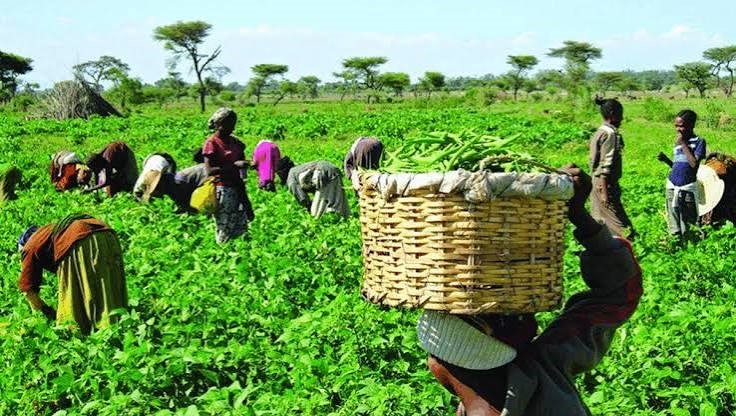
The All Farmers Association of Nigeria (AFAN) in Katsina State has commended the Federal Government for distributing subsidised fertiliser and improved seeds to its members, describing the intervention as a major boost to food production and farmers' livelihoods that has significantly reduced the financial burden of farming across the state.
The chairman of AFAN in Katsina State, Umar Yau Gwajo-Gwajo, disclosed this in an interview with journalists in Katsina, revealing that more than 300,000 members of the association across the state have benefited from the initiative. He described the scale of the intervention as unprecedented, noting that it would substantially reduce the cost of farming at a time when the prices of agricultural inputs remain high in the open market, placing considerable strain on smallholder farmers who make up the bulk of the state's agricultural workforce.
According to Gwajo-Gwajo, access to subsidised fertiliser and improved seed varieties is expected to encourage more farmers to cultivate larger hectares of farmland during the current farming season, potentially translating into a bumper harvest if favourable weather conditions hold through to harvest time. He commended the administration of President Bola Ahmed Tinubu for the gesture, describing the intervention as a major morale booster for farmers that is expected to contribute significantly to increasing food production across the country.
The AFAN chairman explained that the programme has eased the financial burden on farmers, many of whom have struggled in recent years to afford essential farm inputs because of rising production costs driven by inflation and currency pressures that have affected the broader Nigerian economy. Subsidised access to fertiliser and seeds, he said, removes one of the most significant cost barriers standing between smallholder farmers and larger-scale cultivation, particularly for those operating on thin margins who might otherwise be forced to scale back planting in response to high input costs.
Beyond the federal intervention, Gwajo-Gwajo also praised the Katsina State Government for complementing national efforts through a range of its own agricultural support programmes. He said the administration of Governor Dikko Umar Radda has provided farmers across the state with tractors, fertiliser, improved seeds, solar-powered water pumping machines and threshers, describing the combined effect of these interventions as having strengthened farming activities and encouraged more residents to embrace agriculture as a viable livelihood.
He noted that the provision of mechanised equipment such as tractors and threshers, alongside solar-powered irrigation infrastructure, has been particularly significant in a state where agriculture remains heavily dependent on manual labour and seasonal rainfall patterns.
Combining state-level equipment support with federally subsidised inputs, he suggested, has created a more comprehensive support system for farmers than either intervention could achieve on its own.
Katsina State remains one of Nigeria's key agricultural producing states, with a significant proportion of its population engaged in farming activities, particularly the cultivation of staple crops such as maize, millet, sorghum, groundnuts and rice. Like many states in Nigeria's northern region, Katsina has faced recurring agricultural challenges in recent years, including the rising cost of farm inputs, the effects of climate variability on rainfall patterns, and, in parts of the state, security concerns that have periodically disrupted farming activities in certain local government areas.
Against this backdrop, coordinated support from both federal and state governments has become an increasingly important factor in sustaining agricultural output, particularly for smallholder farmers who lack the capital reserves to absorb rising input costs independently. Farmer associations such as AFAN have continued to play a central role in channelling government support to grassroots farmers while also advocating for expanded and more consistent interventions in subsequent farming seasons.
With the current farming season underway, attention will now turn to whether the combination of subsidised inputs, mechanised equipment and favourable weather translates into the bumper harvest AFAN's Katsina chapter is anticipating, a outcome that would be welcomed both by farmers seeking improved incomes and by policymakers focused on strengthening the country's food security in the face of persistent inflationary pressure on food prices nationwide.
Sponsored

Related stories
 Agriculture
Babalola’s Farmer Support Hits N98m
Legal icon Aare Afe Babalola has disbursed N11.2 million to 81 outstanding farmers across Ekiti State's 16 local government areas, bringing total awards under his annual agricultural scheme since 2015 to N98 million.
 Agriculture
FG Launches African Swine Fever Control Campaign in Southwest
The Federal Government has launched a major African Swine Fever control and biosecurity campaign at the Oke-Aro Pig Farm Estate, distributing protective kits to farmers and pledging comprehensive training to prevent future outbreaks. The intervention by the Livestock Productivity and Resilience Support Project (L-PRES) targets one of Nigeria's largest pig production clusters, which has suffered devastating losses from the highly contagious disease in the past.
 Agriculture
Kyari: More Farmland Won’t Feed 400 Million Nigerians
Agriculture Minister Abubakar Kyari says Nigeria must treat agricultural extension as critical infrastructure, disclosing that over 100,000 farmers already receive weekly digital advisories as the country's population heads toward 400 million by 2050.
 Agriculture
Farmland Expansion Alone Won’t Feed Nigeria
Agriculture Minister Abubakar Kyari says Nigeria must shift to demand-driven, AI-enabled agricultural extension services to boost farm yields, warning that expanding farmland alone can no longer feed the country's growing population.
Comments (0)
Leave a comment
All comments are moderated before publishing. Your email is never published.