
IMT Enugu's 'One Diploma, One Skill' Initiative: A Model for Nigeria's Educational Transformation
The Institute of Management and Technology (IMT) Enugu has launched the "One Diploma, One Skill" initiative, ensuring every graduate leaves with a vocational or entrepreneurial skill alongside their academic qualification.
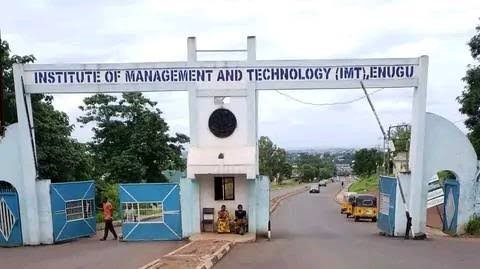
At the Institute of Management and Technology (IMT) Enugu, one of Nigeria's oldest and most established polytechnics, a transformative new initiative is quietly redefining what it means to graduate from a tertiary institution.
Under the leadership of the Rector, Professor Gozie Ogbodo, the initiative seeks to ensure that every graduate leaves the institution with not only a National Diploma or Higher National Diploma but also at least one demonstrable vocational, entrepreneurial, or technology-driven skill.
The campaign, branded "One Diploma, One Skill," represents one of the most concrete institutional responses to the unemployment and underemployment crisis that has continued to plague Nigerian graduates across all tiers of the education system. It is built on a simple but powerful premise: that a certificate without practical capability is an incomplete education.
The "One Diploma, One Skill" initiative is designed to ensure that every student acquires a vocational skill alongside their academic qualification. The practical skills students can acquire span a wide range of disciplines, including tailoring and fashion design, food processing and bakery operations, digital skills, agribusiness, electrical installation, plumbing, graphic design, and other trades that are in active demand in the labour market.
The school has introduced a compulsory skill acquisition programme aimed at equipping students with entrepreneurial skills before graduation. Beyond theoretical instruction, students are expected to demonstrate proficiency in their chosen skill through practical assessments conducted at the institution's vocational training facilities.
In a visible demonstration of the initiative's early success, the institution now operates its own bakery, producing bread for the school community, with plans for future expansion. The bakery serves as both a commercial operation and a training ground, giving students enrolled in food processing real-world experience in production, hygiene standards, customer service, and business management.
The impetus for the initiative lies in the well-documented reality that Nigerian graduates — including polytechnic graduates who are already trained in more applied disciplines than their university counterparts — continue to struggle to find employment after graduation. Employers across sectors have consistently reported that fresh graduates lack not just technical depth but also the practical adaptability and entrepreneurial instincts needed to thrive in Nigeria's rapidly changing economy.
For IMT, the initiative reflects a determination to respond proactively to changing realities instead of waiting for them to dictate institutional relevance.
The Rector, who has led the institution for 18 months, has framed the initiative as part of a broader repositioning of IMT as a practical, outcome-oriented institution whose value to students is measured not only by the quality of instruction they receive but by what they are capable of doing when they leave.
Within the 18 months since he assumed office, the institution has recorded significant achievements in academic excellence, administration, and infrastructure development.
Although the initiative is institution-specific, it speaks directly to broader national policy priorities. Nigeria has consistently emphasised entrepreneurship education, innovation and technical skills development as essential tools for economic diversification and youth empowerment.
The Federal Government's 3 Million Technical Talent (3MTT) programme, the Industrial Training Fund's Skill Up Artisans (SUPA) initiative, and NITDA's digital skills drive all reflect the same underlying recognition — that Nigeria's greatest development challenge is not a shortage of young people but a shortage of young people with the skills that the economy actually needs.
The philosophy behind "One Diploma, One Skill" aligns with those aspirations by placing employability and self-reliance at the centre of the educational experience.
The initiative is being implemented alongside broader academic reforms at IMT. IMT, in collaboration with the University of Nigeria, Nsukka (UNN), and the University of Port Harcourt (UniPort), currently offers degree programmes. This partnership enables students at IMT to pursue higher academic qualifications without leaving the institution, while the One Diploma, One Skill initiative ensures that every graduate ,whether completing an ND, HND, or degree programme — exits with practical capability.
The Enugu State Government has plans to establish an aviation school within the institution, a development that would further expand IMT's vocational and technical training footprint and align the institution with the growing demand for skilled professionals in Nigeria's aviation sector.
The success of IMT's initiative raises a question that education policymakers and institutional leaders across Nigeria would do well to consider seriously.
The "One Diploma, One Skill" initiative raises an important policy question for Nigeria's tertiary education sector: should practical skills acquisition become an institutional priority across all higher education institutions rather than remaining an optional enrichment activity?
Given the scale of Nigeria's graduate unemployment challenge and the persistent skills gap that employers report across every major sector, there is a compelling case for making practical vocational skills a mandatory component of every tertiary education programme — not just at polytechnics but at universities as well.
As the future of work continues to evolve, institutions of higher learning will increasingly be judged not simply by the number of graduates they produce but by the quality, adaptability and economic impact of those graduates. In that context, IMT's "One Diploma, One Skill" campaign deserves attention beyond Enugu.
It represents a practical, replicable model for bridging the gap between academic achievement and economic contribution , one that other institutions across Nigeria could adapt to their own contexts and resources.
For a country with over 700,000 graduates entering the labour market annually, the ability to pair every certificate with a demonstrated skill could be one of the most powerful tools available for reducing youth unemployment, stimulating entrepreneurship, and ultimately unlocking the productive potential of the world's largest black population.
Sponsored

Related stories
 Tech & Education
Bamidele Unveils N200m Renovated Science College
Senate Leader Opeyemi Bamidele has commissioned the renovated Government Science College, Iyin-Ekiti, personally funded at over N200 million, donating buses to the school and nearby FUTESI while promising a second phase of upgrades.
 Tech & Education
Abia Students Crowned Global Debate Champions
Students from public schools in Abia State, representing Nigeria, have emerged overall champions at the 2026 International Schools Debate Championship in Doha, Qatar, winning four major trophies and 12 laurels after defeating teams from Jordan, India, Qatar, the Philippines, Kenya and others. The historic victory has been hailed as proof that Governor Alex Otti's education reforms are producing world-class scholars.
 Tech & Education
WAEC Appoints Suleiman Kum as New Head of Nigeria National Office
The West African Examinations Council has appointed 56-year-old Suleiman Danlami Kum as the new Head of the Nigeria National Office, succeeding Dr Amos Josiah Dangut, who has assumed office as the council’s Registrar and Chief Executive Officer. A seasoned test developer, administrator and executive with 28 years of service, Kum is expected to drive technological innovation and examination security across Nigeria’s foremost examinations body.
 Tech & Education
Emmanuel College ’88 Set Renovates Classrooms, Pays Exam Fees
The Progressives of the Unique 1988 Set of Emmanuel College Owerri have unveiled a renovated five-classroom block and paid NECO and WAEC fees for financially disadvantaged students at their alma mater.
Comments (0)
Leave a comment
All comments are moderated before publishing. Your email is never published.